Heiss Aaron A, Kolisko Martin, Ekelund Fleming, Brown Matthew W, Roger Andrew J, Simpson Alastair G B
Department of Invertebrate Zoology and Sackler Institute for Comparative Genomics, American Museum of Natural History, New York, NY 10024, USA.
Centre for Comparative Genomics and Evolutionary Bioinformatics, Department of Biology, Dalhousie University, Halifax, Nova Scotia B3H 4R2, Canada.
R Soc Open Sci. 2018 Apr 4;5(4):171707. doi: 10.1098/rsos.171707. eCollection 2018 Apr.
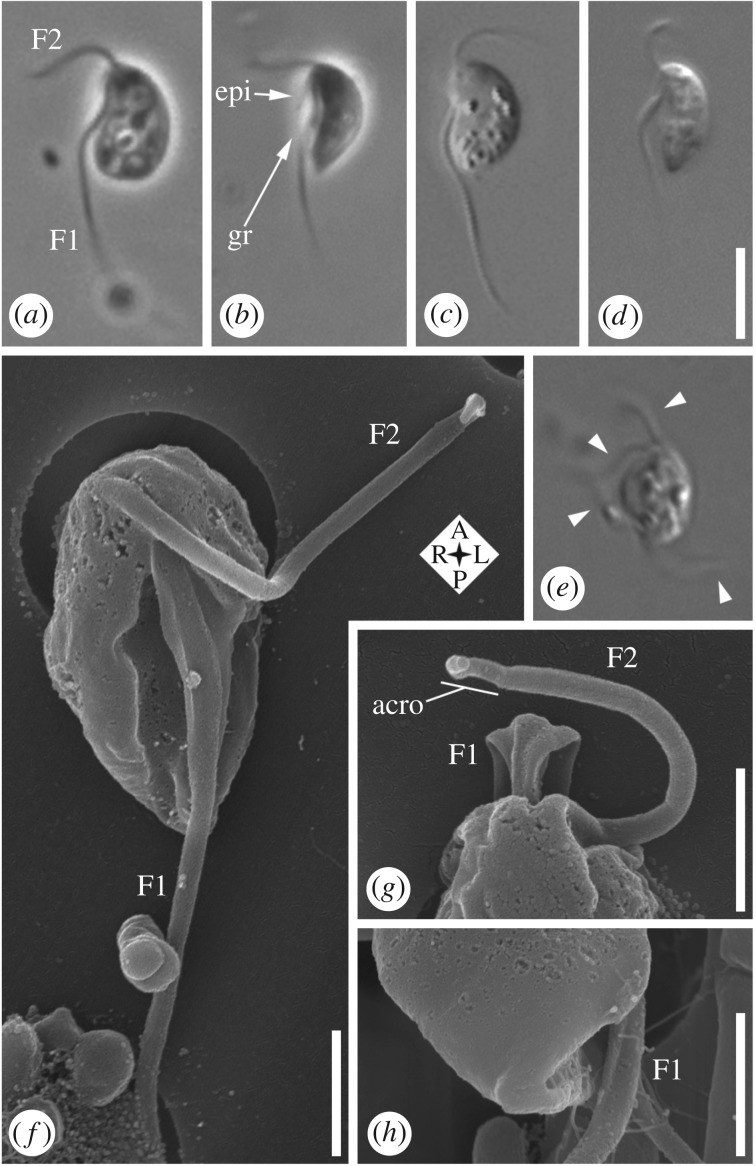
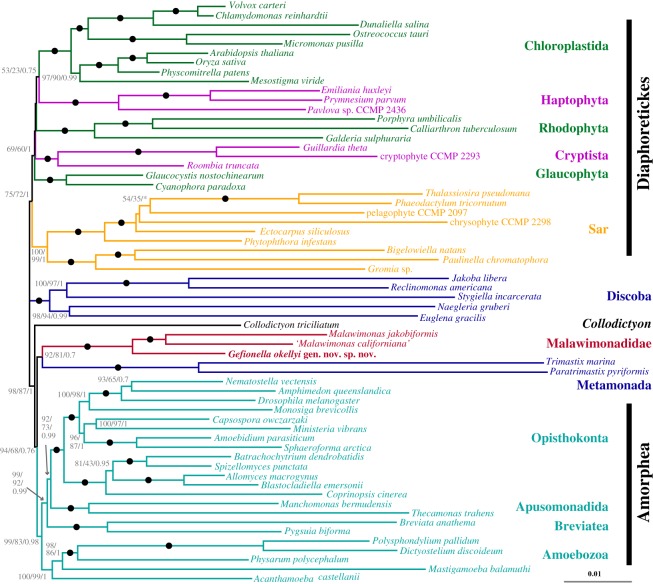
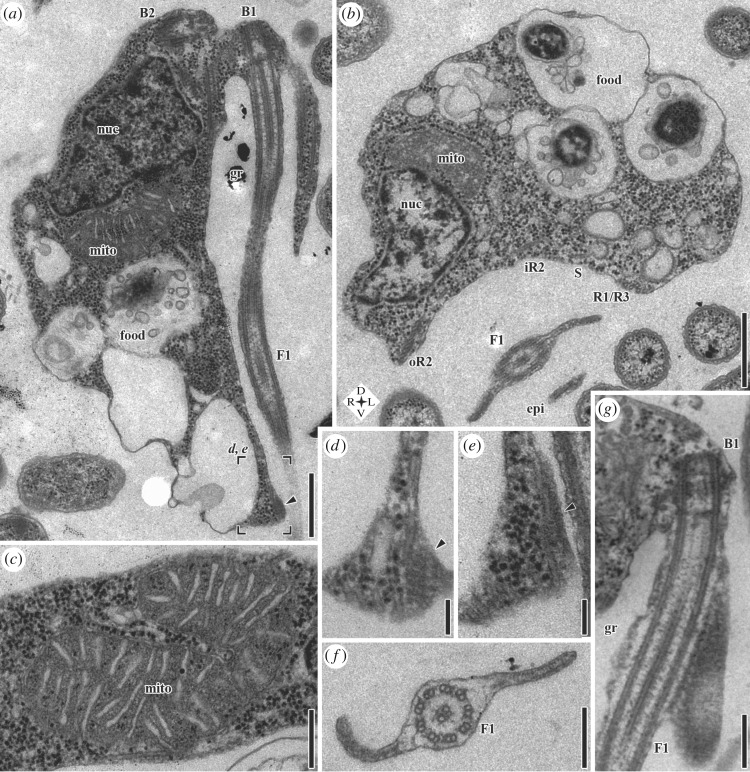
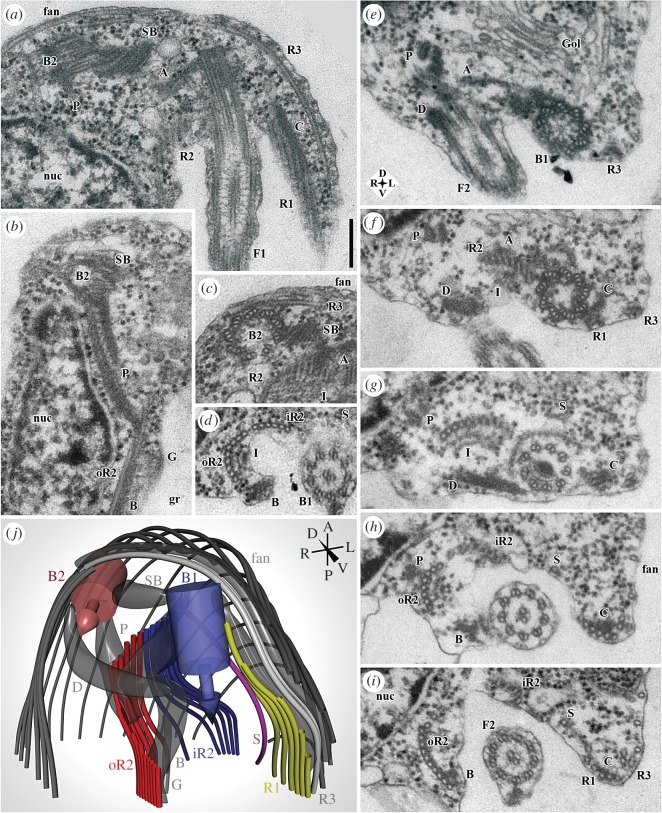
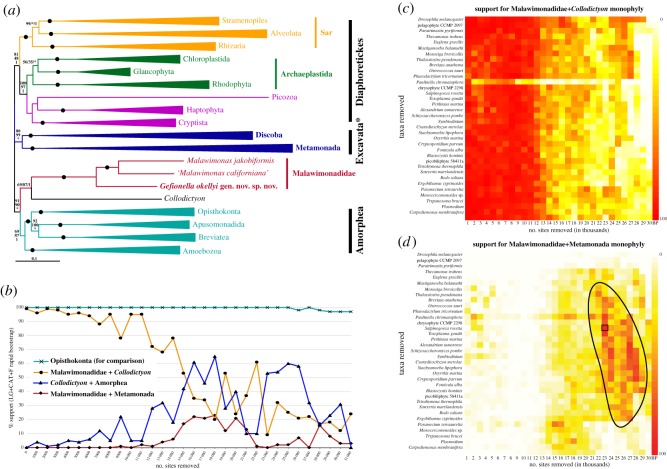
Modern syntheses of eukaryote diversity assign almost all taxa to one of three groups: Amorphea, Diaphoretickes and Excavata (comprising Discoba and Metamonada). The most glaring exception is Malawimonadidae, a group of small heterotrophic flagellates that resemble Excavata by morphology, but branch with Amorphea in most phylogenomic analyses. However, just one malawimonad, , has been studied with both morphological and molecular-phylogenetic approaches, raising the spectre of interpretation errors and phylogenetic artefacts from low taxon sampling. We report a morphological and phylogenomic study of a new deep-branching malawimonad, n. gen. n. sp. Electron microscopy revealed all canonical features of 'typical excavates', including flagellar vanes (as an opposed pair, unlike but like many metamonads) and a composite fibre. Initial phylogenomic analyses grouped malawimonads with the Amorphea-related orphan lineage , separate from a Metamonada+Discoba clade. However, support for this topology weakened when more sophisticated evolutionary models were used, and/or fast-evolving sites and long-branching taxa (FS/LB) were excluded. Analyses of '-FS/LB' datasets instead suggested a relationship between malawimonads and metamonads. The 'malawimonad+metamonad signal' in morphological and molecular data argues against a strict Metamonada+Discoba clade (i.e. the predominant concept of Excavata). A Metamonad+Discoba clade should therefore not be assumed when inferring deep-level evolutionary history in eukaryotes.
无形态类、双鞭毛类和挖掘类(包括盘状类和后滴虫类)。最明显的例外是马拉维滴虫科,这是一类小型异养鞭毛虫,在形态上类似于挖掘类,但在大多数系统发育基因组分析中与无形态类分支在一起。然而,只有一种马拉维滴虫, ,同时采用了形态学和分子系统发育方法进行研究,这引发了由于分类单元采样不足而导致解释错误和系统发育假象的担忧。我们报告了一种新的深层分支马拉维滴虫 属 种的形态学和系统发育基因组学研究。电子显微镜揭示了“典型挖掘类”的所有典型特征,包括鞭毛叶片(呈相对的一对,与 不同,但与许多后滴虫类相似)和复合纤维。最初的系统发育基因组分析将马拉维滴虫与无形态类相关的孤儿谱系 归为一组,与后滴虫类+盘状类分支分开。然而,当使用更复杂的进化模型和/或排除快速进化位点和长分支分类单元(FS/LB)时,对这种拓扑结构的支持减弱了。相反,对“-FS/LB”数据集的分析表明马拉维滴虫与后滴虫类之间存在关系。形态学和分子数据中的“马拉维滴虫+后滴虫类信号”与严格的后滴虫类+盘状类分支(即挖掘类的主要概念)相悖。因此,在推断真核生物的深层进化历史时,不应假定存在后滴虫类+盘状类分支。