Pervasive Systems Research Group, University of Twente, Drienerlolaan 5, 7522 NB Enschede, The Netherlands.
Sensors (Basel). 2018 May 24;18(6):1698. doi: 10.3390/s18061698.
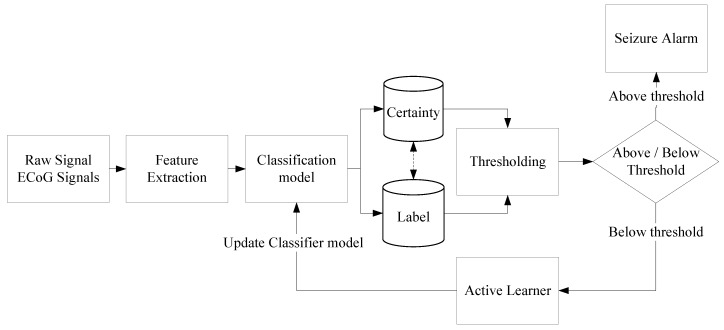
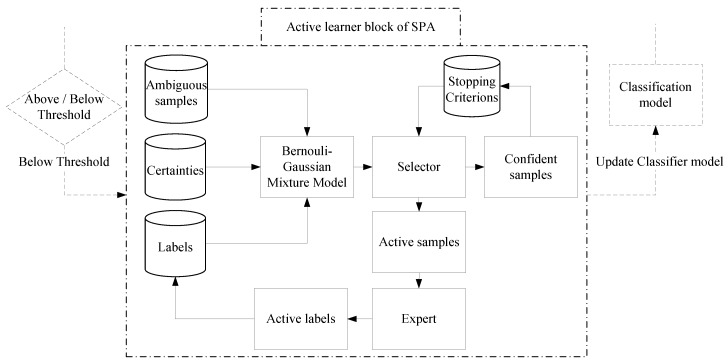
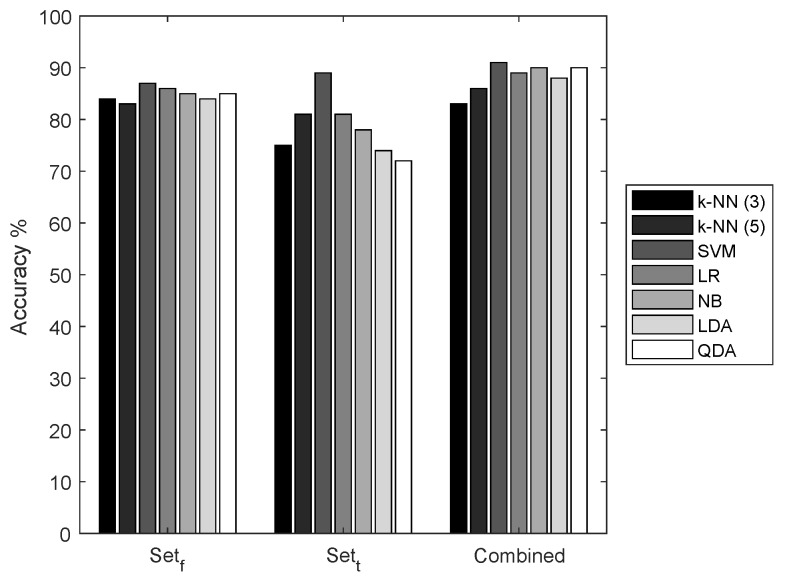
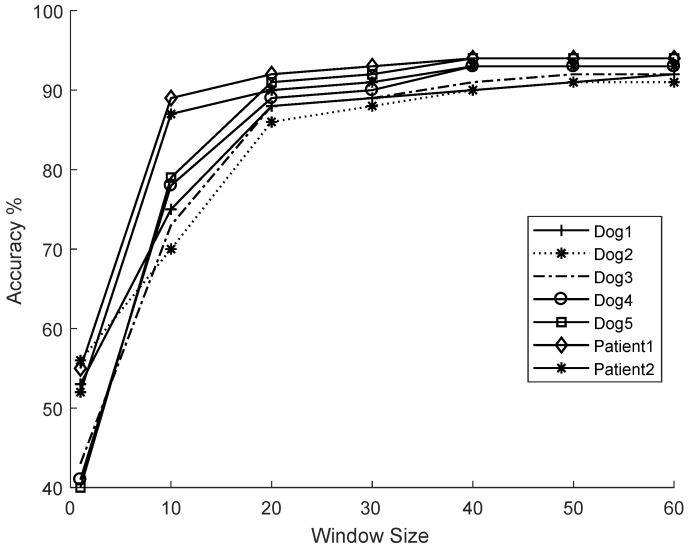
In the last decade, seizure prediction systems have gained a lot of attention because of their enormous potential to largely improve the quality-of-life of the epileptic patients. The accuracy of the prediction algorithms to detect seizure in real-world applications is largely limited because the brain signals are inherently uncertain and affected by various factors, such as environment, age, drug intake, etc., in addition to the internal artefacts that occur during the process of recording the brain signals. To deal with such ambiguity, researchers transitionally use active learning, which selects the ambiguous data to be annotated by an expert and updates the classification model dynamically. However, selecting the particular data from a pool of large ambiguous datasets to be labelled by an expert is still a challenging problem. In this paper, we propose an active learning-based prediction framework that aims to improve the accuracy of the prediction with a minimum number of labelled data. The core technique of our framework is employing the Bernoulli-Gaussian Mixture model (BGMM) to determine the feature samples that have the most ambiguity to be annotated by an expert. By doing so, our approach facilitates expert intervention as well as increasing medical reliability. We evaluate seven different classifiers in terms of the classification time and memory required. An active learning framework built on top of the best performing classifier is evaluated in terms of required annotation effort to achieve a high level of prediction accuracy. The results show that our approach can achieve the same accuracy as a Support Vector Machine (SVM) classifier using only 20 % of the labelled data and also improve the prediction accuracy even under the noisy condition.
在过去的十年中,由于其在很大程度上提高癫痫患者生活质量的巨大潜力,癫痫发作预测系统引起了广泛关注。由于大脑信号本质上是不确定的,并且受到各种因素的影响,例如环境、年龄、药物摄入等,除了在记录大脑信号过程中发生的内部伪影之外,预测算法在实际应用中检测癫痫发作的准确性受到了很大限制。为了应对这种不确定性,研究人员过渡性地使用主动学习,该方法选择由专家注释的模糊数据,并动态更新分类模型。然而,从大量模糊数据集中选择特定数据由专家进行标注仍然是一个具有挑战性的问题。在本文中,我们提出了一种基于主动学习的预测框架,旨在用最少数量的标注数据提高预测的准确性。我们的框架的核心技术是使用伯努利-高斯混合模型(BGMM)来确定最具模糊性的特征样本,以便由专家进行注释。通过这种方式,我们的方法既方便了专家干预,又提高了医疗可靠性。我们根据分类时间和所需的内存评估了七种不同的分类器。根据所需的注释工作量,在性能最佳的分类器之上构建一个主动学习框架,以达到高水平的预测准确性。结果表明,我们的方法仅使用 20%的标注数据即可达到与支持向量机(SVM)分类器相同的准确性,并且即使在嘈杂的条件下也可以提高预测准确性。