Evolution and Cancer Laboratory, Barts Cancer Institute, Queen Mary University of London, London, UK.
Department of Cell and Developmental Biology, University College London, London, UK.
Nat Genet. 2018 Jun;50(6):895-903. doi: 10.1038/s41588-018-0128-6. Epub 2018 May 28.
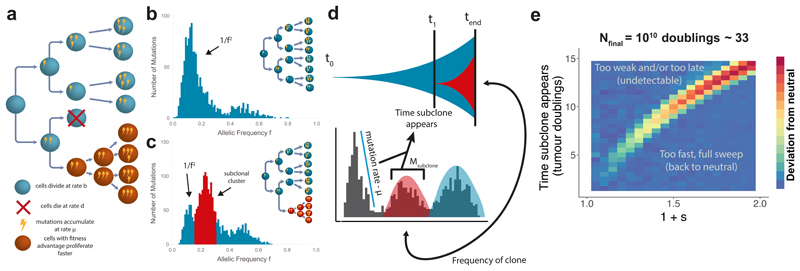
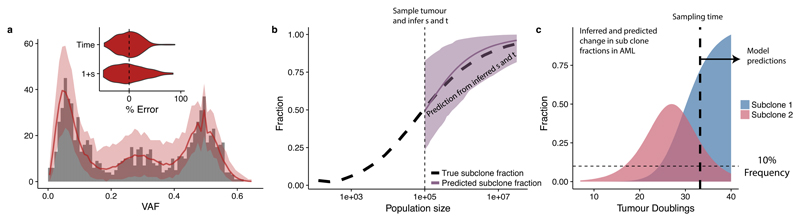
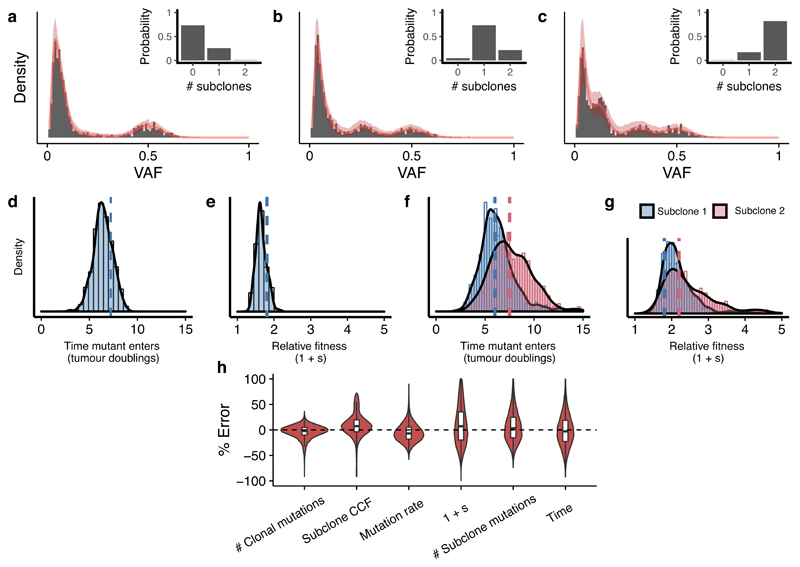
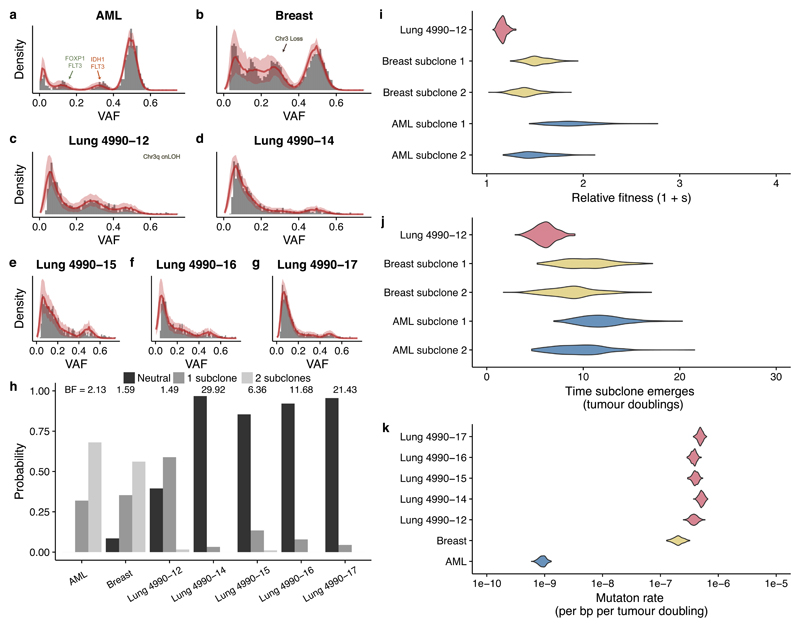
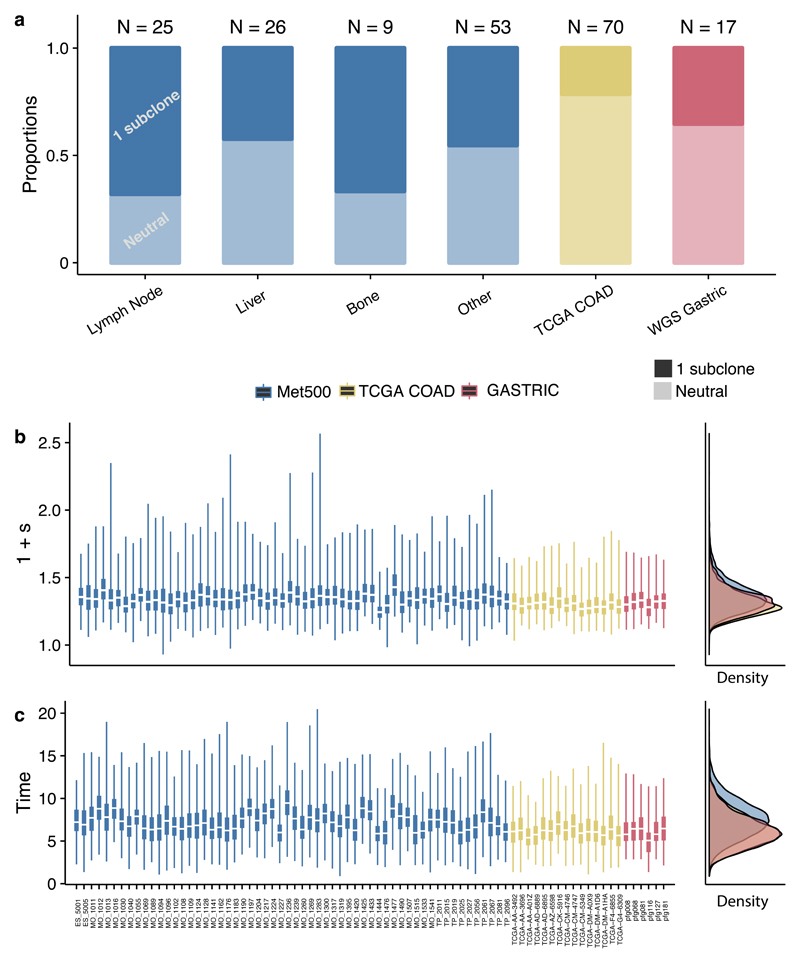
Subclonal architectures are prevalent across cancer types. However, the temporal evolutionary dynamics that produce tumor subclones remain unknown. Here we measure clone dynamics in human cancers by using computational modeling of subclonal selection and theoretical population genetics applied to high-throughput sequencing data. Our method determined the detectable subclonal architecture of tumor samples and simultaneously measured the selective advantage and time of appearance of each subclone. We demonstrate the accuracy of our approach and the extent to which evolutionary dynamics are recorded in the genome. Application of our method to high-depth sequencing data from breast, gastric, blood, colon and lung cancer samples, as well as metastatic deposits, showed that detectable subclones under selection, when present, consistently emerged early during tumor growth and had a large fitness advantage (>20%). Our quantitative framework provides new insight into the evolutionary trajectories of human cancers and facilitates predictive measurements in individual tumors from widely available sequencing data.
亚克隆结构在多种癌症中普遍存在。然而,产生肿瘤亚克隆的时间进化动态仍然未知。在这里,我们通过使用亚克隆选择的计算建模和应用于高通量测序数据的理论群体遗传学来测量人类癌症中的克隆动态。我们的方法确定了肿瘤样本的可检测亚克隆结构,同时测量了每个亚克隆的选择优势和出现时间。我们证明了我们方法的准确性以及进化动态在基因组中记录的程度。我们的方法应用于来自乳腺癌、胃癌、血液癌、结肠癌和肺癌样本以及转移沉积物的高深度测序数据表明,在存在可检测的选择亚克隆的情况下,它们始终在肿瘤生长早期出现,并且具有很大的适应度优势(>20%)。我们的定量框架为人类癌症的进化轨迹提供了新的见解,并从广泛可用的测序数据中为个体肿瘤提供了预测性测量。