Department of International Public Health, Liverpool School of Tropical Medicine, Liverpool, UK.
LVCT Health, Nairobi, Kenya.
Health Policy Plan. 2018 Jul 1;33(6):729-742. doi: 10.1093/heapol/czy043.
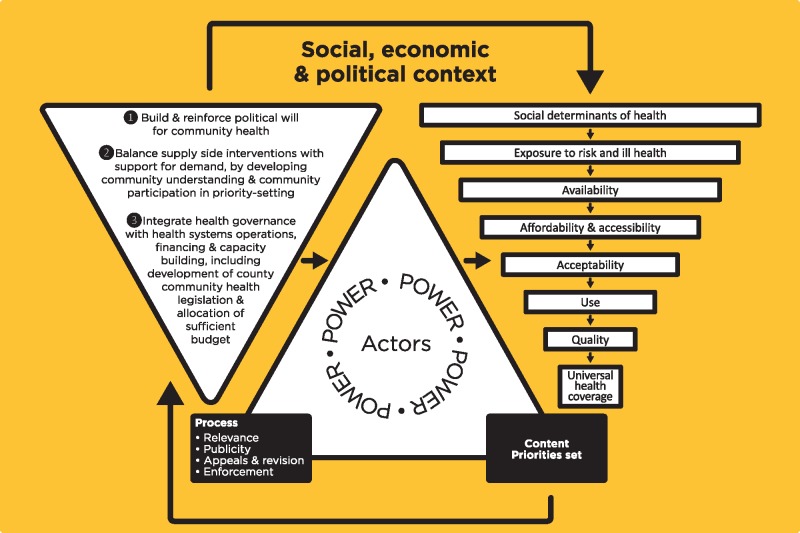
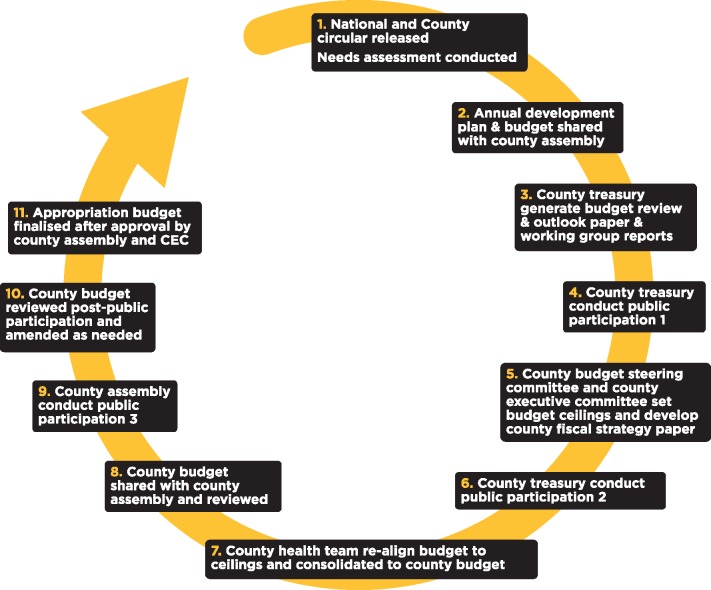
Devolution changes the locus of power within a country from central to sub-national levels. In 2013, Kenya devolved health and other services from central government to 47 new sub-national governments (known as counties). This transition seeks to strengthen democracy and accountability, increase community participation, improve efficiency and reduce inequities. With changing responsibilities and power following devolution reforms, comes the need for priority-setting at the new county level. Priority-setting arises as a consequence of the needs and demand for healthcare resources exceeding the resources available, resulting in the need for some means of choosing between competing demands. We sought to explore the impact of devolution on priority-setting for health equity and community health services. We conducted key informant and in-depth interviews with health policymakers, health providers and politicians from 10 counties (n = 269 individuals) and 14 focus group discussions with community members based in 2 counties (n = 146 individuals). Qualitative data were analysed using the framework approach. We found Kenya's devolution reforms were driven by the need to demonstrate responsiveness to county contexts, with positive ramifications for health equity in previously neglected counties. The rapidity of the process, however, combined with limited technical capacity and guidance has meant that decision-making and prioritization have been captured and distorted for political and power interests. Less visible community health services that focus on health promotion, disease prevention and referral have been neglected within the prioritization process in favour of more tangible curative health services. The rapid transition in power carries a degree of risk of not meeting stated objectives. As Kenya moves forward, decision-makers need to address the community health gap and lay down institutional structures, processes and norms which promote health equity for all Kenyans.
权力下放将一个国家的权力从中央转移到国家以下各级。2013 年,肯尼亚将卫生和其他服务从中央政府下放到 47 个新的国家以下各级政府(称为县)。这一转变旨在加强民主和问责制,增加社区参与,提高效率,减少不平等。随着权力下放改革带来的责任和权力的变化,需要在新的县级层面确定优先事项。优先事项的产生是由于对医疗资源的需求和需求超过了可用资源,因此需要通过某种方式在竞争需求之间进行选择。我们试图探讨权力下放对卫生公平和社区卫生服务的优先事项设定的影响。我们对来自 10 个县的卫生政策制定者、卫生提供者和政治家(n=269 人)进行了关键人物访谈和深入访谈,并在 2 个县对社区成员进行了 14 次焦点小组讨论(n=146 人)。使用框架方法对定性数据进行了分析。我们发现,肯尼亚的权力下放改革是为了满足对县情的回应需求,这对以前被忽视的县的卫生公平产生了积极影响。然而,该过程的迅速性,加上有限的技术能力和指导,意味着决策和优先排序已经被政治和权力利益所捕获和扭曲。在优先排序过程中,关注健康促进、疾病预防和转诊的不太可见的社区卫生服务被忽视,而更有形的治疗性卫生服务则受到青睐。权力的迅速过渡带来了一定程度的未能实现既定目标的风险。随着肯尼亚的前进,决策者需要解决社区卫生差距,并制定机构结构、程序和规范,促进所有肯尼亚人的卫生公平。