Department of Biochemistry and Biophysics, Oregon State University, 2011 Agriculture and Life Sciences Building, Corvallis, OR 97331, USA.
Oxid Med Cell Longev. 2018 Apr 23;2018:7607463. doi: 10.1155/2018/7607463. eCollection 2018.
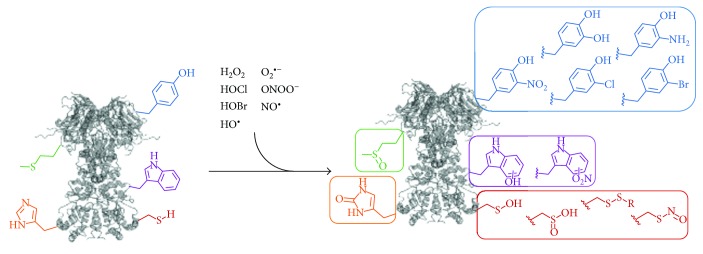
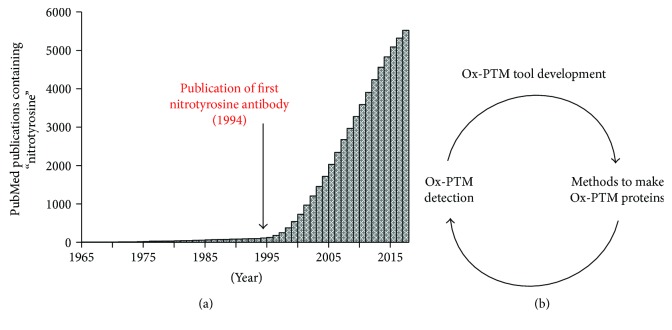
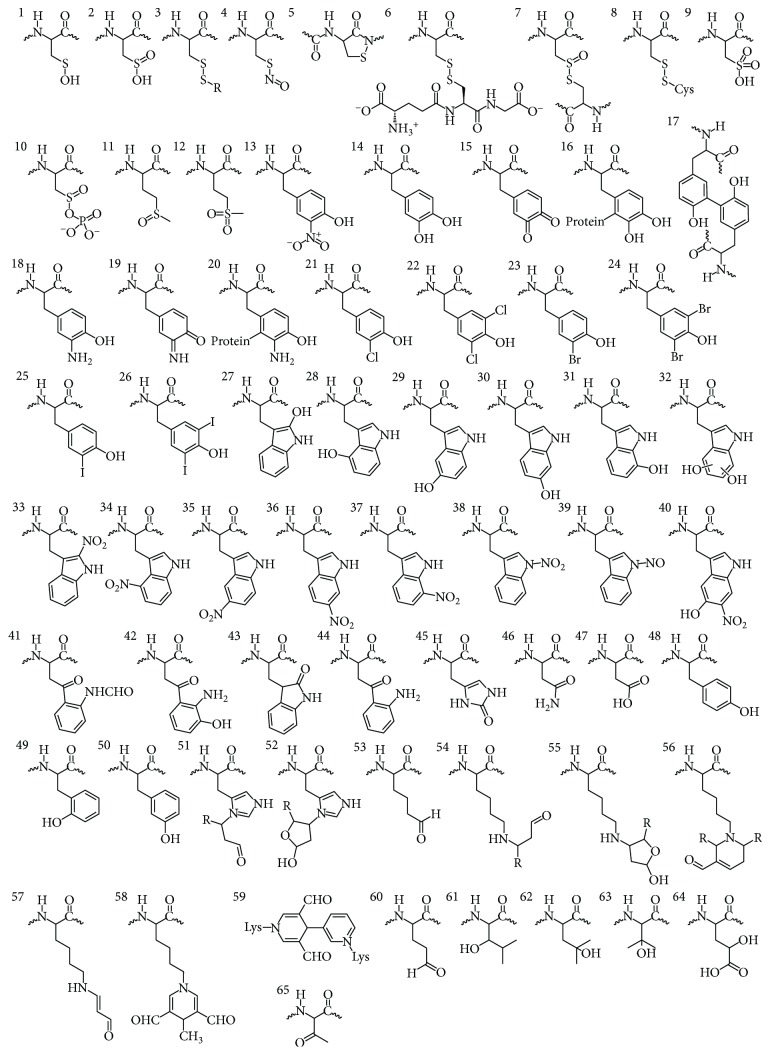
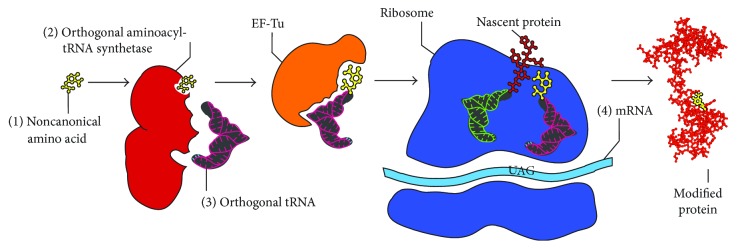
Posttranslational modifications resulting from oxidation of proteins (Ox-PTMs) are present intracellularly under conditions of oxidative stress as well as basal conditions. In the past, these modifications were thought to be generic protein damage, but it has become increasingly clear that Ox-PTMs can have specific physiological effects. It is an arduous task to distinguish between the two cases, as multiple Ox-PTMs occur simultaneously on the same protein, convoluting analysis. Genetic code expansion (GCE) has emerged as a powerful tool to overcome this challenge as it allows for the site-specific incorporation of an Ox-PTM into translated protein. The resulting homogeneously modified protein products can then be rigorously characterized for the effects of individual Ox-PTMs. We outline the strengths and weaknesses of GCE as they relate to the field of oxidative stress and Ox-PTMs. An overview of the Ox-PTMs that have been genetically encoded and applications of GCE to the study of Ox-PTMs, including antibody validation and therapeutic development, is described.
氧化应激条件下和基础条件下,蛋白质氧化后的翻译后修饰(Ox-PTMs)存在于细胞内。过去,这些修饰被认为是通用的蛋白质损伤,但越来越清楚的是,Ox-PTMs 可以具有特定的生理效应。由于同一蛋白质上同时发生多种 Ox-PTM,使得区分这两种情况变得非常困难,分析也变得复杂。遗传密码扩展(GCE)的出现为克服这一挑战提供了一种强大的工具,因为它允许在翻译的蛋白质中特异性地掺入 Ox-PTM。然后,可以对产生的均一修饰的蛋白质产物进行严格的特征分析,以研究单个 Ox-PTM 的影响。我们概述了 GCE 与氧化应激和 Ox-PTM 领域相关的优缺点。概述了已被遗传编码的 Ox-PTM 以及 GCE 在 Ox-PTM 研究中的应用,包括抗体验证和治疗开发。