Sejdini Milaim, Meqa Kastriot, Berisha Nora, Çitaku Ekrem, Aliu Nora, Krasniqi Sokol, Salihu Sami
Department of Orthodontics, Faculty of Medicine, University of Prishtina, Prishtina, Kosovo.
Department of Periodontology and Oral Medicine, Faculty of Medicine, University of Prishtina, Prishtina, Kosovo.
Int J Dent. 2018 May 8;2018:2759040. doi: 10.1155/2018/2759040. eCollection 2018.
Saliva is a watery product formed by the salivary glands and secreted in the mouth. Besides the fundamental factors, saliva with its ingredient is one of the main etiologic factors of caries presence. In the development of dental caries, the relationship between demineralization and remineralization is influenced by the presence of saliva, which facilitates the transportation of ions, oral bacteria, and fermentable carbohydrates to the exposed surfaces of teeth. The main components of saliva electrolytes are sodium, calcium, copper, magnesium, bicarbonates, and organic phosphates. Increase in calcium level in the remineralization solution may enhance the deposition velocity of minerals in the caries lesion. Magnesium, except the similar role as calcium, takes an active part in cellular reparation process.
In this study were included students of age 12-13. Students were divided into three groups; the first group included caries-free children, the second group with DMF = 1-6, and the third group with DMF > 6. Fully stimulated and nonstimulated saliva was collected in sterile graded patches in the morning hours, due to the circadian rhythm in 5-minute length. Chemical analyzes have been conducted at the Faculty of Chemistry, Ss. Cyril and Methodius University in Skopje. Statistical processing has been performed at the Medical Faculty, at the Institute of Medical Statistics in Skopje.
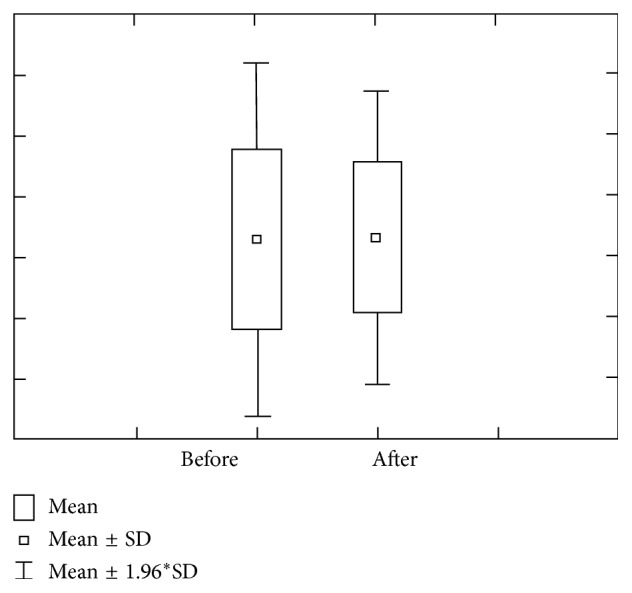
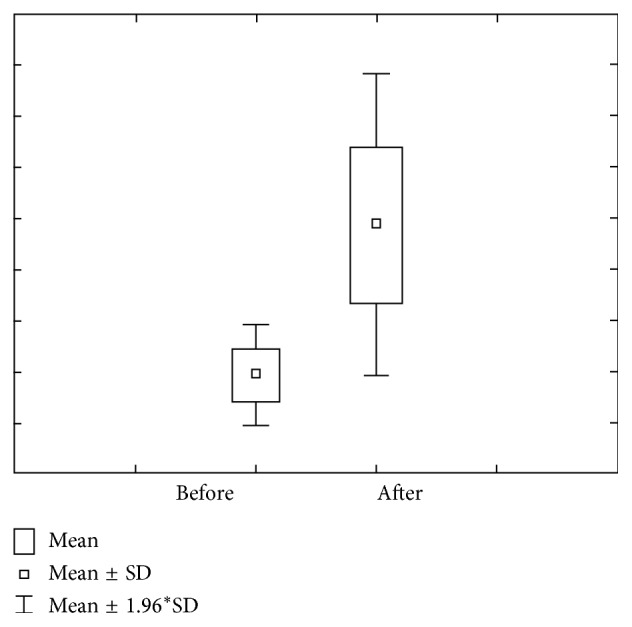
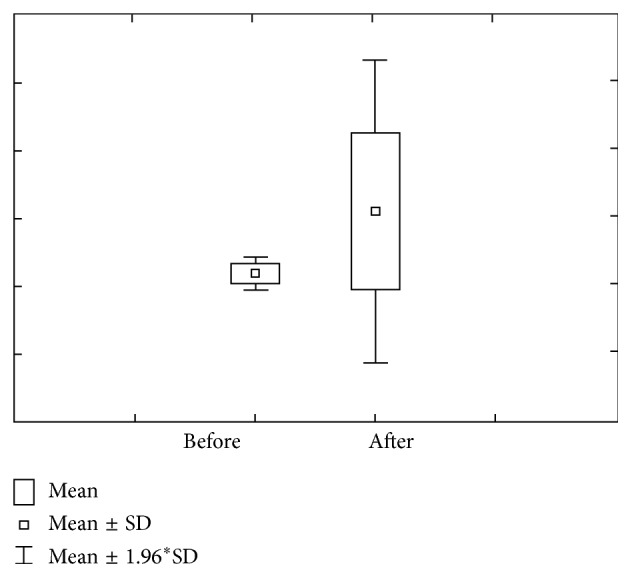
Depending on the DMF, before and after stimulation, regarding Ca level, no significant differences were found. However, the Ca level prior to stimulation is significantly higher in the second group compared to the third one. Also, the amount of Ca after stimulation in the first group was significantly higher. No significant differences in Mg level and amount were found prior to and after stimulation, while the amount of Mg after stimulation had a significant difference between groups.
Saliva mineral analysis has shown significant differences in quantitative and qualitative components between examining groups. The decrease of calcium molality in saliva might play a significant role in caries occurrence; thus, we may suppose that saliva calcium level significantly influences hard dental tissues defense mechanism. Magnesium levels after stimulation showed a significant difference between groups I and III and no significant differences between groups I and II. Magnesium level and amount correlate with calcium level, favoring elemental caries resistance.
唾液是由唾液腺形成并分泌至口腔的一种水性物质。除了一些基本因素外,唾液及其成分是龋齿发生的主要病因之一。在龋齿的发展过程中,脱矿与再矿化之间的关系受唾液的影响,唾液有助于离子、口腔细菌和可发酵碳水化合物向牙齿暴露表面的运输。唾液电解质的主要成分是钠、钙、铜、镁、碳酸氢盐和有机磷酸盐。再矿化溶液中钙水平的增加可能会提高矿物质在龋损中的沉积速度。镁除了具有与钙类似的作用外,还积极参与细胞修复过程。
本研究纳入了12至13岁的学生。学生被分为三组;第一组为无龋儿童,第二组的龋失补牙面数(DMF)为1 - 6,第三组的DMF大于6。由于昼夜节律,在早晨时段每隔5分钟,用无菌分级贴片收集完全刺激唾液和非刺激唾液。化学分析在斯科普里的圣西里尔和美多德乌斯大学化学系进行。统计处理在斯科普里医学院医学统计研究所进行。
根据DMF,在刺激前后,关于钙水平,未发现显著差异。然而,与第三组相比,第二组刺激前的钙水平显著更高。此外,第一组刺激后的钙含量显著更高。刺激前后镁水平和含量均未发现显著差异,而刺激后镁的含量在组间存在显著差异。
唾液矿物质分析显示,各检查组在定量和定性成分上存在显著差异。唾液中钙摩尔浓度的降低可能在龋齿发生中起重要作用;因此,我们可以推测唾液钙水平显著影响牙齿硬组织的防御机制。刺激后镁水平在第一组和第三组之间存在显著差异,在第一组和第二组之间无显著差异。镁水平和含量与钙水平相关,有利于增强对龋齿的抵抗力。