Mohammed Warhel Asim, Pappous Athanasios, Sharma Dinkar
School of Sport and Exercise Sciences, University of Kent, Canterbury, United Kingdom.
School of Psychology, University of Kent, Canterbury, United Kingdom.
Front Psychol. 2018 May 15;9:722. doi: 10.3389/fpsyg.2018.00722. eCollection 2018.
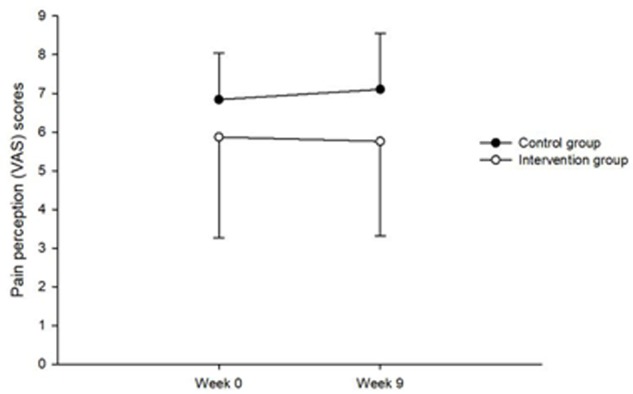
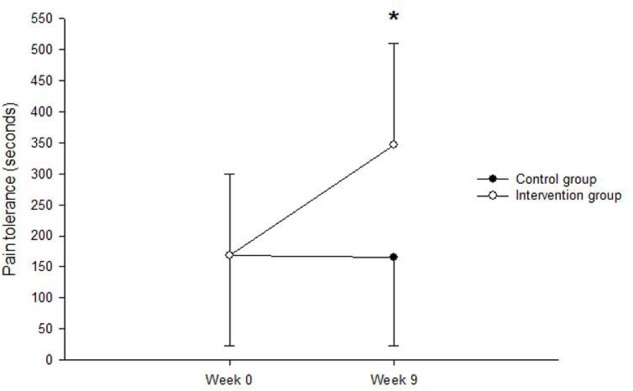
Literature indicates that injured athletes face both physical and psychological distress after they have been injured. In this study, a Mindfulness Based Stress Reduction (MBSR) was utilised as an intervention for use during the period of recovery with injured athletes and, to the best of our knowledge, this is the first study using MBSR as an intervention for this purpose. The aim of this research was to investigate the role of MBSR practise in reducing the perception of pain and decreasing anxiety/stress, as well as increasing pain tolerance and mindfulness. An additional aim was to increase positive mood and decrease negative mood in injured athletes. The participants comprised of twenty athletes (male = 14; female = 6; age range = 21-36 years) who had severe injuries, preventing their participation in sport for more than 3 months. Prior to their injury, the participants had trained regularly with their University teams and participated in official university championships. Both groups followed their normal physiotherapy treatment, but in addition, the intervention group practised mindfulness meditation for 8 weeks (one 90-min session/week). A Cold Pressor Test (CPT) was used to assess pain tolerance. In contrast, the perception of pain was measured using a Visual Analogue Scale. Other measurements used were the Mindful Attention Awareness Scale (MAAS), Depression Anxiety and Stress Scale (DASS), and Profile of Mood States (POMS). Our results demonstrated an increase in pain tolerance for the intervention group and an increase in mindful awareness for injured athletes. Moreover, our findings observed a promising change in positive mood for both groups. Regarding the Stress/Anxiety scores, our findings showed a notable decrease across sessions; however, no significant changes were observed in other main and interaction effects in both groups. Injured athletes can benefit from using mindfulness as part of the sport rehabilitation process to increase their pain tolerance and awareness. Further research is required to assess whether increasing pain tolerance could help in the therapeutic process.
文献表明,受伤运动员在受伤后面临身体和心理上的困扰。在本研究中,基于正念减压疗法(MBSR)被用作受伤运动员康复期间的一种干预措施,据我们所知,这是第一项将MBSR用作此目的干预措施的研究。本研究的目的是调查MBSR练习在减轻疼痛感知、降低焦虑/压力以及提高疼痛耐受性和正念方面的作用。另一个目的是提高受伤运动员的积极情绪并降低消极情绪。参与者包括20名运动员(男性14名;女性6名;年龄范围21 - 36岁),他们受了重伤,无法参加运动超过3个月。在受伤之前,参与者定期与他们的大学团队一起训练,并参加大学官方锦标赛。两组都接受常规物理治疗,但此外,干预组进行了8周的正念冥想(每周一次90分钟课程)。使用冷加压试验(CPT)来评估疼痛耐受性。相比之下,使用视觉模拟量表来测量疼痛感知。使用的其他测量工具包括正念注意力觉知量表(MAAS)、抑郁焦虑压力量表(DASS)和情绪状态剖面图(POMS)。我们的结果表明,干预组的疼痛耐受性有所提高,受伤运动员的正念意识有所增强。此外,我们的研究结果观察到两组在积极情绪方面都有可喜的变化。关于压力/焦虑得分,我们的研究结果显示各阶段有显著下降;然而,两组在其他主要效应和交互效应方面未观察到显著变化。受伤运动员可以从将正念作为运动康复过程的一部分中受益,以提高他们的疼痛耐受性和意识。需要进一步研究来评估提高疼痛耐受性是否有助于治疗过程。