Sirota Benjamin, Glavin Nicholas, Krylyuk Sergiy, Davydov Albert V, Voevodin Andrey A
Department of Materials Science and Engineering, Advanced Materials and Manufacturing Processing Institute, University of North Texas, Denton, TX, 76203, USA.
Materials and Manufacturing Directorate, Air Force Research Laboratory, Wright-Patterson AFB, OH, 45433, USA.
Sci Rep. 2018 Jun 6;8(1):8668. doi: 10.1038/s41598-018-26751-4.
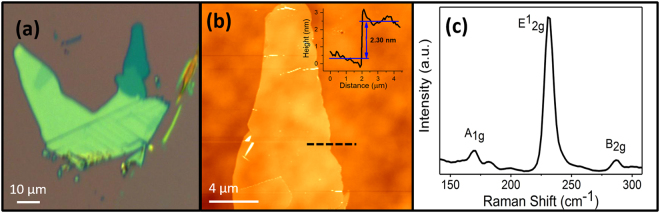
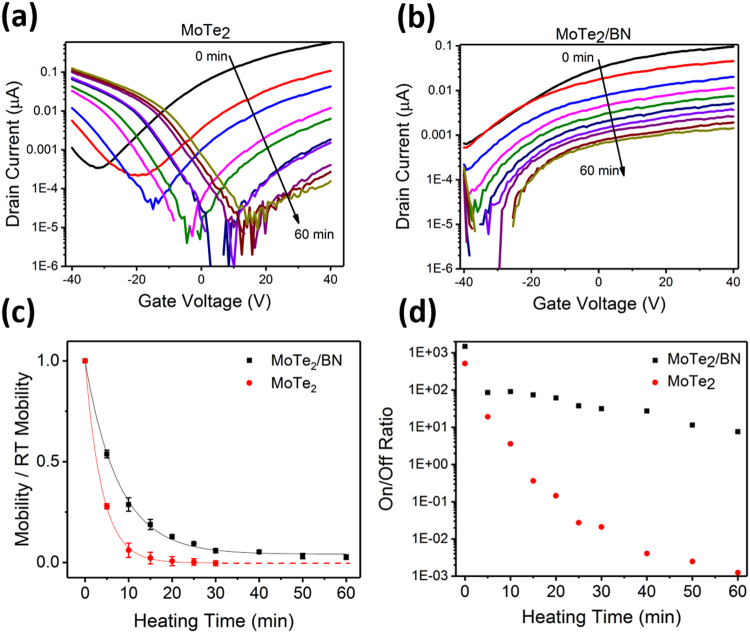
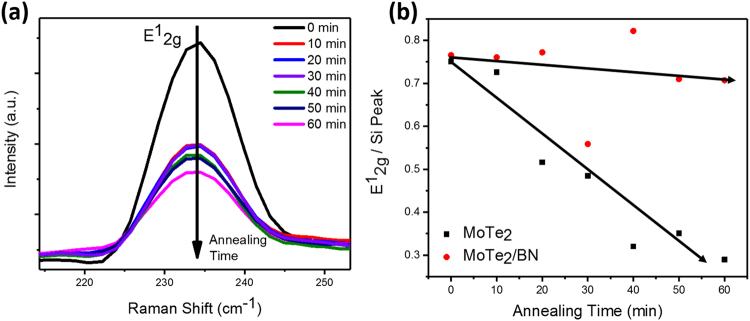
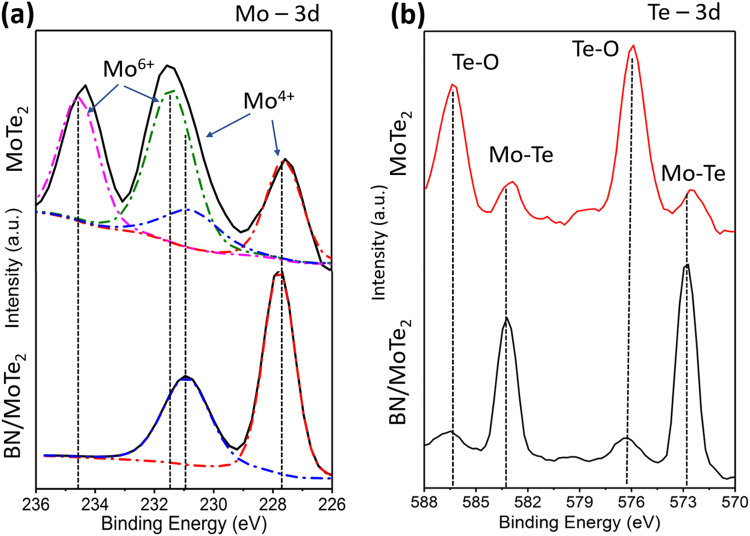
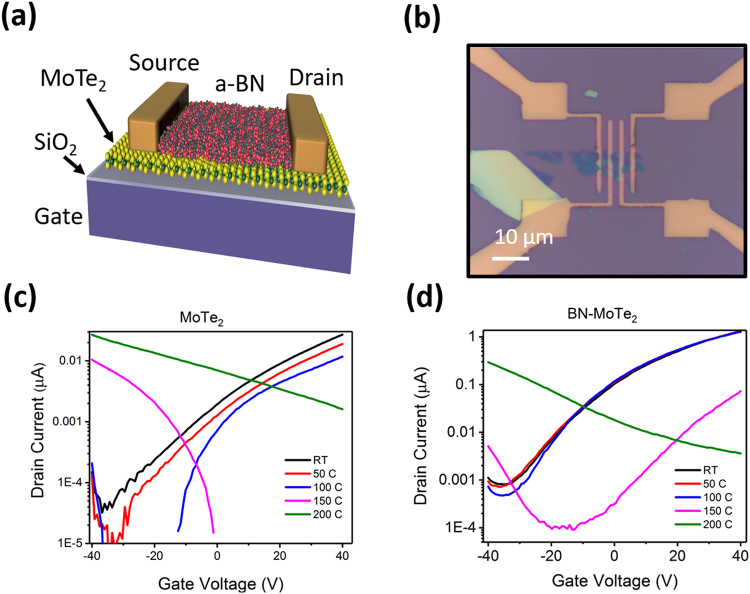
Environmental and thermal stability of two-dimensional (2D) transition metal dichalcogenides (TMDs) remains a fundamental challenge towards enabling robust electronic devices. Few-layer 2H-MoTe with an amorphous boron nitride (a-BN) covering layer was synthesized as a channel for back-gated field effect transistors (FET) and compared to uncovered MoTe. A systematic approach was taken to understand the effects of heat treatment in air on the performance of FET devices. Atmospheric oxygen was shown to negatively affect uncoated MoTe devices while BN-covered FETs showed considerably enhanced chemical and electronic characteristic stability. Uncapped MoTe FET devices, which were heated in air for one minute, showed a polarity switch from n- to p-type at 150 °C, while BN-MoTe devices switched only after 200 °C of heat treatment. Time-dependent experiments at 100 °C showed that uncapped MoTe samples exhibited the polarity switch after 15 min of heat treatment while the BN-capped device maintained its n-type conductivity for the maximum 60 min duration of the experiment. X-ray photoelectron spectroscopy (XPS) analysis suggests that oxygen incorporation into MoTe was the primary doping mechanism for the polarity switch. This work demonstrates the effectiveness of an a-BN capping layer in preserving few-layer MoTe material quality and controlling its conductivity type at elevated temperatures in an atmospheric environment.
二维(2D)过渡金属二硫属化物(TMDs)的环境稳定性和热稳定性仍然是实现稳健电子器件面临的一项基本挑战。合成了带有非晶态氮化硼(a-BN)覆盖层的少层2H-MoTe作为背栅场效应晶体管(FET)的沟道,并与未覆盖的MoTe进行比较。采用系统方法来了解空气中热处理对FET器件性能的影响。结果表明,大气中的氧气会对未涂层的MoTe器件产生负面影响,而覆盖BN的FET在化学和电子特性稳定性方面有显著增强。未封盖的MoTe FET器件在空气中加热一分钟后,在150°C时显示出从n型到p型的极性转变,而BN-MoTe器件在200°C热处理后才发生转变。在100°C下进行的时间相关实验表明,未封盖的MoTe样品在热处理15分钟后出现极性转变,而覆盖BN的器件在长达60分钟的实验中保持其n型导电性。X射线光电子能谱(XPS)分析表明,氧掺入MoTe是极性转变的主要掺杂机制。这项工作证明了a-BN覆盖层在大气环境中高温下保持少层MoTe材料质量和控制其导电类型方面的有效性。