inLAB-Inorganic Nanochemistry Laboratory, Dipartimento di Chimica, Università di Pavia, 27100 Pavia, Italy.
CHT, Centre for Health Technologies, Università di Pavia, 27100 Pavia, Italy.
Molecules. 2018 Jun 11;23(6):1414. doi: 10.3390/molecules23061414.
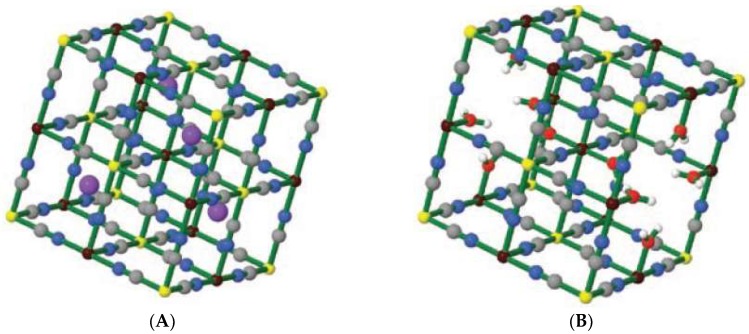
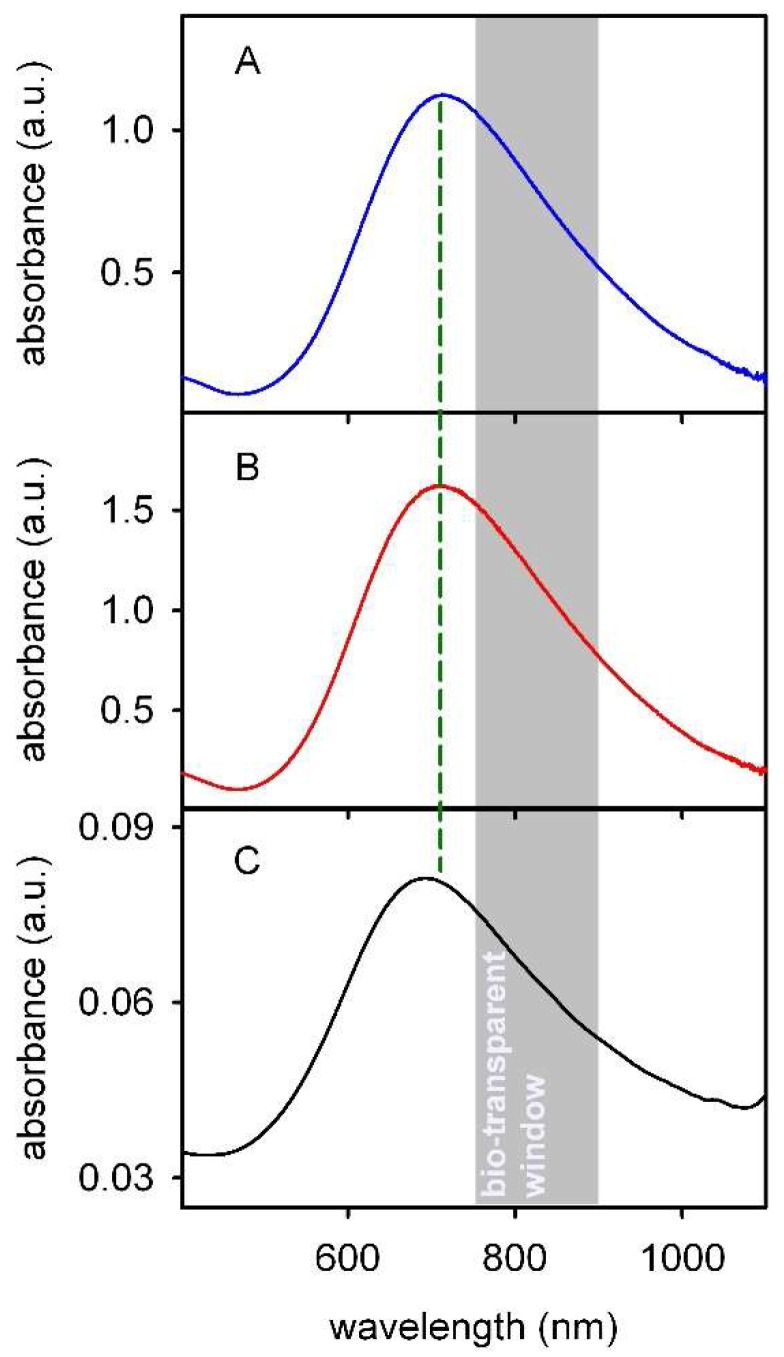
Prussian blue (PB) is a coordination polymer studied since the early 18th century, historically known as a pigment. PB can be prepared in colloidal form with a straightforward synthesis. It has a strong charge-transfer absorption centered at ~700 nm, with a large tail in the Near-IR range. Irradiation of this band results in thermal relaxation and can be exploited to generate a local hyperthermia by irradiating in the so-called bio-transparent Near-IR window. PB nanoparticles are fully biocompatible (PB has already been approved by FDA) and biodegradable, this making them ideal candidates for in vivo use. While papers based on the imaging, drug-delivery and absorbing properties of PB nanoparticles have appeared and have been reviewed in the past decades, a very recent interest is flourishing with the use of PB nanoparticles as photothermal agents in biomedical applications. This review summarizes the syntheses and the optical features of PB nanoparticles in relation to their photothermal use and describes the state of the art of PB nanoparticles as photothermal agents, also in combination with diagnostic techniques.
普鲁士蓝 (PB) 是一种自 18 世纪初就开始研究的配位聚合物,历史上曾被用作颜料。PB 可以通过简单的合成方法制备成胶体形式。它具有强烈的电荷转移吸收,中心位于~700nm,在近红外范围内有一个大的尾巴。辐照这个带会导致热弛豫,并可以通过在所谓的生物透明近红外窗口中辐照来产生局部过热。PB 纳米粒子具有完全的生物相容性(PB 已经被 FDA 批准)和可生物降解性,这使得它们成为体内应用的理想候选材料。虽然过去几十年已经有基于 PB 纳米粒子的成像、药物输送和吸收特性的论文出现并被综述过,但最近人们对 PB 纳米粒子作为光热剂在生物医学应用中的应用产生了浓厚的兴趣。这篇综述总结了 PB 纳米粒子的合成和光学特性,以及它们在光热应用中的应用,并描述了 PB 纳米粒子作为光热剂的最新进展,包括与诊断技术的结合。