Food Quality and Design Group, Department of Agrotechnology and Food Sciences, Wageningen University, Bornse Weilanden 9, 6708 WG, Wageningen, The Netherlands.
Mol Nutr Food Res. 2018 Sep;62(18):e1701069. doi: 10.1002/mnfr.201701069. Epub 2018 Jul 12.
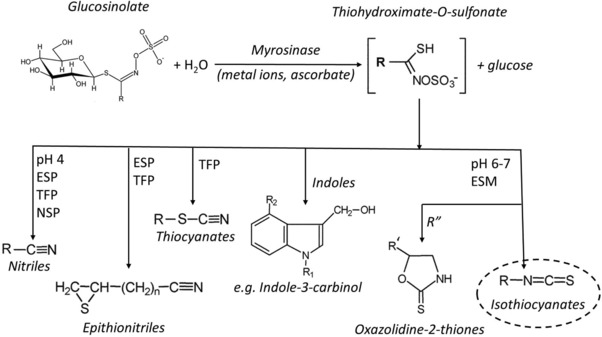
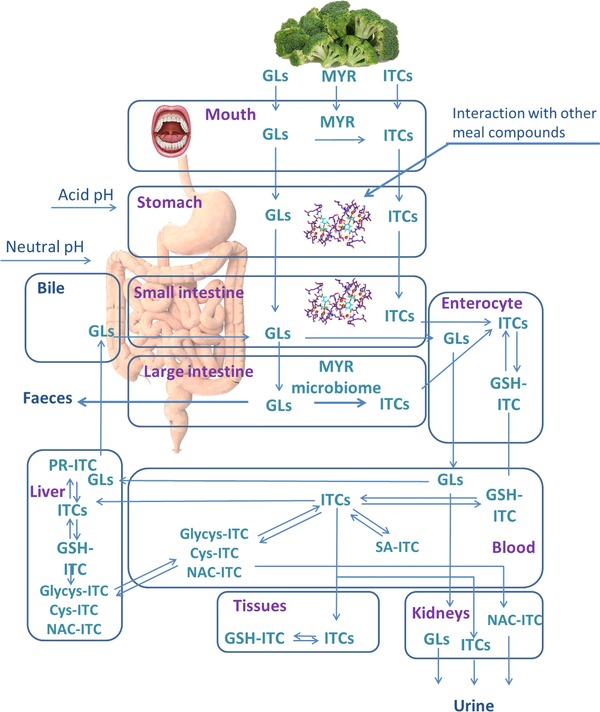
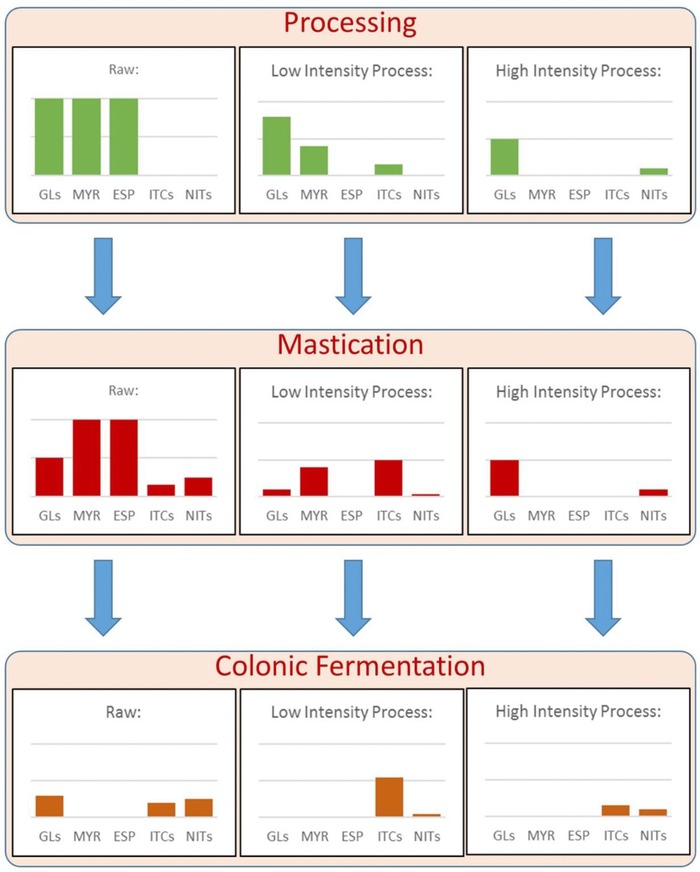
The formation of health-beneficial isothiocyanates (ITCs) from glucosinolates depends on a wide variety of plant-intrinsic factors (e.g., concentration of glucosinolates, activity of myrosinase, and specifier proteins) and on a multitude of extrinsic postharvest factors such as the conditions used during industrial processing, domestic preparation, mastication, and digestion. All of these factors contribute to a large variability in the formation of ITCs (and other breakdown products), as well as their intake and absorption upon consumption of Brassica vegetables. This uncertainty in ITC intake and absorption is a barrier for the determination of an optimal Brassica vegetable consumption pattern. In this review, the intrinsic and extrinsic factors that affect the formation, intake, and absorption of ITCs are described according to the most recent findings. The focus of this review includes the hydrolysis reaction mechanisms, the elucidation of the primary factors that play a role in the hydrolysis reaction, the influence of processing and cooking conditions, the effect of chewing, and the roles of the gastric and upper intestinal phases, including the effect of the meal composition (e.g., the effect of other meal compounds present during digestion) on the potential formation of ITCs.
十字花科蔬菜中的有益健康的异硫氰酸酯(ITC)的形成取决于多种植物内在因素(例如,硫代葡萄糖苷的浓度、黑芥子酶的活性和特异性蛋白)和多种采后外在因素,如工业加工、家庭准备、咀嚼和消化过程中使用的条件。所有这些因素都会导致 ITC(和其他分解产物)的形成以及在食用十字花科蔬菜时的摄入量和吸收存在很大的可变性。这种 ITC 摄入量和吸收的不确定性是确定最佳十字花科蔬菜消费模式的障碍。在这篇综述中,根据最新的发现,描述了影响 ITC 形成、摄入和吸收的内在和外在因素。本综述的重点包括水解反应机制、阐明在水解反应中起作用的主要因素、加工和烹饪条件的影响、咀嚼的影响以及胃和上肠相的作用,包括膳食组成(例如,在消化过程中存在的其他膳食化合物的影响)对潜在 ITC 形成的影响。