Key Laboratory for Major Obstetrics Diseases of Guangdong Province, Key Laboratory of Reproduction and Genetics of Guangdong Higher Education Institutes, The Third Hospital Affiliated of Guangzhou Medical University, Guangzhou, Guangdong 510150, P.R. China.
Mol Med Rep. 2018 Aug;18(2):1981-1986. doi: 10.3892/mmr.2018.9167. Epub 2018 Jun 14.
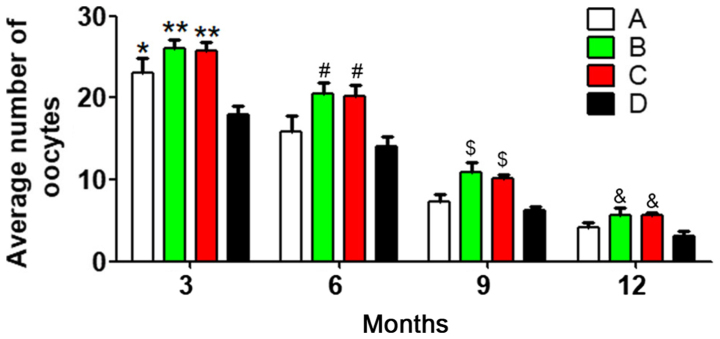
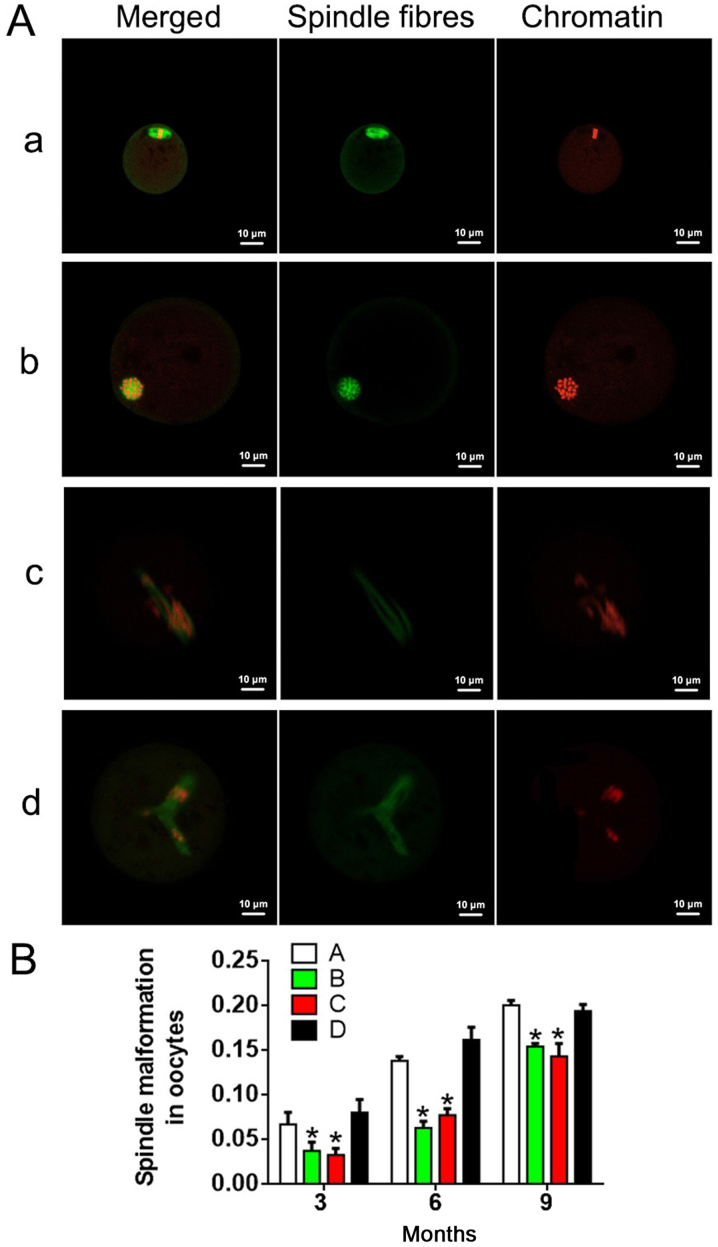
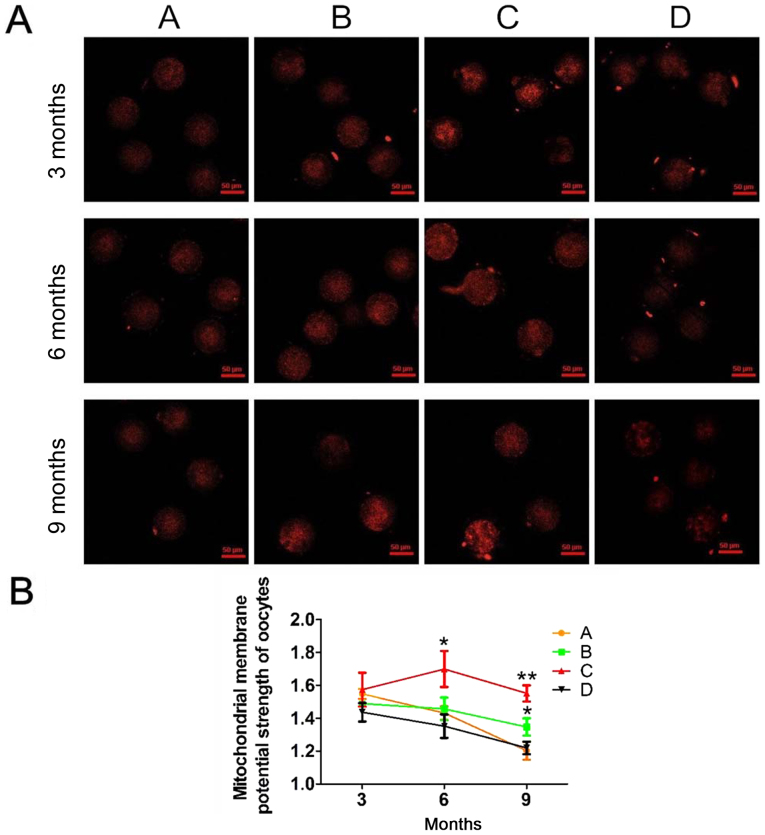
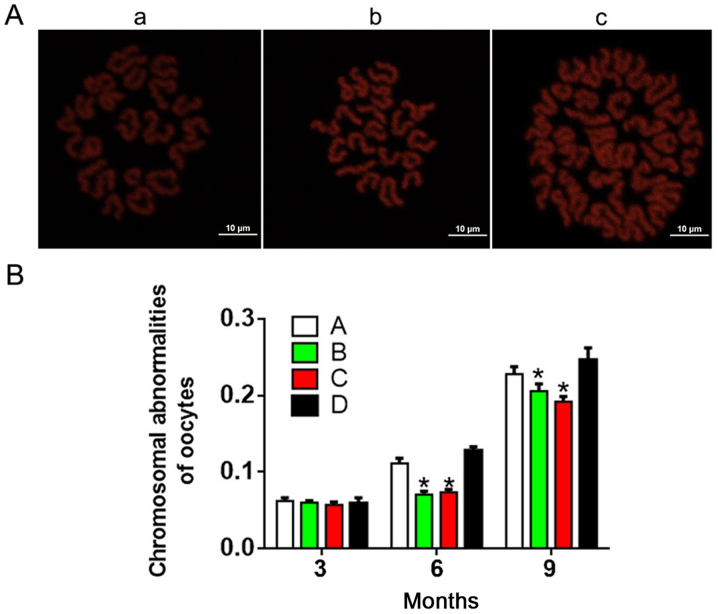
The aim of the present study was to verify the effects of heavy metal coupling agents (sodium citrate and EDTA) and antioxidants (acetyl carnitine and lipoic acid) on the number of oocytes, as well as the ageing of mitochondria, chromosomes and spindles in mice. C57BL/6 female mice were randomly classified into four groups (n=12 per group): i) Heavy metal coupling agent; ii) antioxidant; iii) mixed group; and iv) the normal control group. For the treatments, heavy metal coupling agents and antioxidants were added to the drinking water provided to the mice. Following 3, 6, 9 and 12 months of treatment, the number of oocytes and mitochondrial membrane potential were determined, and chromosome and spindle structures were observed. With increasing age, the experimental mice in the four groups showed significantly decreased numbers of oocytes, reduced mitochondrial activity, and increased rates of spindle and chromosome abnormalities, which indicated age‑induced ageing of mouse oocytes; thus, a mouse ageing oocyte model had been successfully established. For mice of the same age, more oocytes, higher mitochondrial activity, and lower spindle and chromosome malformation rates were detected in the antioxidant and mixed groups when compared with the normal control groups. Furthermore, no significant difference in the number of oocytes, mitochondrial activity or chromosome malformation rates was observed between the heavy metal coupling agent group and normal control group, which was possibly due to less metal being absorbed during the breeding process. Therefore, the results demonstrated that the antioxidants acetyl carnitine and lipoic acid may serve a role in delaying oocyte ageing.
本研究旨在验证重金属偶联剂(柠檬酸钠和 EDTA)和抗氧化剂(乙酰肉碱和硫辛酸)对卵母细胞数量以及线粒体、染色体和纺锤体老化的影响。将 C57BL/6 雌性小鼠随机分为四组(每组 n=12):i)重金属偶联剂;ii)抗氧化剂;iii)混合组;iv)正常对照组。对于处理,将重金属偶联剂和抗氧化剂添加到提供给小鼠的饮用水中。在治疗 3、6、9 和 12 个月后,测定卵母细胞数量和线粒体膜电位,并观察染色体和纺锤体结构。随着年龄的增长,四组实验小鼠的卵母细胞数量明显减少,线粒体活性降低,纺锤体和染色体异常率增加,表明卵母细胞的年龄相关性老化;因此,成功建立了一种小鼠老化卵母细胞模型。对于同龄的小鼠,抗氧化剂和混合组的卵母细胞数量更多,线粒体活性更高,纺锤体和染色体畸形率更低,与正常对照组相比。此外,重金属偶联剂组与正常对照组之间卵母细胞数量、线粒体活性或染色体畸形率无显著差异,这可能是由于在繁殖过程中吸收的金属较少。因此,研究结果表明,抗氧化剂乙酰肉碱和硫辛酸可能在延缓卵母细胞衰老方面发挥作用。