From the Department of Molecular and Clinical Medicine, Wallenberg Laboratory, Sahlgrenska University Hospital, University of Gothenburg, Sweden (A.L.J., R.C., R.A., C.R., F.F.H., J.B., F.B.).
Novo Nordisk Foundation Center for Basic Metabolic Research, Section for Metabolic Receptology and Enteroendocrinology, University of Copenhagen, Denmark (F.B.).
Arterioscler Thromb Vasc Biol. 2018 Oct;38(10):2318-2326. doi: 10.1161/ATVBAHA.118.311233.
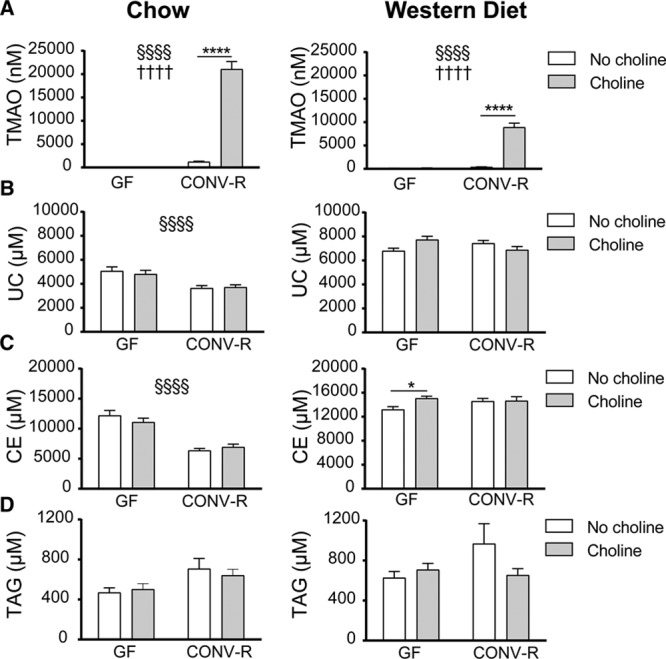
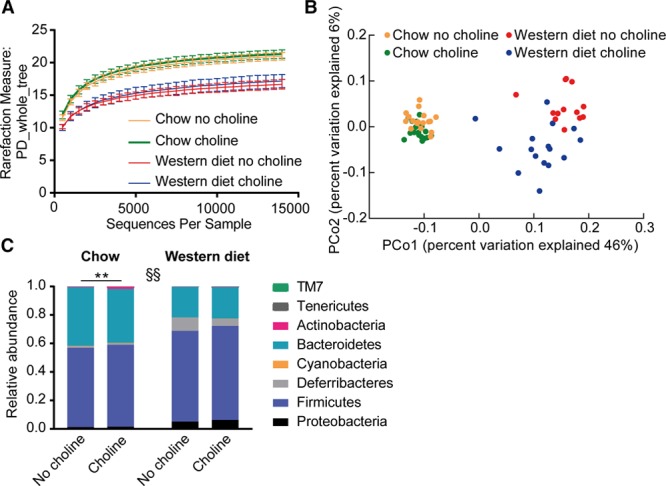
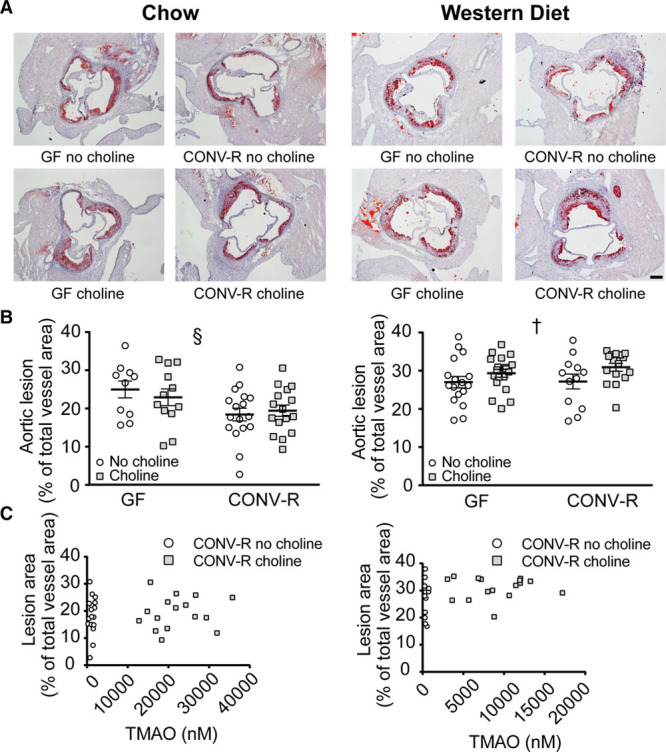
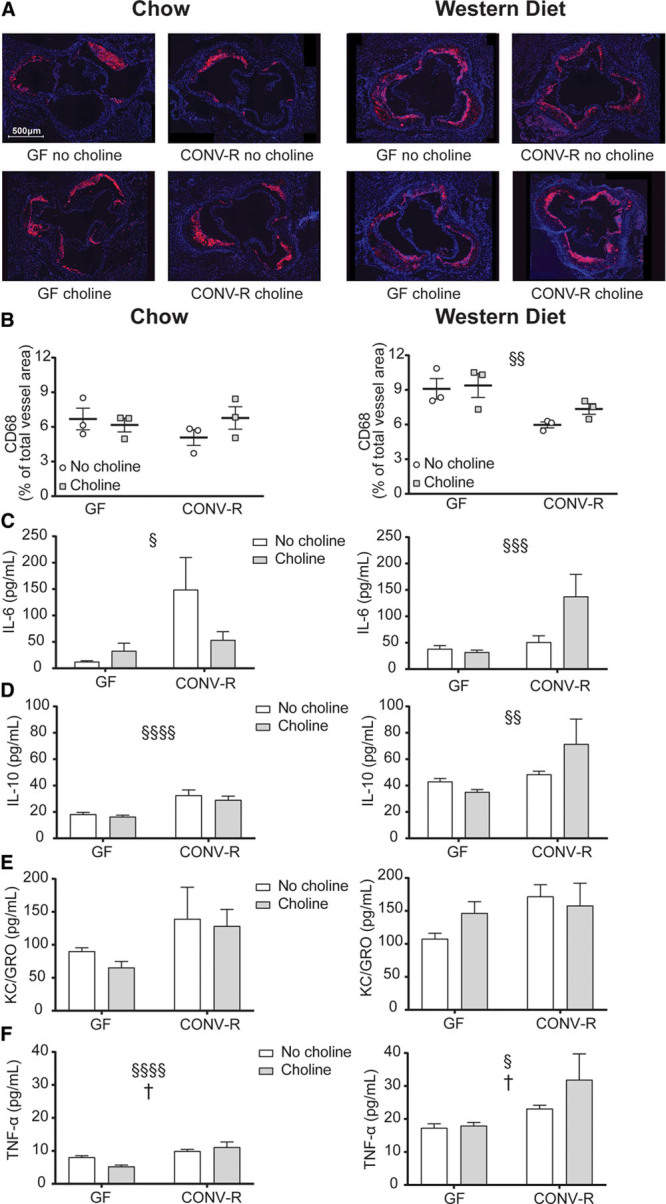
Objective- To investigate the effect of gut microbiota and diet on atherogenesis. Approach and Results- Here, we investigated the interaction between the gut microbiota and diet on atherosclerosis by feeding germ-free or conventionally raised Apoe mice chow or Western diet alone or supplemented with choline (which is metabolized by the gut microbiota and host enzymes to trimethylamine N-oxide) for 12 weeks. We observed smaller aortic lesions and lower plasma cholesterol levels in conventionally raised mice compared with germ-free mice on a chow diet; these differences were not observed in mice on a Western diet. Choline supplementation increased plasma trimethylamine N-oxide levels in conventionally raised mice but not in germ-free mice. However, this treatment did not affect the size of aortic lesions or plasma cholesterol levels. Gut microbiota composition was analyzed by sequencing of 16S rRNA genes. As expected, the global community structure and relative abundance of many taxa differed between mice fed chow or a Western diet. Choline supplementation had minor effects on the community structure although the relative abundance of some taxa belonging to Clostridiales was altered. Conclusions- In conclusion, the impact of the gut microbiota on atherosclerosis is dietary dependent and is associated with plasma cholesterol levels. Furthermore, the microbiota was required for trimethylamine N-oxide production from dietary choline, but this process could not be linked to increased atherosclerosis in this model.
目的-研究肠道微生物群和饮食对动脉粥样硬化形成的影响。
方法和结果-在这里,我们通过单独用无特定病原体(germ-free)或常规饲养(conventionally raised)的 Apoe 小鼠喂养标准饲料或西方饮食(Western diet),或用补充胆碱(choline,由肠道微生物群和宿主酶代谢为三甲胺 N-氧化物(trimethylamine N-oxide))的方法,研究了肠道微生物群和饮食对动脉粥样硬化的相互作用,持续 12 周。我们观察到,与标准饲料喂养的无特定病原体小鼠相比,常规饲养的小鼠主动脉病变较小,血浆胆固醇水平较低;而在西方饮食喂养的小鼠中则没有观察到这些差异。胆碱补充增加了常规饲养小鼠的血浆三甲胺 N-氧化物水平,但对无特定病原体小鼠没有影响。然而,这种处理方法并没有影响主动脉病变的大小或血浆胆固醇水平。通过 16S rRNA 基因测序分析了肠道微生物群的组成。正如预期的那样,与标准饲料或西方饮食相比,喂食 Chow 或 Western 饮食的小鼠的全球群落结构和许多分类群的相对丰度存在差异。胆碱补充对群落结构的影响较小,尽管属于梭状芽孢杆菌(Clostridiales)的某些分类群的相对丰度发生了改变。
结论-总之,肠道微生物群对动脉粥样硬化的影响取决于饮食,并与血浆胆固醇水平有关。此外,微生物群是膳食胆碱产生三甲胺 N-氧化物所必需的,但在这个模型中,这一过程与动脉粥样硬化的增加无关。