Tian Wende, Zhang Tai, Wang Xinyi, Zhang Jie, Ju Jianqing, Xu Hao
Xiyuan Hospital, China Academy of Chinese Medical Sciences, 100091 Beijing, China.
Graduate School, China Academy of Chinese Medical Sciences, 100700 Beijing, China.
Rev Cardiovasc Med. 2022 Sep 14;23(9):317. doi: 10.31083/j.rcm2309317. eCollection 2022 Sep.
The atherosclerotic cardiovascular disease (ASCVD) is a major killer and health care burden worldwide. Atherosclerosis, the common pathological foundation, has been associated with inflammation over the past few years. Some promising results also have emerged suggesting the role of targeting inflammation as a potential therapeutic option to reduce cardiovascular events. In light of the pathogenic role that inflammation plays in ASCVD, we propose to evaluate the worldwide research architecture for ASCVD and inflammation using bibliometric analysis.
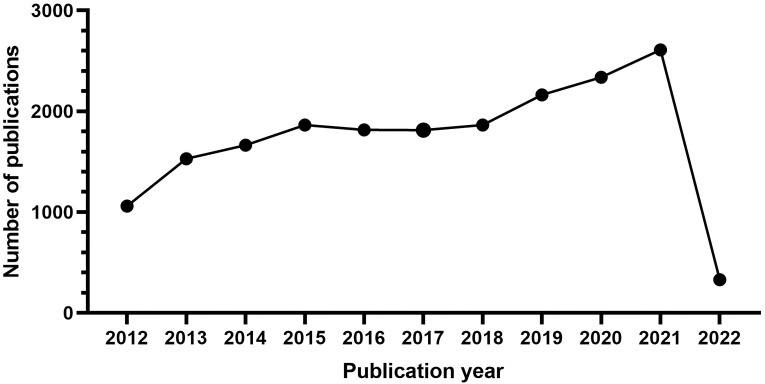
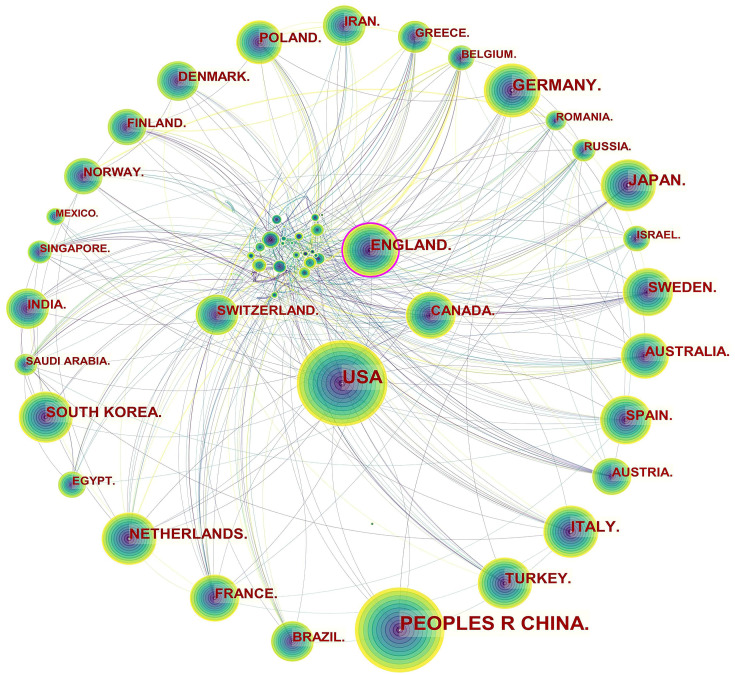
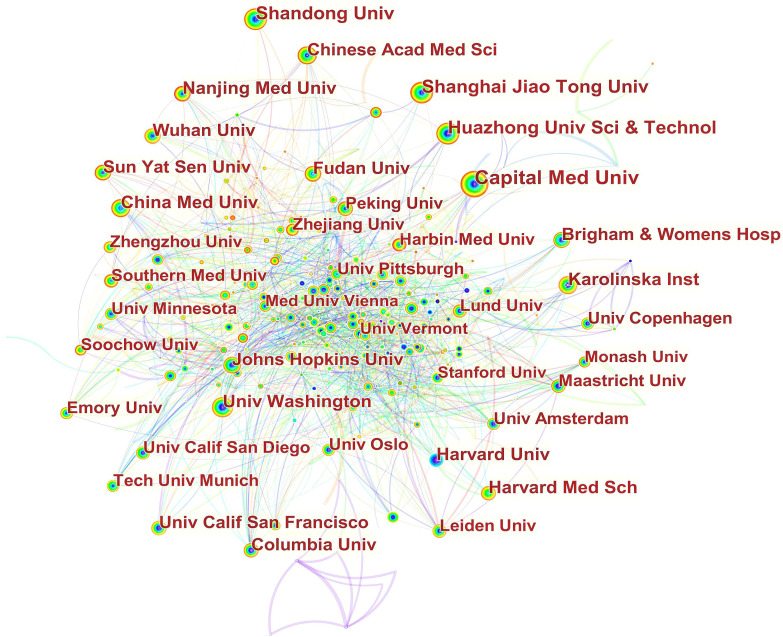
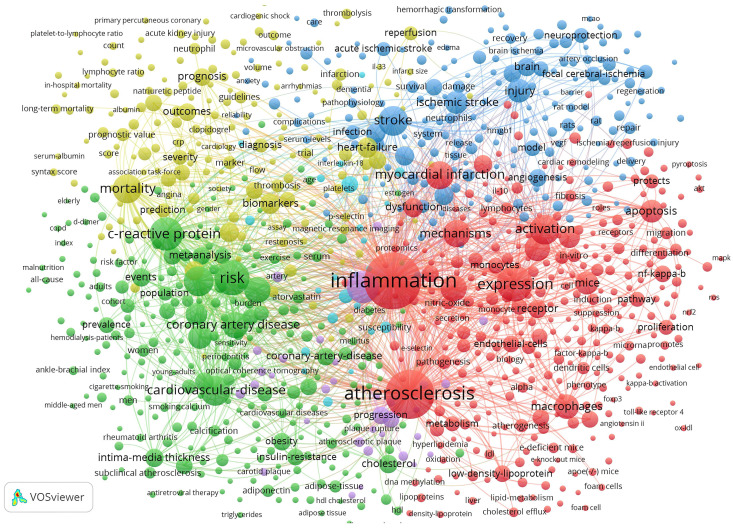
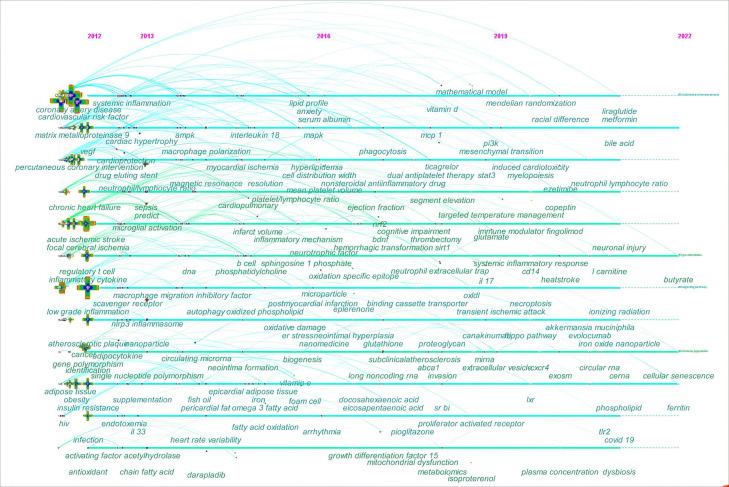
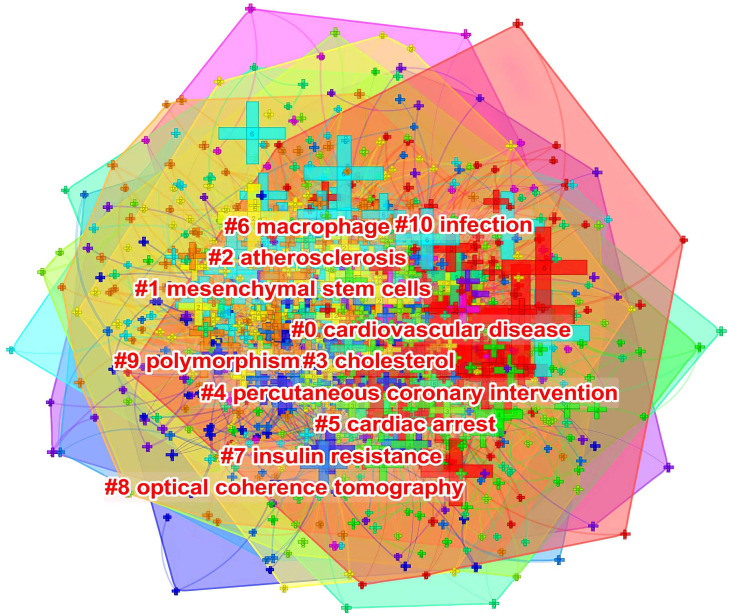
A search of the Web of Science Core Collection of Clarivate Analytics was performed for articles in the field published between 2012 and 2022. The number of publications per year has been visualized using GraphPad Prism through time. CiteSpace and VOSviewer were used to generate knowledge maps about the collaboration of countries, institutions, and authors, and to represent the landscape on ASCVD and inflammation research as well as to reveal current foci.
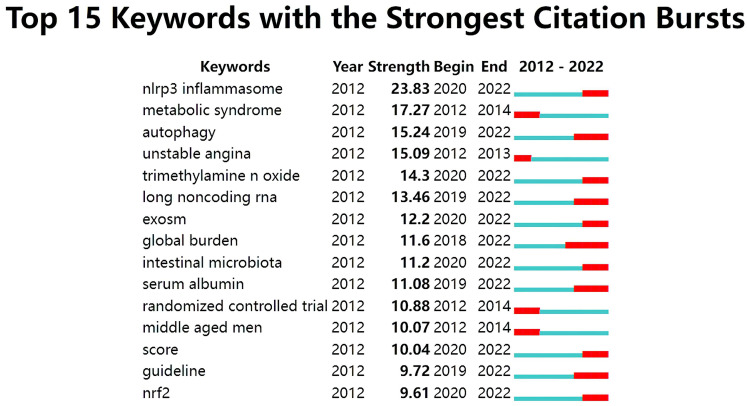
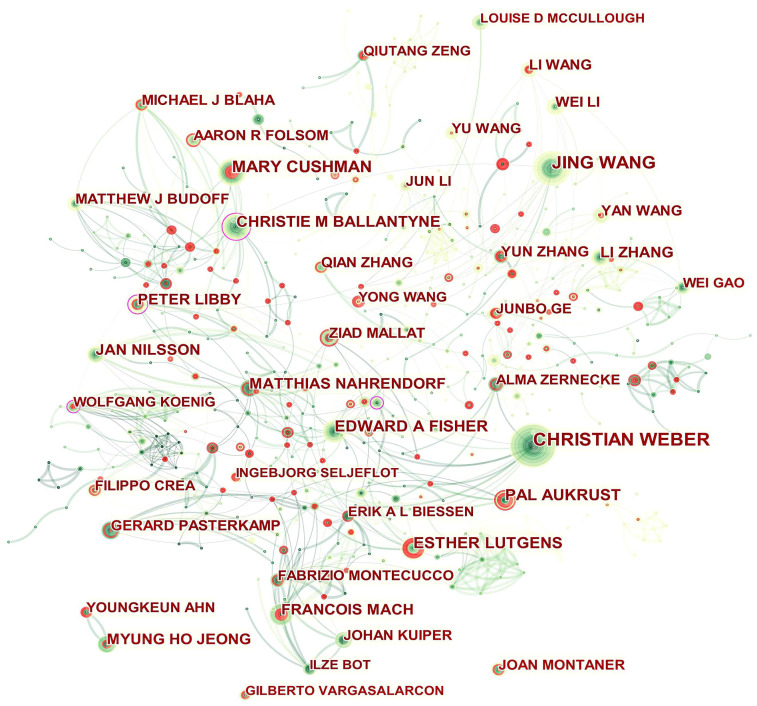
There were a total of 19,053 publications examined in this study. The most publications came from China (6232, 32.71%). Capital Med Univ was the most productive institution (410, 2.15%). Christian Weber published the greatest number of articles (75, 0.39%). was identified as the most prolific journal (706, 3.71%). was the most co-cited journal (13276, 2.81%). Keywords with the ongoing strong citation bursts were "nucleotide-binding oligomerization (NOD), Leucine-rich repeat (LRR)-containing protein (NLRP3) inflammasome", "intestinal microbiota", "exosome", "lncRNAs", etc.
It can be shown that ASCVD and inflammation research benefited from manuscripts that had a high impact on the scientific community. Asian, European and North American countries dominated in the field in terms of quantitative, qualitative and collaborative parameters. The NLRP3 inflammasome, gut microbiota and trimethylamine N-oxide, autophagy, lncRNAs, exosomes, and nuclear factor erythroid 2-related factor 2 were described to be hot themes in the field.
动脉粥样硬化性心血管疾病(ASCVD)是全球主要的杀手和医疗负担。动脉粥样硬化作为常见的病理基础,在过去几年中一直与炎症相关。一些有前景的结果也表明,将炎症作为潜在的治疗靶点以减少心血管事件具有重要作用。鉴于炎症在ASCVD中的致病作用,我们建议使用文献计量分析来评估全球范围内关于ASCVD和炎症的研究架构。
在科睿唯安的Web of Science核心合集中搜索2012年至2022年间发表的该领域文章。每年的出版物数量已通过GraphPad Prism随时间进行可视化展示。使用CiteSpace和VOSviewer生成关于国家、机构和作者合作的知识图谱,以呈现ASCVD和炎症研究的格局并揭示当前的研究热点。
本研究共审查了19053篇出版物。发表文章最多的是中国(6232篇,占32.71%)。首都医科大学是产出最多的机构(410篇,占2.15%)。克里斯蒂安·韦伯发表的文章数量最多(75篇,占0.39%)。《》被确定为发文量最多的期刊(706篇,占3.71%)。《》是被引用次数最多的期刊(13276次,占2.81%)。具有持续强烈引用爆发的关键词有“含核苷酸结合寡聚化结构域(NOD)、富含亮氨酸重复序列(LRR)的蛋白(NLRP)炎症小体3”、“肠道微生物群”、“外泌体”、“长链非编码RNA(lncRNAs)”等。
可以看出ASCVD和炎症研究受益于对科学界有重大影响的手稿。在数量、质量和合作参数方面,亚洲、欧洲和北美国家在该领域占据主导地位。NLRP3炎症小体、肠道微生物群和氧化三甲胺、自噬、lncRNAs、外泌体以及核因子红细胞2相关因子2被描述为该领域的热点主题。