Aziz Abdul Rashid, Che Muhamad Ahmad Munir, Roslan Siti Raifana, Ghulam Mohamed Nazirah, Singh Rabindarjeet, Chia Michael Yong Hwa
Sport Science Centre, Singapore Sports Institute, Sport Singapore, Singapore 397630, Singapore.
Physical Education and Sport Science, National Institute of Education, Nanyang Technological University, Singapore 637616, Singapore.
Sports (Basel). 2017 Jan 6;5(1):4. doi: 10.3390/sports5010004.
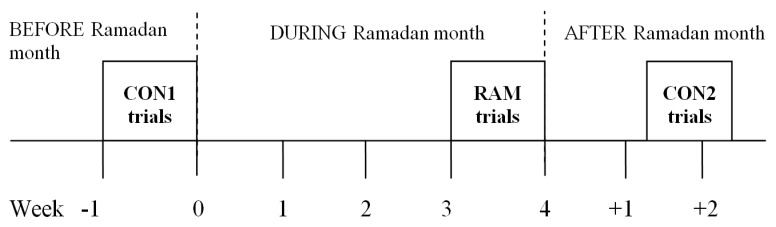
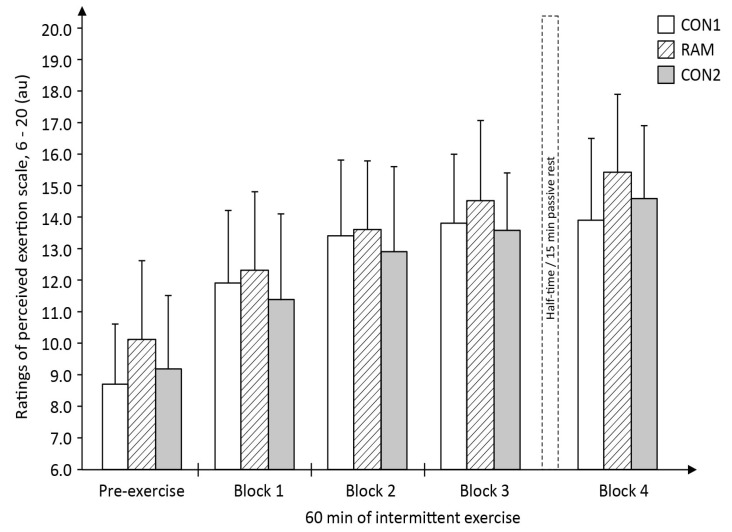
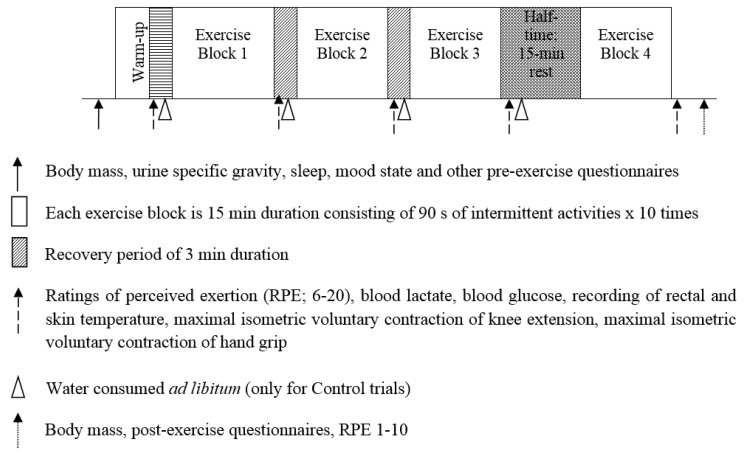
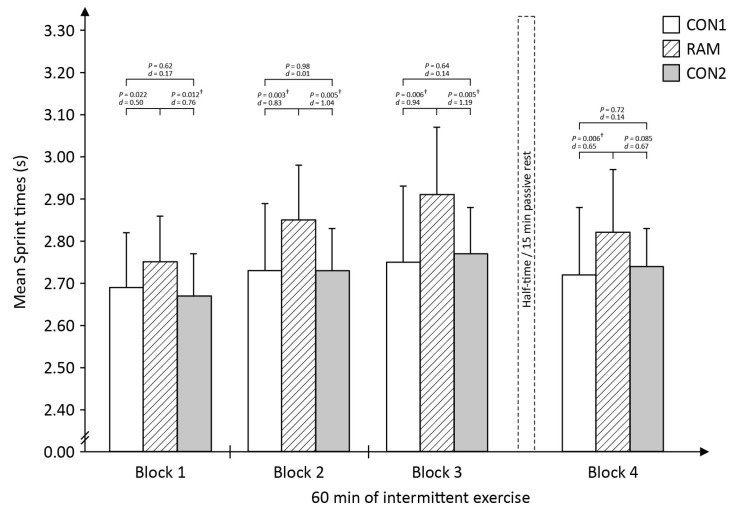
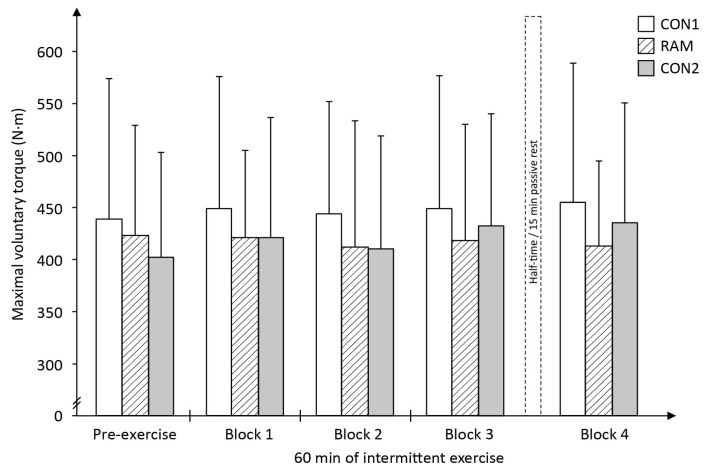
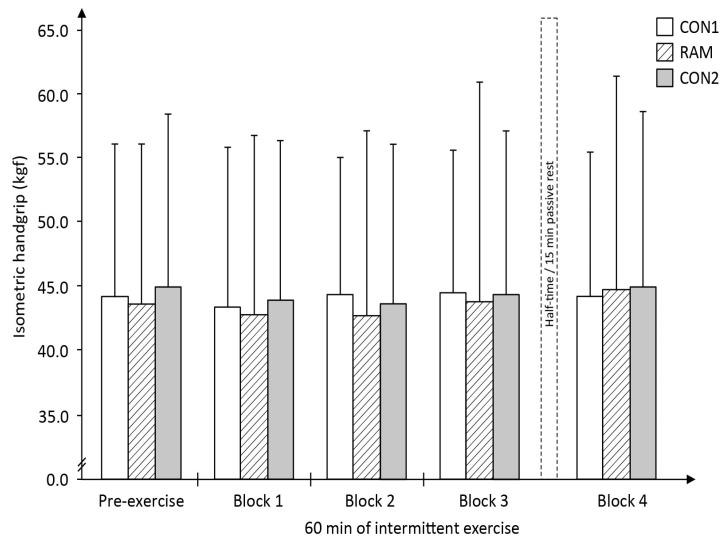
This study examines the effects of Ramadan fasting on sprint performance during prolonged intermittent exercise in trained Muslim footballers, under controlled pre-exercise conditions. A within-group, cross-over study design with two non-fasted or Control trials performed before (i.e., CON1) and after (CON2) the Ramadan month, and with the Ramadan-fasted (RAM) trials performed within the Ramadan month. After familiarization, 14 players completed a modified 60-min (4 × 15-min exercise blocks interspersed with 3-min intervals) of the Loughborough Intermittent Shuttle Test (mLIST) of fixed speeds of walking, jogging, running, but with all-out effort sprints. During the interval periods, capillary blood glucose and blood lactate measures were taken, rectal and skin temperatures were recorded and maximal voluntary isometric contractions (MVIC) of the dominant leg and hand-grip were performed to provide some indication to the cause(s) of 'fatigue' during exercise. Players were provided with standardized 24-h pre-packed meals prior to all trials. Sleep hours were objectively assessed and perceived training loads were monitored and these were equivalent between RAM and CON trials. Sprint times throughout mLIST were significantly faster in both CON1 and CON2 as compared to RAM trials (all < 0.017; = small to moderate), and this poorer performance in RAM was observed as early as during the first 15-min of the mLIST. Blood markers, MVIC and thermoregulatory results were not substantially different between both CON and RAM trials. In conclusion, despite similarities in dietary intake, sleeping hours and training loads between conditions, results still indicate that Ramadan fasting had an adverse effect on prolonged intermittent performance. Nocebo effects plays a dominant role during exercise in the Ramadan-fasted state.
本研究在可控的运动前条件下,考察斋月禁食对受过训练的穆斯林足球运动员在长时间间歇性运动中短跑成绩的影响。采用组内交叉研究设计,在斋月前(即CON1)和斋月后(CON2)进行两次非禁食或对照试验,并在斋月期间进行斋月禁食(RAM)试验。在熟悉流程后,14名运动员完成了一项修改后的60分钟(4个15分钟运动时段,中间穿插3分钟间隔)的拉夫堡间歇性穿梭试验(mLIST),运动速度为固定的步行、慢跑、跑步速度,但短跑需全力冲刺。在间隔期间,采集毛细血管血糖和血乳酸测量值,记录直肠温度和皮肤温度,并对优势腿和握力进行最大自主等长收缩(MVIC),以对运动期间“疲劳”的原因提供一些指示。在所有试验前,为运动员提供标准化的24小时预包装餐食。客观评估睡眠时间,监测主观训练负荷,RAM试验和CON试验的这些指标相当。与RAM试验相比,CON1和CON2中整个mLIST的短跑时间均显著更快(均<0.017;效应量为小到中等),并且早在mLIST的前15分钟就观察到RAM试验中的表现较差。CON试验和RAM试验之间的血液指标、MVIC和体温调节结果没有实质性差异。总之,尽管不同条件下的饮食摄入、睡眠时间和训练负荷相似,但结果仍表明斋月禁食对长时间间歇性运动表现有不利影响。在斋月禁食状态下运动期间,反安慰剂效应起主导作用。