Bhadoria Pooja, Nagar Mahindra, Bharihoke Veena, Bhadoria Ajeet Singh
Department of Anatomy, Maulana Azad Medical College, New Delhi, India.
Department of Anatomy, University College of Medical Sciences, New Delhi, India.
J Family Med Prim Care. 2018 Jan-Feb;7(1):179-183. doi: 10.4103/jfmpc.jfmpc_422_16.
In the recent years, ethephon, 2-chloroethylphosphonic acid, is one of the most commonly used plant growth regulators. At present, it is being used on fruits, vegetables, and cereals for promoting pre- and post-harvest ripening. The effect of artificial ripening has become questionable because of various health-related issues. This study was conducted to note the morphology of liver after ethephon administration as it is the site where chemicals undergo first pass metabolism and probably will be affected by ethephon. Materials and.
Adult Wistar albino rats were divided into experimental and control groups (10 each). Ethephon was administered at a dose of 200 mg/kg/day by a gavage tube in the experimental rats for 14 days. The animals were sacrificed within 24 h of the last dose; liver was dissected and processed for light microscopy. Hematoxylin and eosin-stained sections were studied using an image-pro express analyzer. The data obtained from control and experimental groups were statistically analyzed.
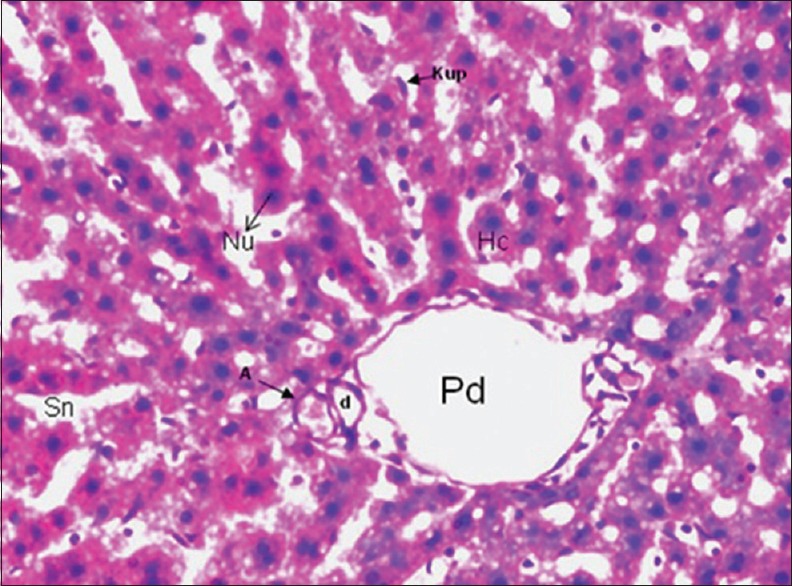
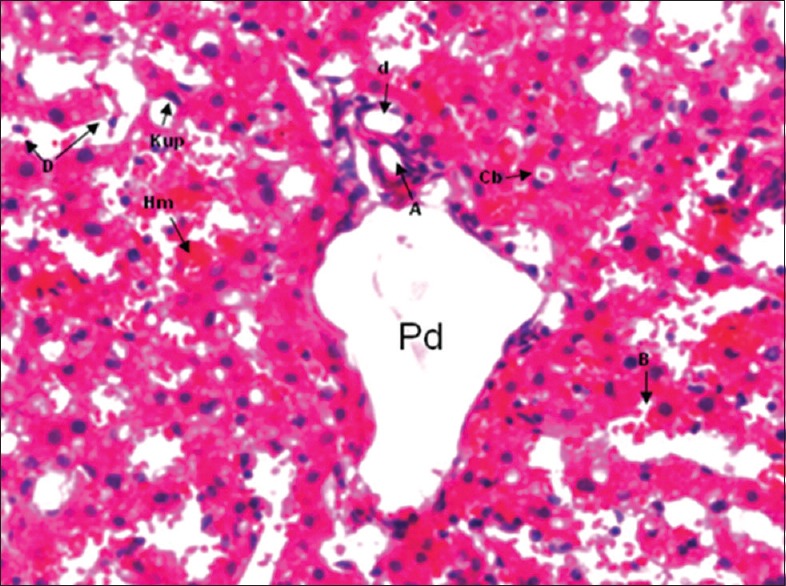
In the experimental rats, the body weight was found to be significantly decreased. The orderly arrangement of hepatocytes was disrupted and was replaced by blood-filled sinusoids. At sites, hepatocytes appeared to be degenerated. Councilman bodies with pyknotic nuclei and inflammatory infiltrations were seen. The population per unit area of the hepatocytes and Kupffer cells was 29.53 ± 10.65 versus 44.18 ± 10.31 and 25.12 ± 4.41versus 13.05 ± 6.5 in experimental and control groups, respectively. The decrease of hepatocytes and increase of Kupffer cells were found to be statistically significant.
The observations in the liver are probably indicative of degenerative changes associated with ethephon. Hence, we can conclude that this plant growth regulator, Fruit and Vegetable Ripener, has hepatotoxic potential. General awareness and regarding the use of such plant growth regulators is must to reduce the intake.
近年来,乙烯利,即2-氯乙基膦酸,是最常用的植物生长调节剂之一。目前,它被用于水果、蔬菜和谷物,以促进收获前和收获后的成熟。由于各种与健康相关的问题,人工催熟的效果已受到质疑。本研究旨在观察乙烯利给药后肝脏的形态,因为肝脏是化学物质进行首过代谢的部位,可能会受到乙烯利的影响。材料与方法:成年Wistar白化大鼠分为实验组和对照组(每组10只)。实验组大鼠通过灌胃管以200mg/kg/天的剂量给予乙烯利,持续14天。在最后一次给药后24小时内处死动物;解剖肝脏并进行光镜检查。使用图像分析软件对苏木精和伊红染色的切片进行研究。对对照组和实验组获得的数据进行统计学分析。结果:在实验组大鼠中,发现体重显著下降。肝细胞的有序排列被破坏,取而代之的是充满血液的窦状隙。在某些部位,肝细胞似乎发生了退化。可见有核固缩的康氏小体和炎症浸润。实验组和对照组肝细胞和库普弗细胞的单位面积数量分别为29.53±10.65和44.18±10.31,以及25.12±4.41和13.05±6.5。发现肝细胞数量减少和库普弗细胞数量增加具有统计学意义。结论:肝脏中的观察结果可能表明与乙烯利相关的退行性变化。因此,我们可以得出结论,这种植物生长调节剂,果蔬催熟剂,具有肝毒性潜力。必须提高公众对使用此类植物生长调节剂的认识,以减少摄入量。