Department of Immunology, School of Basic Medical Sciences, Peking University Health Science Center, Beijing, China.
Key Laboratory of Medical Immunology, Ministry of Health, Peking University, Beijing, China.
Front Immunol. 2018 Apr 25;9:862. doi: 10.3389/fimmu.2018.00862. eCollection 2018.
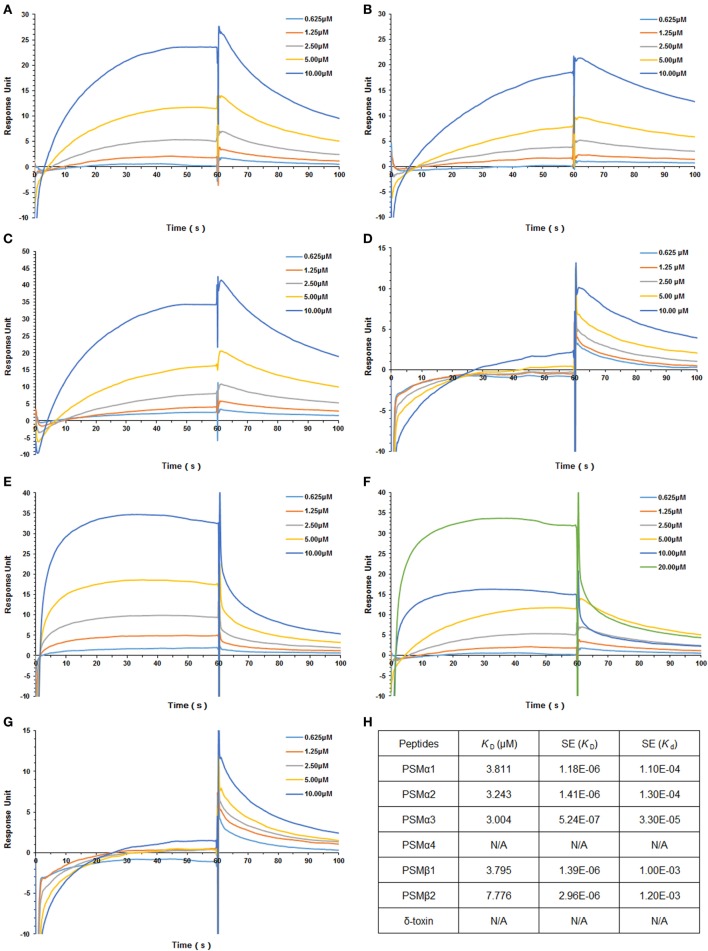
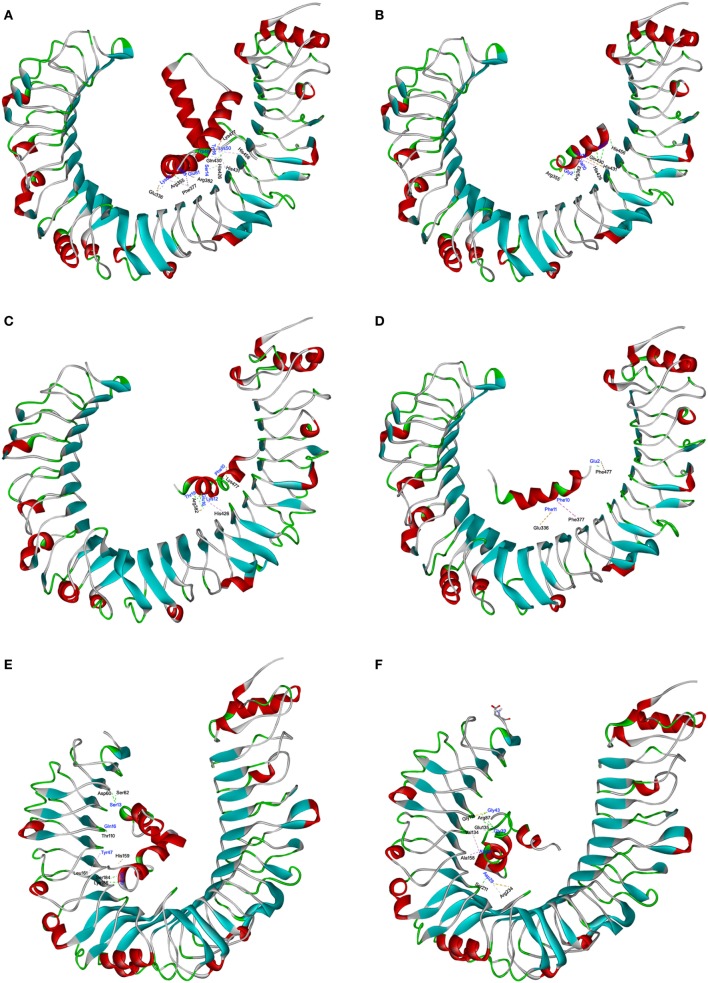
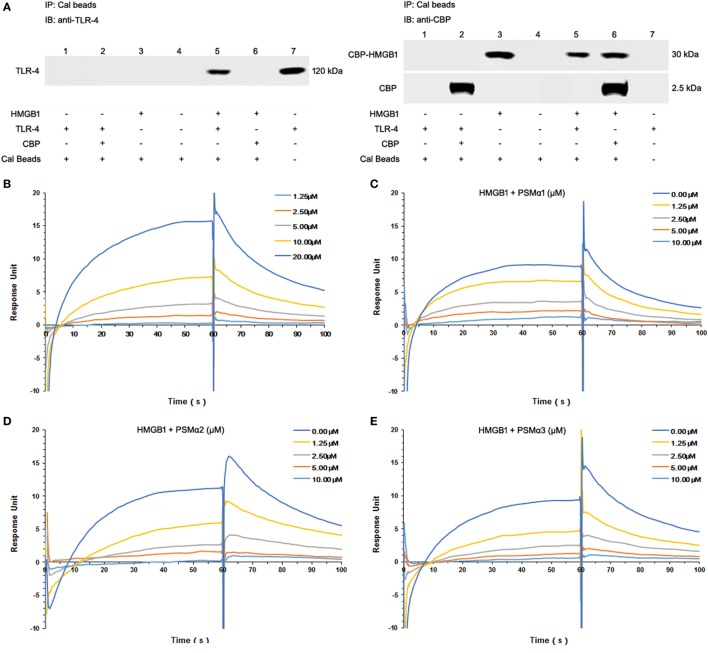
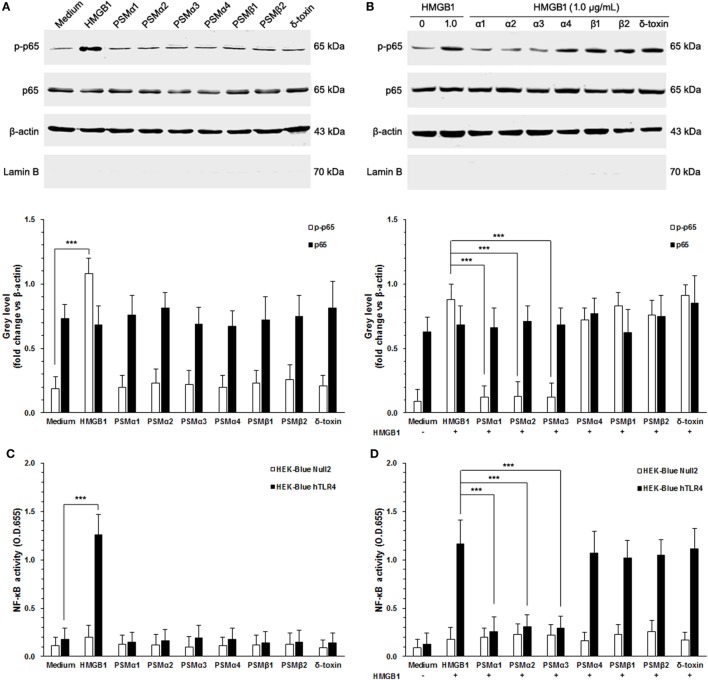
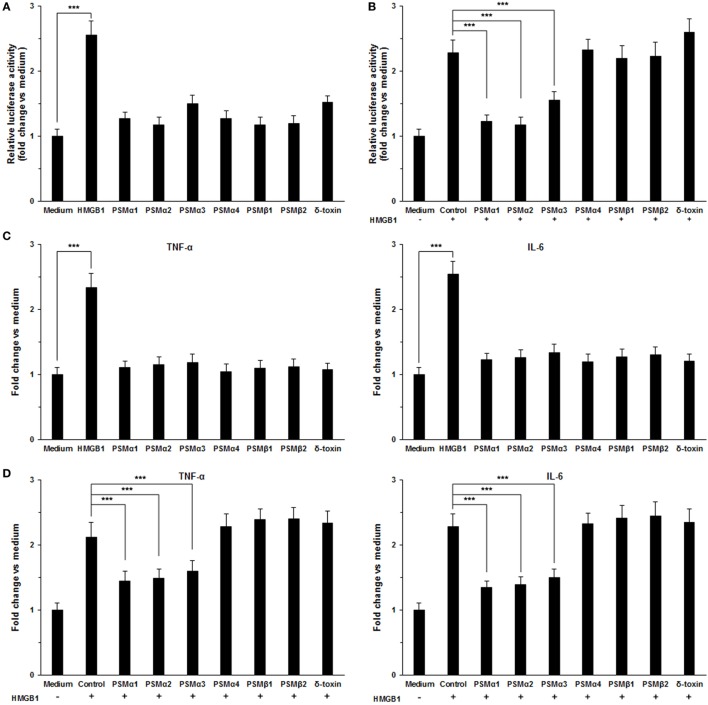
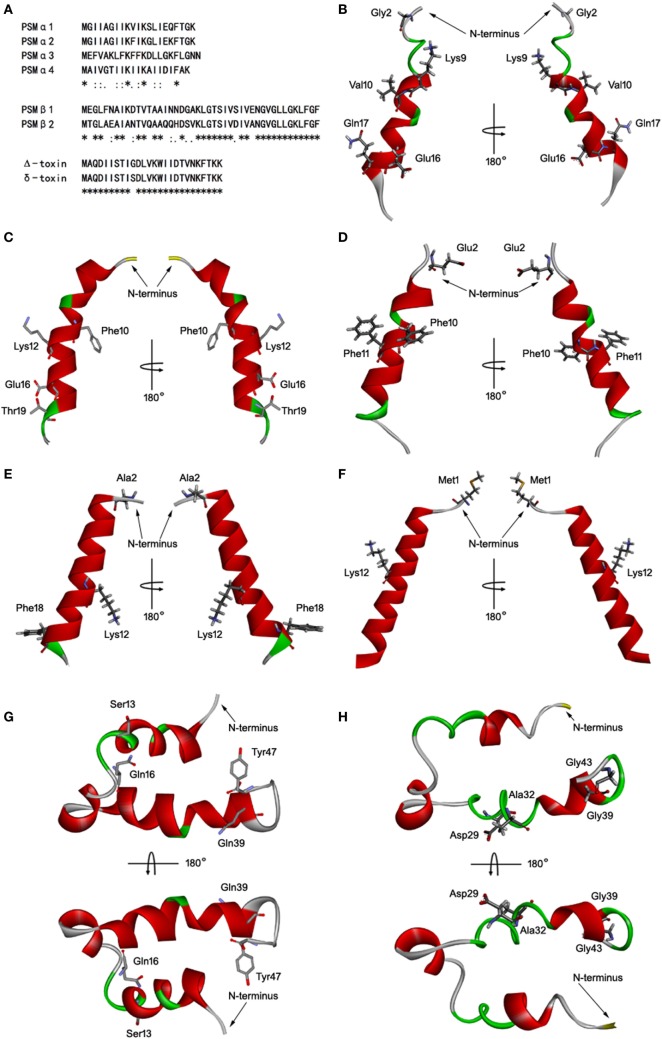
Phenol-soluble modulins (PSMs) have recently emerged as key virulence determinants, particularly in highly aggressive isolates. These peptides contribute to the pathogenesis of infections, participating in multiple inflammatory responses. Here, we report a new role for PSMs in high mobility group box-1 protein (HMGB1) induced inflammation by modulating toll-like receptor (TLR) 4 pathway. Direct ligation of TLR4 with PSMα1-α3 and PSMβ1-β2 was identified by surface plasmon resonance. Remarkably, the binding affinity of TLR4 with HMGB1 was attenuated by PSMα1-α3. Further study revealed that PSMα1-α3 directly inhibited HMGB1-induced NF-κB activation and proinflammatory cytokines production using HEK-Blue hTLR4 cells and THP-1 cells. To analyze the molecular interactions between PSMs and TLR4, blast similarity search was performed and identified that PSMα1 and PSMβ2 were ideal templates for homology modeling. The three-dimensional structures of PSMα2, PSMα4, PSMβ1, and δ-toxin were successfully generated with MODELLER, and further refined using CHARMm. PSMs docking into TLR4 were done using ZDOCK, indicating that PSMα1-α3 compete with HMGB1 for interacting with the surrounding residues (336-477) of TLR4 domain. Our study reveals that PSMα1-α3 can act as novel TLR4 antagonists, which account at least in part for the staphylococcal immune evasion. Modulation of this process will lead to new therapeutic strategies against infections.
酚溶性调节素(PSMs)最近被认为是关键的毒力决定因素,特别是在高度侵袭性的分离株中。这些肽参与了金黄色葡萄球菌感染的发病机制,参与了多种炎症反应。在这里,我们报道了 PSMs 通过调节 Toll 样受体(TLR)4 途径在高迁移率族蛋白 B1(HMGB1)诱导的炎症中的新作用。通过表面等离子体共振鉴定了 PSMα1-α3 和 PSMβ1-β2 与 TLR4 的直接结合。值得注意的是,PSMα1-α3 减弱了 TLR4 与 HMGB1 的结合亲和力。进一步的研究表明,PSMα1-α3 通过使用 HEK-Blue hTLR4 细胞和 THP-1 细胞直接抑制 HMGB1 诱导的 NF-κB 激活和促炎细胞因子的产生。为了分析 PSMs 和 TLR4 之间的分子相互作用,进行了 Blast 相似性搜索,并确定 PSMα1 和 PSMβ2 是同源建模的理想模板。使用 MODELLER 成功生成了 PSMα2、PSMα4、PSMβ1 和 δ-毒素的三维结构,并使用 CHARMm 进一步进行了细化。使用 ZDOCK 进行了 PSMs 与 TLR4 的对接,表明 PSMα1-α3 与 HMGB1 竞争与 TLR4 结构域周围残基(336-477)相互作用。我们的研究表明,PSMα1-α3 可以作为新型 TLR4 拮抗剂,这至少部分解释了葡萄球菌的免疫逃避。调节这一过程将导致针对金黄色葡萄球菌感染的新治疗策略。