Duarte Elizabeth A A, Damasceno Caroline L, de Oliveira Thiago A S, Barbosa Leonardo de Oliveira, Martins Fabiano M, de Queiroz Silva Jurema Rosa, de Lima Thais E F, da Silva Rafael M, Kato Rodrigo B, Bortolini Dener E, Azevedo Vasco, Góes-Neto Aristóteles, Soares Ana C F
Center of Agricultural, Environmental and Biological Sciences, Federal University of Reconcavo of Bahia, Cruz das Almas, Brazil.
Graduate Program in Biotechnology (PPGBiotec), State University of Feira of Santana, Feira de Santana, Brazil.
Front Microbiol. 2018 Jun 11;9:1227. doi: 10.3389/fmicb.2018.01227. eCollection 2018.
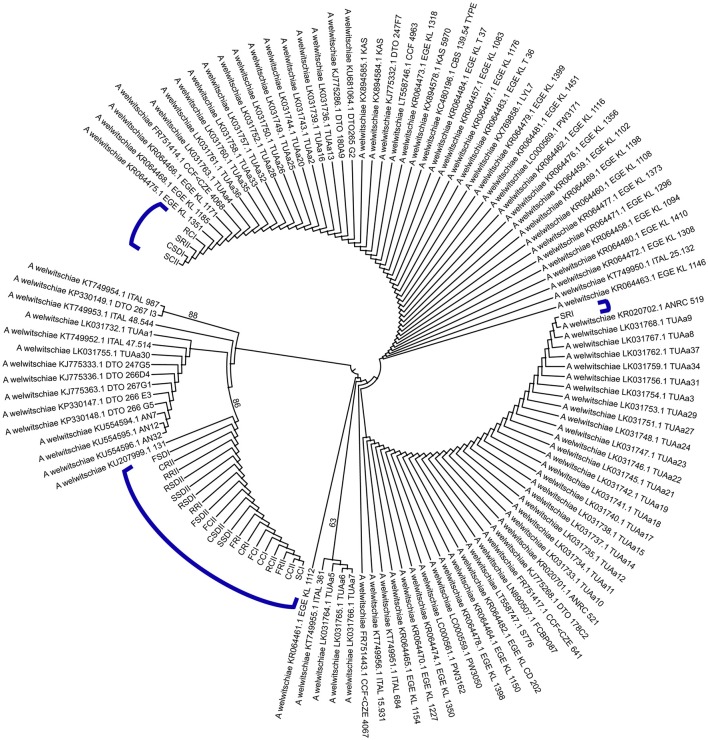
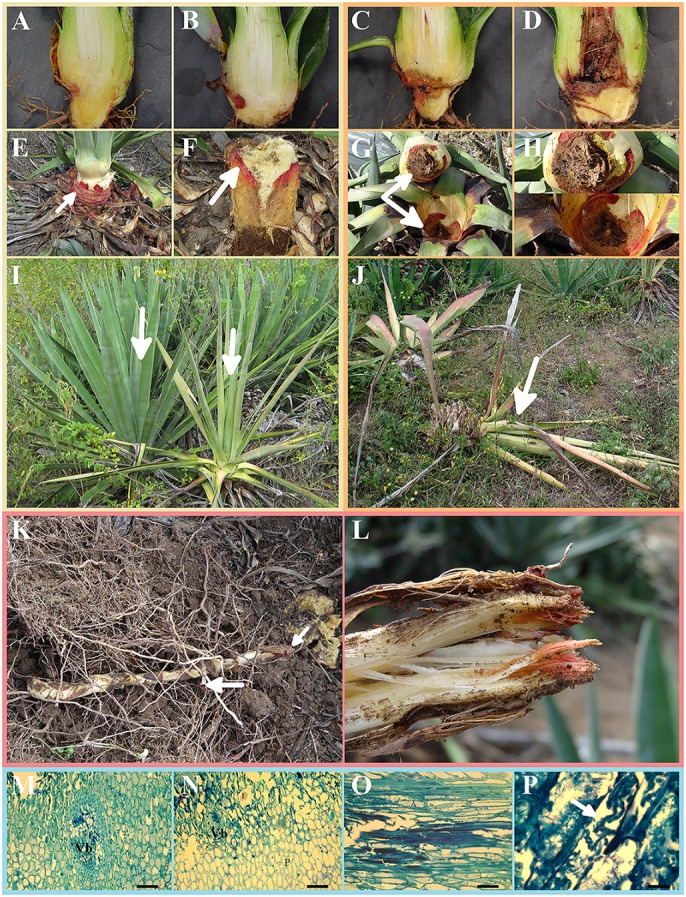
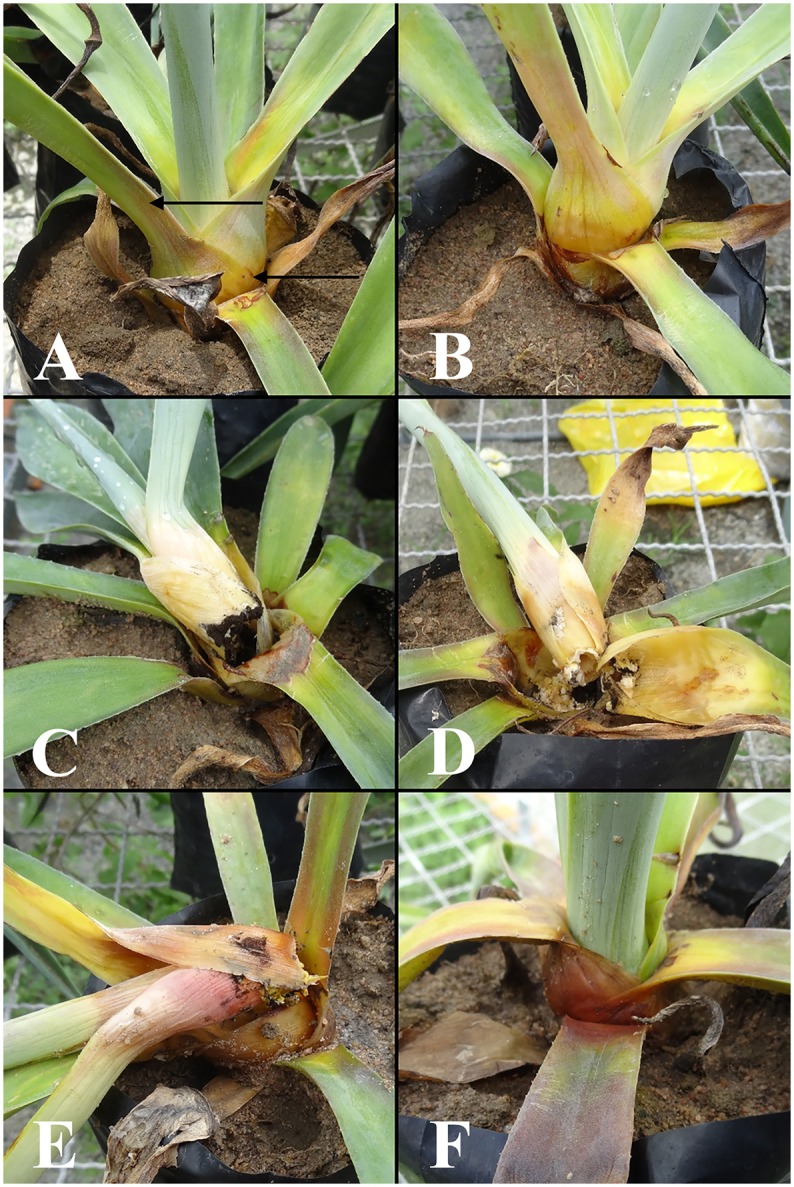
Approximately 75% of the worldwide production of hard natural fibers originates from sisal, an industrial crop from arid and semiarid tropical regions. Brazil is the world's largest producer of sisal fiber, accounting for more than 40% of the worldwide production, and sisal bole rot disease has been the main phytosanitary problem of this crop. All previous studies reporting as the causal agent of the disease were based on the morphological features of fungal isolates from infected plant tissues in pure cultures. Black aspergilli are one of the most complex and difficult groups to classify and identify. Therefore, we performed an integrative analysis of this disease based on the isolation of black aspergilli from the endospheres and soils in the root zones of symptomatic adult plants, pathogenicity tests, histopathology of symptomatic plants, and molecular phylogeny and worldwide genetic variability of the causal agent. All sisal isolates were pathogenic and unequivocally produced symptoms of bole rot disease in healthy plants. In all tree-based phylogenetic methods used, a monophyletic group formed by along with all sisal isolates was retrieved. Ten haplotypes have been identified in the world, and three occur in the largest sisal-producing area. Most of the isolates are from a unique haplotype, present in only the sisal-producing region. destroyed parenchymatic and vascular cylinder cells and induced the necrosis of internal stem tissues. Therefore, sisal bole disease is probably the consequence of a saprotrophic fungus that opportunistically invades sisal plants and behaves as a typical necrotrophic pathogen.
全球约75%的硬质天然纤维产量来自剑麻,剑麻是一种来自干旱和半干旱热带地区的经济作物。巴西是世界上最大的剑麻纤维生产国,占全球产量的40%以上,而剑麻茎腐病一直是这种作物的主要植物检疫问题。以往所有将 报道为该病病原体的研究都是基于纯培养中从受感染植物组织分离出的真菌分离物的形态特征。黑曲霉是最难分类和鉴定的复杂类群之一。因此,我们基于从有症状成年植物根区的内生菌和土壤中分离黑曲霉、致病性测试、有症状植物的组织病理学以及病原体的分子系统发育和全球遗传变异性,对这种疾病进行了综合分析。所有剑麻分离物都具有致病性,并在健康植物中明确产生了茎腐病症状。在所有使用的基于树的系统发育方法中,都检索到了一个由 与所有剑麻分离物组成的单系群。在世界范围内已鉴定出10种单倍型,其中3种出现在最大的剑麻产区。大多数分离物来自仅存在于剑麻产区的独特单倍型。 破坏了薄壁组织和维管束细胞,并诱导了内部茎组织的坏死。因此,剑麻茎腐病可能是一种腐生真菌机会性侵入剑麻植物并表现为典型坏死性病原菌的结果。