Trauma Research Center, First Hospital Affiliated to the Chinese PLA General Hospital, Beijing, China.
State Key Laboratory of Kidney Disease, The Chinese PLA General Hospital, Beijing, China.
Front Immunol. 2018 Jun 7;9:1302. doi: 10.3389/fimmu.2018.01302. eCollection 2018.
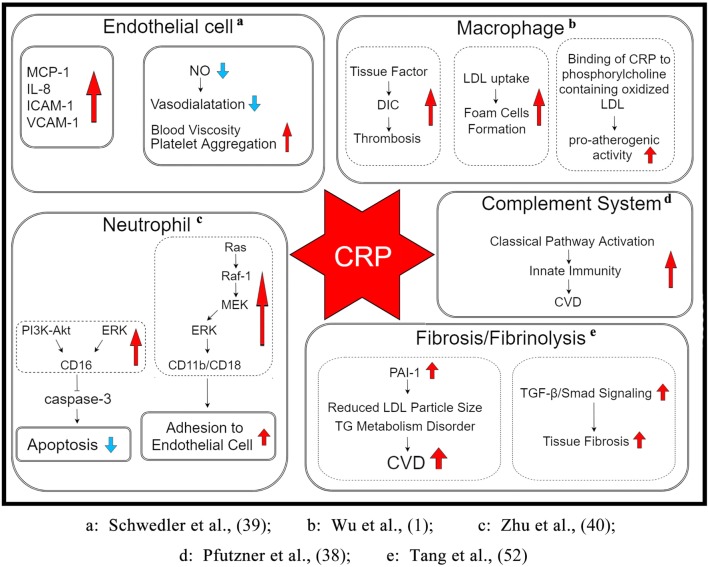
C-reactive protein (CRP) is an acute-phase protein synthesized by hepatocytes in response to pro-inflammatory cytokines during inflammatory/infectious processes. CRP exists in conformationally distinct forms such as the native pentameric CRP and monomeric CRP (mCRP) and may bind to distinct receptors and lipid rafts and exhibit different functional properties. It is known as a biomarker of acute inflammation, but many large-scale prospective studies demonstrate that CRP is also known to be associated with chronic inflammation. This review is focused on discussing the clinical significance of CRP in chronic inflammatory and neurodegenerative diseases, such as cardiovascular disease, type 2 diabetes mellitus, age-related macular degeneration, hemorrhagic stroke, Alzheimer's disease, and Parkinson's disease, including recent advances on the implication of CRP and its forms specifically on the pathogenesis of these diseases. Overall, we highlight the advances in these areas that may be translated into promising measures for the diagnosis and treatment of inflammatory diseases.
C 反应蛋白(CRP)是一种急性时相蛋白,在炎症/感染过程中,由肝细胞对促炎细胞因子作出反应而合成。CRP 存在于构象不同的形式中,如天然五聚体 CRP 和单体 CRP(mCRP),并可能与不同的受体和脂筏结合,表现出不同的功能特性。CRP 被认为是急性炎症的生物标志物,但许多大规模前瞻性研究表明,CRP 也与慢性炎症有关。本综述重点讨论 CRP 在心血管疾病、2 型糖尿病、年龄相关性黄斑变性、出血性中风、阿尔茨海默病和帕金森病等慢性炎症性和神经退行性疾病中的临床意义,包括 CRP 及其形式在这些疾病发病机制中的作用的最新进展。总的来说,我们强调了这些领域的进展,这些进展可能转化为炎症性疾病诊断和治疗的有希望的措施。