Department of Anesthesiology and Perioperative Medicine, University of Rochester Medical Center, USA; Department of Neuroscience, University of Rochester Medical Center, USA.
Department of Anesthesiology and Perioperative Medicine, University of Rochester Medical Center, USA.
J Mol Cell Cardiol. 2018 Aug;121:155-162. doi: 10.1016/j.yjmcc.2018.06.007. Epub 2018 Jun 26.
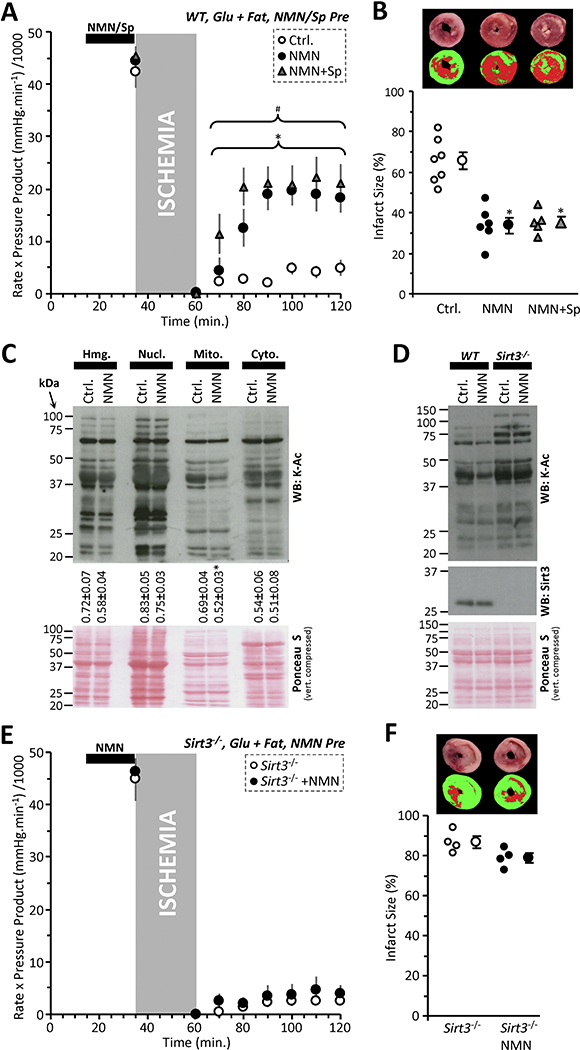
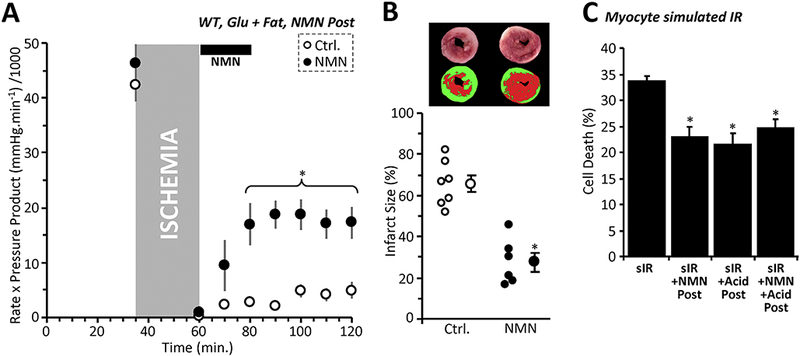
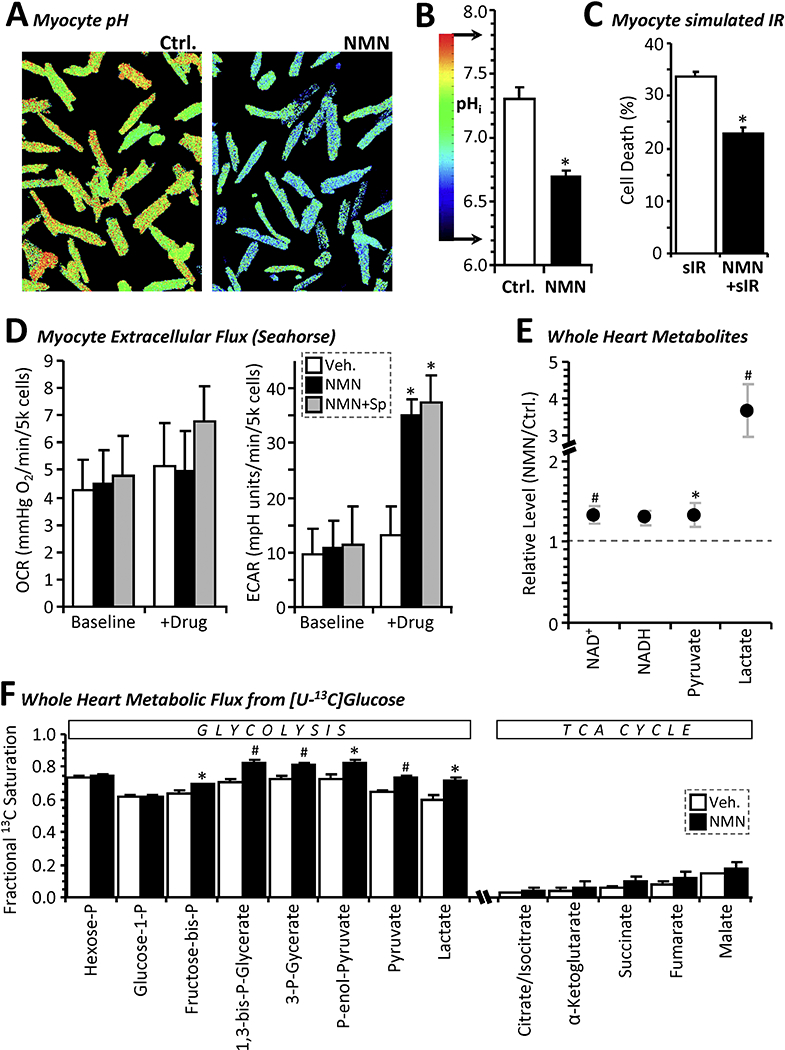
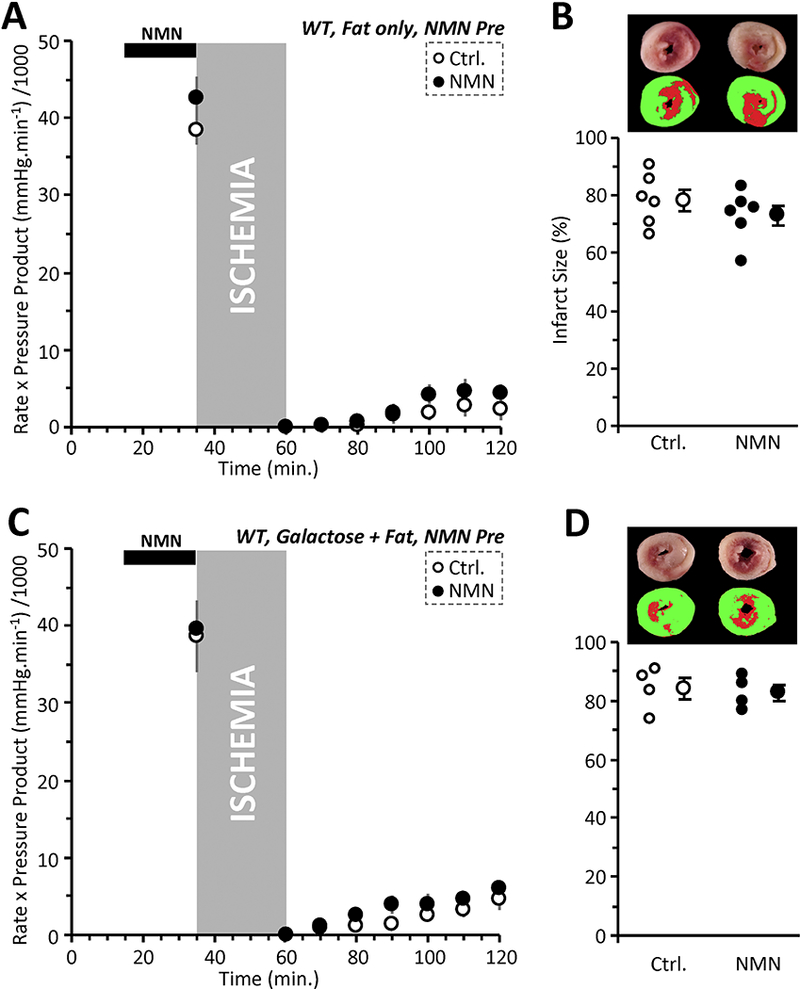
Stimulation of the cytosolic NAD dependent deacetylase SIRT1 is cardioprotective against ischemia-reperfusion (IR) injury. NAD precursors including nicotinamide mononucleotide (NMN) are thought to induce cardioprotection via SIRT1. Herein, while NMN protected perfused hearts against IR (functional recovery: NMN 42 ± 7% vs. vehicle 11 ± 3%), this protection was insensitive to the SIRT1 inhibitor splitomicin (recovery 47 ± 8%). Although NMN-induced cardioprotection was absent in Sirt3 hearts (recovery 9 ± 5%), this was likely due to enhanced baseline injury in Sirt3 (recovery 6 ± 2%), since similar injury levels in WT hearts also blunted the protective efficacy of NMN. Considering alternative cardiac effects of NMN, and the requirement of glycolysis for NAD, we hypothesized NMN may confer protection in part via direct stimulation of cardiac glycolysis. In primary cardiomyocytes, NMN induced cytosolic and extracellular acidification and elevated lactate. In addition, [U-C]glucose tracing in intact hearts revealed that NMN stimulated glycolytic flux. Consistent with a role for glycolysis in NMN-induced protection, hearts perfused without glucose (palmitate as fuel source), or hearts perfused with galactose (no ATP from glycolysis) exhibited no benefit from NMN (recovery 11 ± 4% and 15 ± 2% respectively). Acidosis during early reperfusion is known to be cardioprotective (i.e., acid post-conditioning), and we also found that NMN was cardioprotective when delivered acutely at reperfusion (recovery 39 ± 8%). This effect of NMN was not additive with acidosis, suggesting overlapping mechanisms. We conclude that the acute cardioprotective benefits of NMN are mediated in part via glycolytic stimulation, with the downstream protective mechanism involving enhanced ATP synthesis during ischemia and/or enhanced acidosis during reperfusion.
细胞溶质 NAD 依赖性去乙酰化酶 SIRT1 的刺激对缺血再灌注 (IR) 损伤具有心脏保护作用。烟酰胺单核苷酸 (NMN) 等 NAD 前体被认为通过 SIRT1 诱导心脏保护作用。在此,虽然 NMN 可保护灌流心脏免受 IR(功能恢复:NMN 为 42±7%,而载体为 11±3%),但这种保护对 SIRT1 抑制剂 splitomicin 不敏感(恢复为 47±8%)。尽管 Sirt3 心脏中缺乏 NMN 诱导的心脏保护作用(恢复为 9±5%),但这可能是由于 Sirt3 中的基线损伤增强(恢复为 6±2%)所致,因为 WT 心脏中的类似损伤水平也削弱了 NMN 的保护作用。考虑到 NMN 的其他心脏作用,以及 NAD 对糖酵解的需求,我们假设 NMN 可能通过直接刺激心脏糖酵解而部分发挥保护作用。在原代心肌细胞中,NMN 诱导细胞溶质和细胞外酸化并升高乳酸。此外,完整心脏中的 [U-C]葡萄糖示踪表明,NMN 刺激糖酵解通量。与 NMN 诱导的保护作用中糖酵解的作用一致,在不含有葡萄糖的心脏中(脂肪酸作为燃料来源)或在含有半乳糖的心脏中(无糖酵解产生的 ATP),NMN 没有益处(恢复分别为 11±4%和 15±2%)。再灌注早期的酸中毒已知具有心脏保护作用(即酸后处理),我们还发现 NMN 在再灌注时急性给药也具有心脏保护作用(恢复为 39±8%)。NMN 的这种作用与酸中毒没有叠加,表明存在重叠机制。我们得出结论,NMN 的急性心脏保护益处部分通过糖酵解刺激介导,其下游保护机制涉及缺血期间 ATP 合成增强和/或再灌注期间酸化增强。