Autism & Developmental Medicine Institute, Geisinger Health System, Lewisburg, PA, United States of America.
Department of Psychology, University of Illinois, Champaign, IL, United States of America.
PLoS One. 2018 Jul 3;13(7):e0200103. doi: 10.1371/journal.pone.0200103. eCollection 2018.
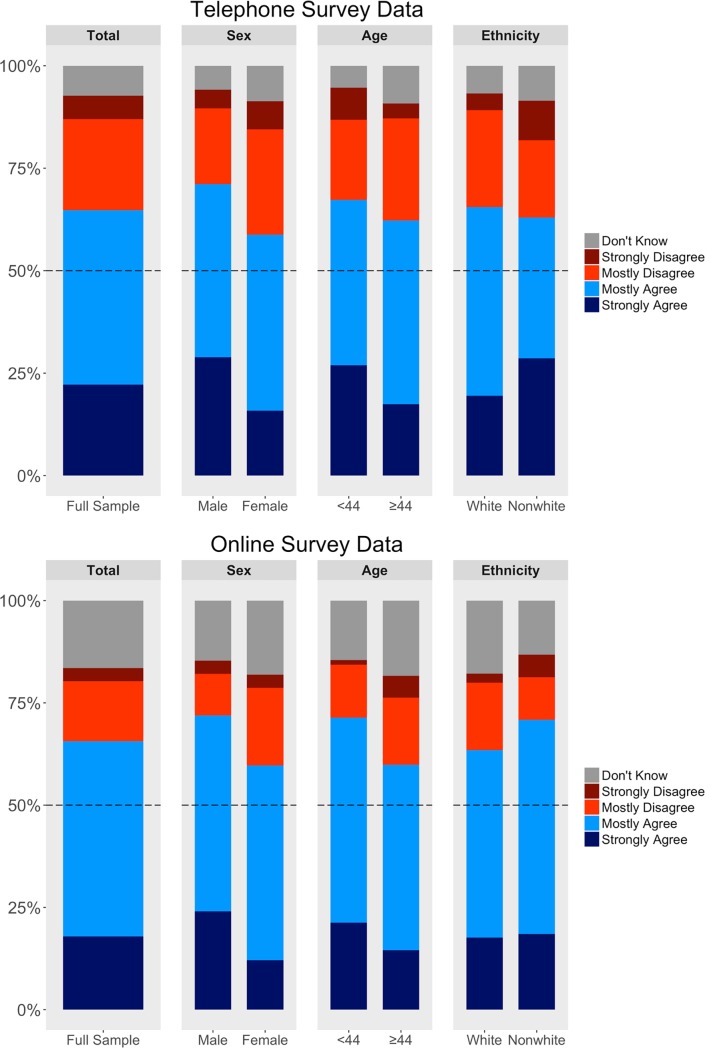
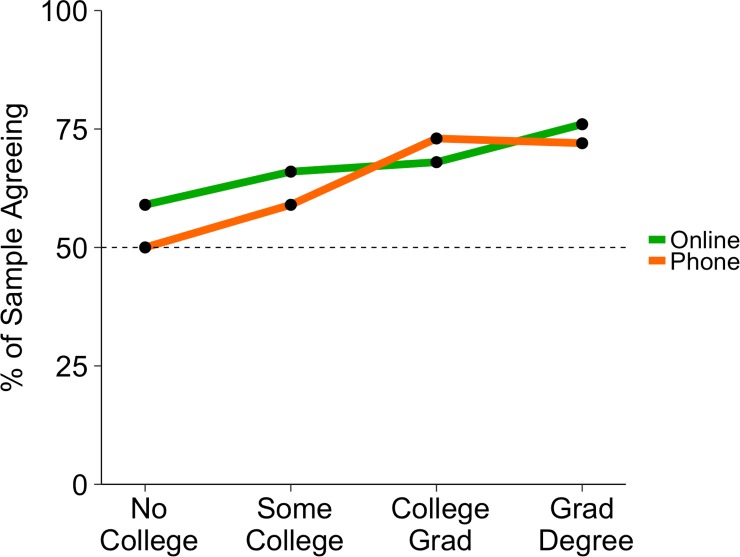
Psychologists often note that most people think they are above average in intelligence. We sought robust, contemporary evidence for this "smarter than average" effect by asking Americans in two independent samples (total N = 2,821) whether they agreed with the statement, "I am more intelligent than the average person." After weighting each sample to match the demographics of U.S. census data, we found that 65% of Americans believe they are smarter than average, with men more likely to agree than women. However, overconfident beliefs about one's intelligence are not always unrealistic: more educated people were more likely to think their intelligence is above average. We suggest that a tendency to overrate one's cognitive abilities may be a stable feature of human psychology.
心理学家经常指出,大多数人认为自己的智力高于平均水平。为了找到这种“比一般人更聪明”效应的有力的、现代的证据,我们在两个独立的样本中(总共 N=2821 名美国人)询问他们是否同意这样的说法:“我比一般人更聪明。”在对每个样本进行加权以匹配美国人口普查数据的人口统计学特征后,我们发现 65%的美国人认为自己比平均水平更聪明,男性比女性更有可能同意这一说法。然而,对自己智力的过于自信的信念并不总是不现实的:受教育程度较高的人更有可能认为自己的智力高于平均水平。我们认为,高估自己认知能力的倾向可能是人类心理的一个稳定特征。