Clinical Stem Cell Center, The Affiliated Drum Tower Hospital of Nanjing University Medical School, 321 Zhongshan Road, Nanjing, 210008, China.
Institute of Genetics and Developmental Biology, Chinese Academy of Sciences, No. 1 West Beichen Road, Beijing, 100190, China.
Stem Cell Res Ther. 2018 Jul 4;9(1):177. doi: 10.1186/s13287-018-0920-3.
In cell-based therapy, the transmission of communicable diseases imposes a substantial threat to recipients. In this study, we investigated whether cell-based screening could detect hepatitis B virus (HBV) in human umbilical cord-derived mesenchymal stem cells (HUMSCs) isolated from HBV-infected donors to understand the susceptibility of HUMSCs to HBV infection.
HBV assay was performed in HUMSCs derived from healthy and HBV-infected donors with enzyme-linked immunosorbent assay (ELISA), fluorescence quantitative PCR (FQ-PCR) assay, and droplet digital PCR (ddPCR) assay. Further, HBV DNA was assayed in HUMSCs derived from healthy donors after incubation with human sera containing a high titer of HBV using FQ-PCR.
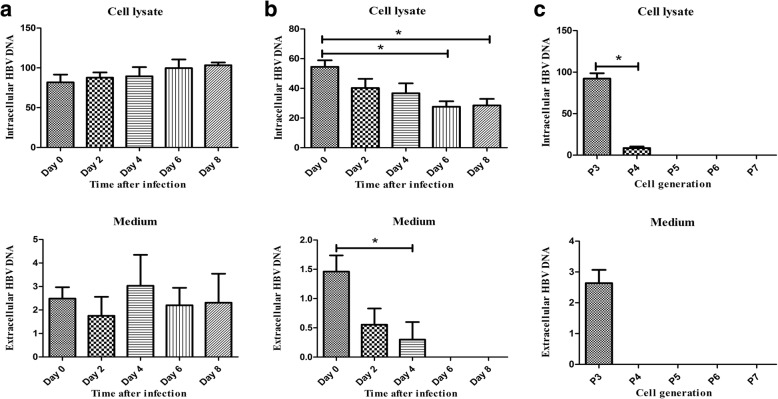
HBV antigen/antibody and DNA failed to be detected using ELISA, FQ-PCR, and ddPCR. After incubation with HBV infection sera, HBV DNA could be detected, but below the valid titer of the assay kit. The HBV DNA levels in HBV-incubated HUMSCs gradually decreased with medium change every 2 days and then significantly decreased, not even detected after passage.
The current cell-based screening methods could not detect HBV in HUMSCs derived from HBV-infected donors, indicating the importance of more stringent donor eligibility to reduce the risk of transmission of communicable diseases in cell-based therapy. To solve the problem of an occult HBV window period in donor eligibility determination, we recommend that the donors undergo another HBV serological test 3 months after the first serological communicable disease screening.
在细胞治疗中,传染性疾病的传播对接受者构成了重大威胁。在这项研究中,我们研究了基于细胞的筛选方法是否可以检测乙型肝炎病毒(HBV)在源自乙型肝炎病毒感染供体的人脐带间充质干细胞(HUMSCs)中,以了解 HUMSCs 对 HBV 感染的易感性。
使用酶联免疫吸附测定法(ELISA)、荧光定量 PCR(FQ-PCR)法和液滴数字 PCR(ddPCR)法对源自健康和 HBV 感染供体的 HUMSCs 进行 HBV 检测。此外,使用 FQ-PCR 检测了在高滴度 HBV 血清孵育后源自健康供体的 HUMSCs 中的 HBV DNA。
ELISA、FQ-PCR 和 ddPCR 均未检测到 HBV 抗原/抗体和 DNA。用 HBV 感染血清孵育后,可以检测到 HBV DNA,但低于检测试剂盒的有效滴度。随着每 2 天更换培养基,HBV 孵育的 HUMSCs 中的 HBV DNA 水平逐渐降低,然后显著降低,传代后甚至无法检测到。
目前的基于细胞的筛选方法无法检测源自 HBV 感染供体的 HUMSCs 中的 HBV,这表明在细胞治疗中,需要更严格的供体资格标准来降低传染性疾病传播的风险。为了解决供体资格确定中隐匿性 HBV 窗口期的问题,我们建议供体在第一次传染病血清学筛查后 3 个月再进行另一次 HBV 血清学检测。