Department of Veterinary Biosciences, Melbourne Veterinary School, The University of Melbourne, Werribee, Victoria, 3030, Australia.
Cria Genesis, PO Box 406, Ocean Grove, Victoria, 3226, Australia.
Parasit Vectors. 2018 Jul 4;11(1):388. doi: 10.1186/s13071-018-2949-7.
Gastrointestinal nematodes (GINs) can cause significant economic losses in alpacas due to lowered production of fibre and meat. Although no anthelmintics are registered for use in alpacas, various classes of anthelmintics are frequently used to control parasitic gastroenteritis in alpacas in Australia and other countries. Very little is known about the current worm control practices as well as the efficacy of anthelmintics used against common GINs of alpacas. This study aimed to assess the existing worm control practices used by Australian alpaca farmers and to quantify the efficacy of commonly used anthelmintics against GINs of alpacas.
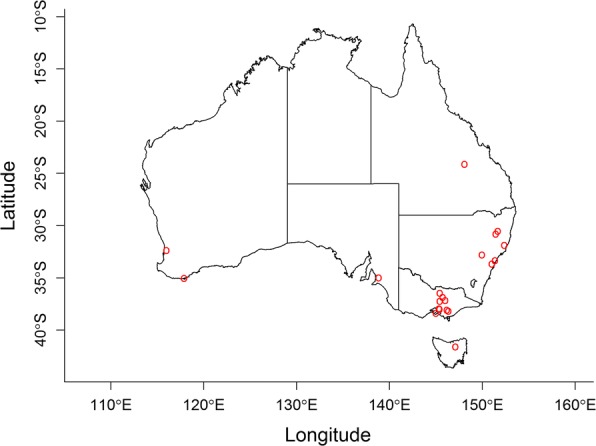
An online questionnaire survey was conducted to assess current worm control practices on 97 Australian alpaca farms, with an emphasis on the use of anthelmintics. Of this group of 97 alpaca farms, 20 were selected to assess the efficacy of eight anthelmintics and/or their combinations (closantel, fenbendazole ivermectin, monepantel, moxidectin and a combination of levamisole, closantel, albendazole, abamectin) using the faecal egg count reduction test (FECRT). A multiplexed-tandem PCR (MT-PCR) was used to identify the prevalent nematode genera/species.
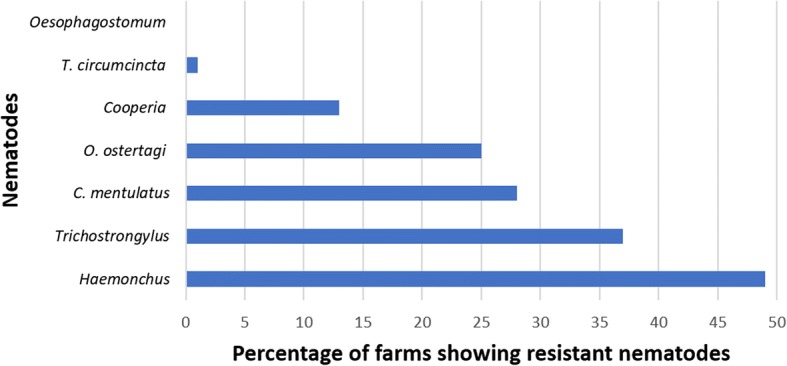
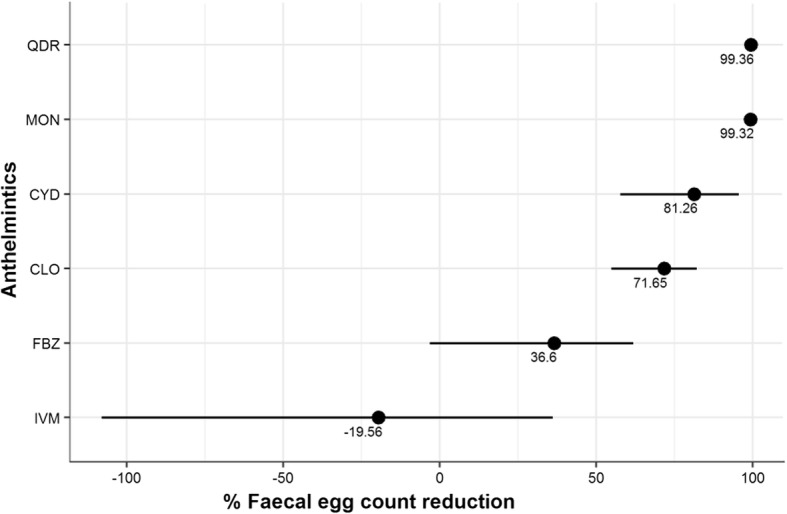
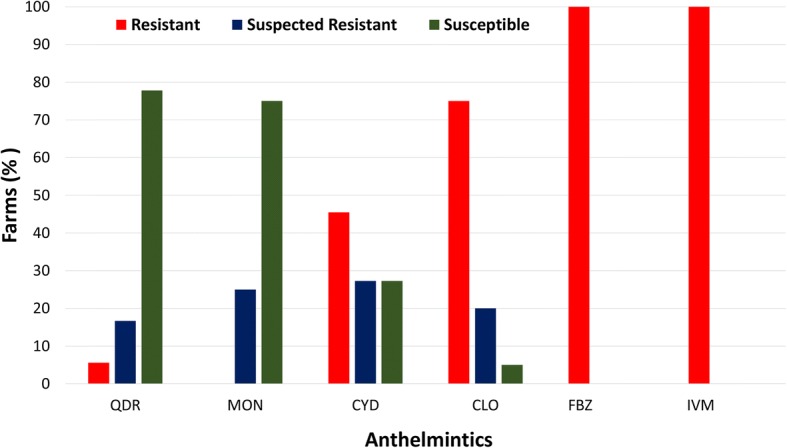
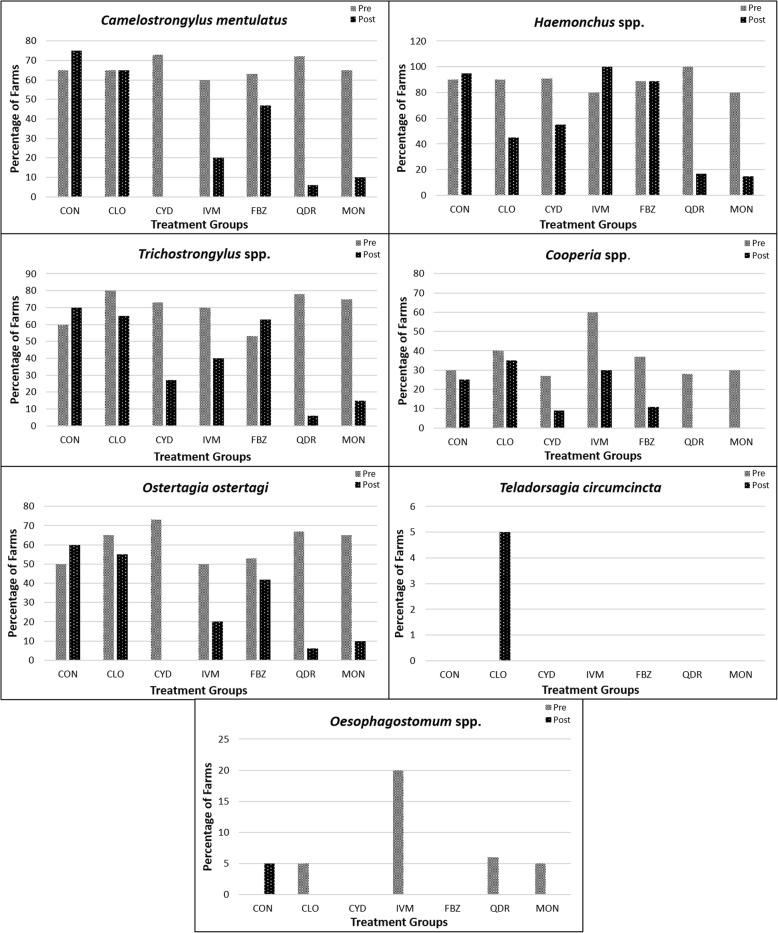
The response rate for the questionnaire was 94% (91/97). Almost half of the respondents kept alpacas with sheep and cattle, and 26% of respondents allowed alpacas to co-graze with these ruminants. Although only 63% respondents perceived worms to be an important health concern for alpacas, the majority of respondents (89%) used anthelmintics to control GINs of alpacas. The commonly used anthelmintics were macrocyclic lactones, monepantel, benzimidazoles, levamisole, closantel and their combinations, and they were typically administered at the dose rate recommended for sheep. The FECRT results showed that a combination of levamisole, closantel, albendazole and abamectin was the most effective dewormer followed by single drugs, including monepantel, moxidectin, closantel, fenbendazole and ivermectin. Haemonchus spp. were the most commonly resistant nematodes followed by Trichostrongylus spp., Camelostrongylus mentulatus, Ostertagia ostertagi and Cooperia spp.
This is the first study aimed at assessing worm control practices and efficacy of commonly used anthelmintics in alpacas in Australia. Our findings document the extent of anthelmintics resistance on Australian alpaca farms and identify those anthelmintics that are still effective against GINs of alpacas.
胃肠道线虫(GINs)可导致羊驼纤维和肉产量降低,从而造成重大经济损失。尽管没有驱虫药被注册用于羊驼,但在澳大利亚和其他国家,各种类别的驱虫药经常被用于控制羊驼的寄生性胃肠炎。目前对驱虫控制实践以及常用驱虫药对羊驼常见 GINs 的效果知之甚少。本研究旨在评估澳大利亚羊驼农民现有的驱虫控制实践,并量化常用驱虫药对羊驼 GINs 的效果。
对 97 家澳大利亚羊驼农场进行了一项在线问卷调查,重点评估驱虫药的使用情况。在这 97 家羊驼农场中,选择了 20 家农场来评估 8 种驱虫药及其组合(氯氰碘柳胺、芬苯达唑、伊维菌素、莫昔克丁和左旋咪唑、氯氰碘柳胺、阿苯达唑、阿维菌素)对羊驼胃肠道线虫的效果,使用粪便卵囊减少率检测(FECRT)。采用多重串联 PCR(MT-PCR)检测常见线虫属/种。
问卷的回复率为 94%(91/97)。近一半的受访者饲养绵羊和牛,26%的受访者允许羊驼与这些反刍动物一起放牧。尽管只有 63%的受访者认为寄生虫是羊驼的一个重要健康问题,但大多数受访者(89%)使用驱虫药来控制羊驼的胃肠道线虫。常用的驱虫药是大环内酯类、莫昔克丁、苯并咪唑类、左旋咪唑、氯氰碘柳胺及其组合,通常按照推荐给绵羊的剂量使用。FECRT 结果表明,左旋咪唑、氯氰碘柳胺、阿苯达唑和阿维菌素的组合是最有效的驱虫药,其次是单药,包括莫昔克丁、莫西菌素、氯氰碘柳胺、芬苯达唑和伊维菌素。对羊驼胃肠道线虫具有耐药性的最常见线虫是 Haemonchus spp.,其次是 Trichostrongylus spp.、Camelostrongylus mentulatus、Ostertagia ostertagi 和 Cooperia spp.
这是第一项旨在评估澳大利亚羊驼驱虫控制实践和常用驱虫药效果的研究。我们的研究结果记录了澳大利亚羊驼农场驱虫药耐药的程度,并确定了对羊驼胃肠道线虫仍然有效的驱虫药。