CAS Key Laboratory of Experimental Marine Biology, Institute of Oceanology, Chinese Academy of Sciences, Qingdao, China.
Laboratory for Marine Biology and Biotechnology, Qingdao National Laboratory for Marine Science and Technology, Qingdao, China.
Appl Environ Microbiol. 2018 Aug 31;84(18). doi: 10.1128/AEM.00445-18. Print 2018 Sep 15.
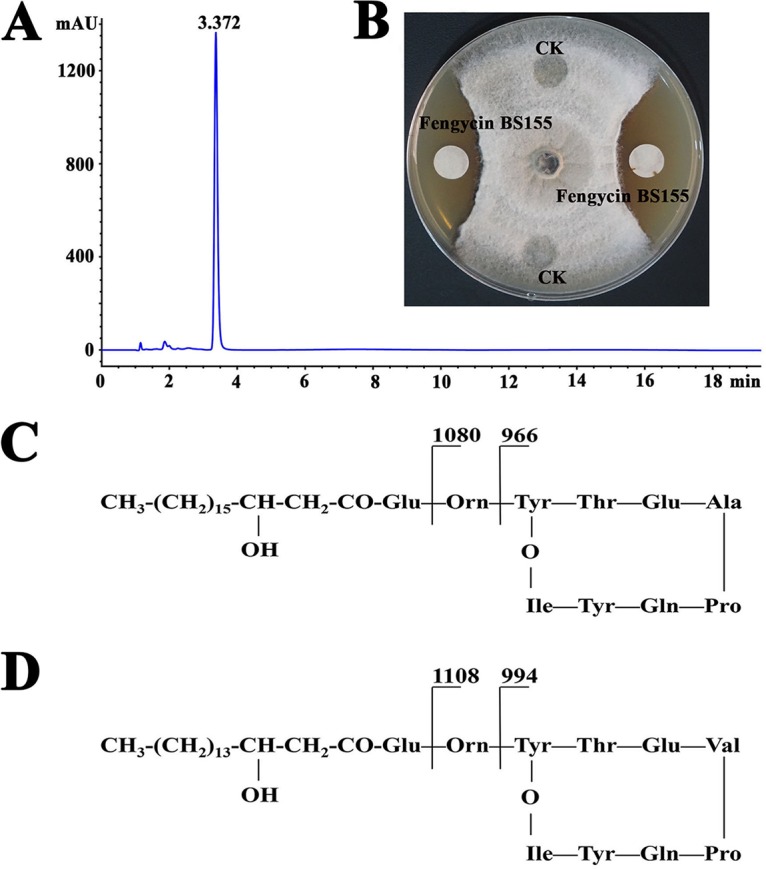
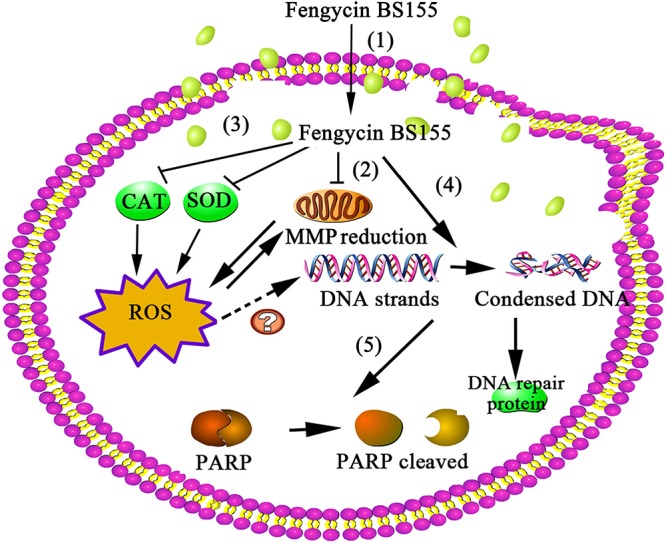
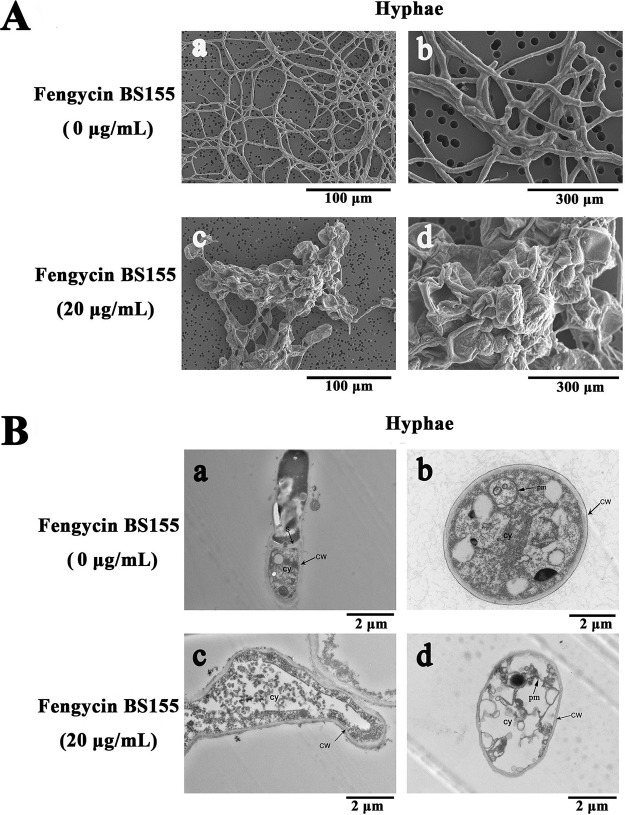
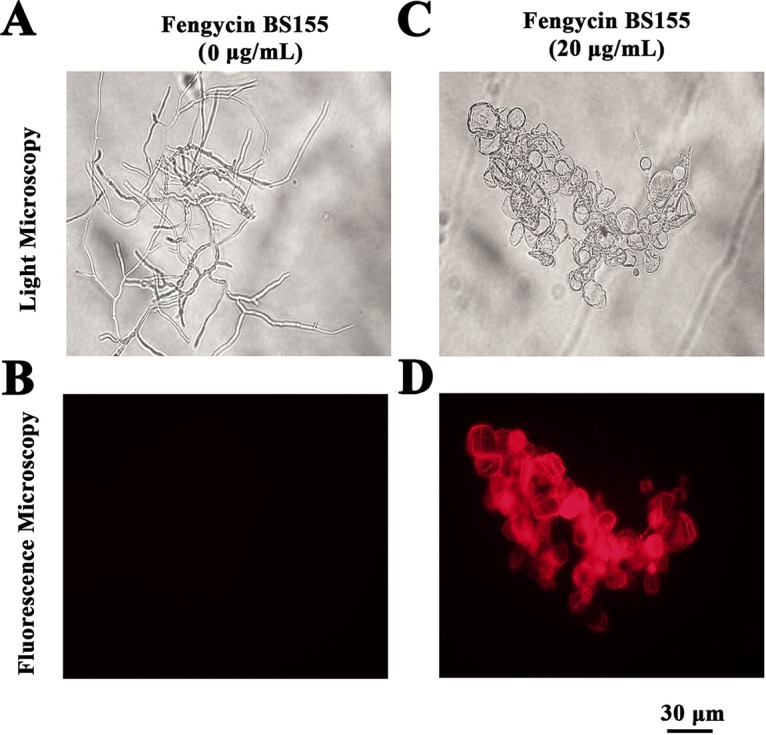
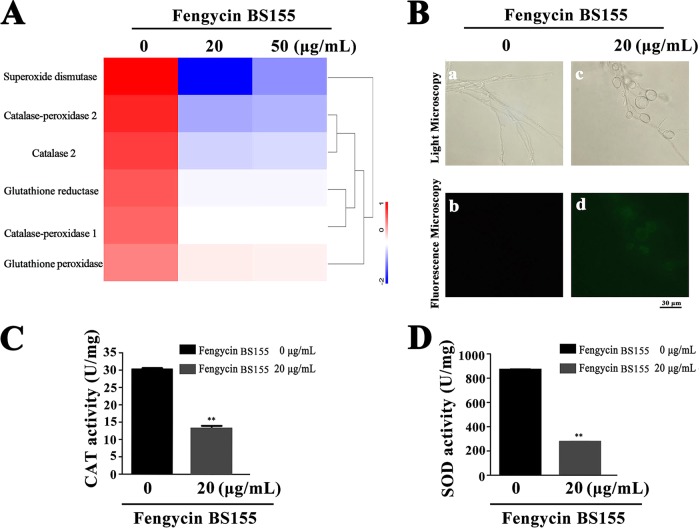
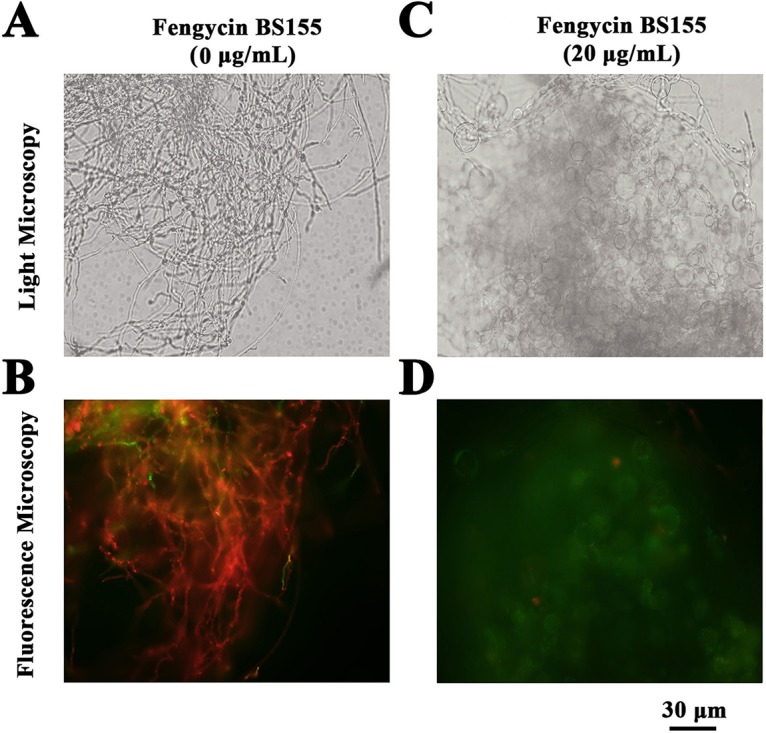
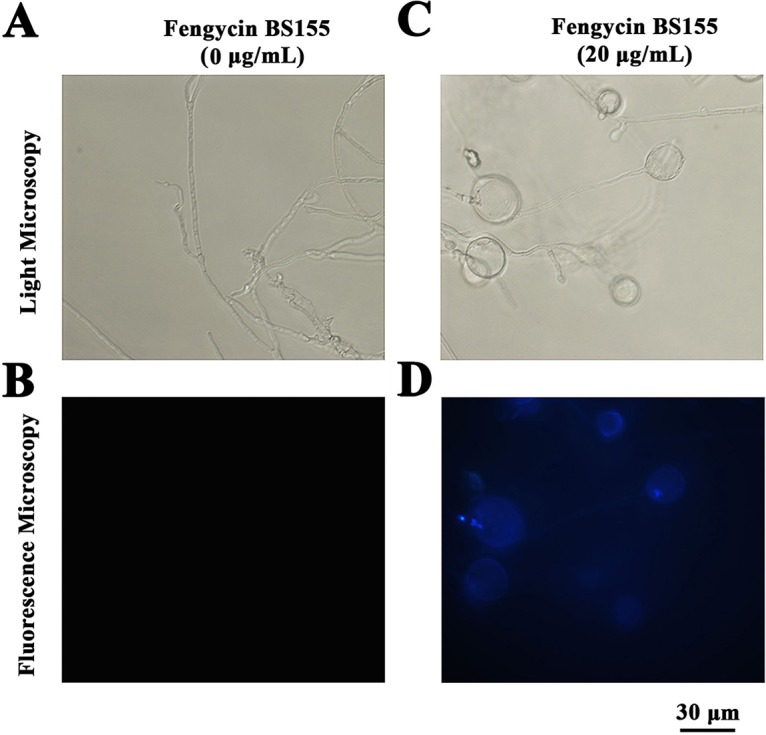
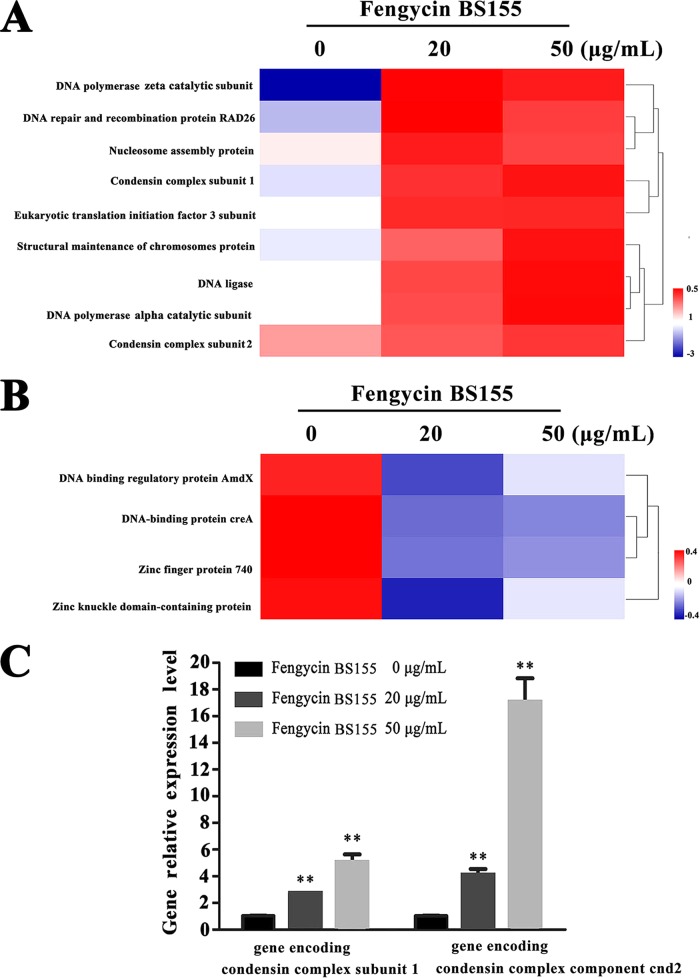
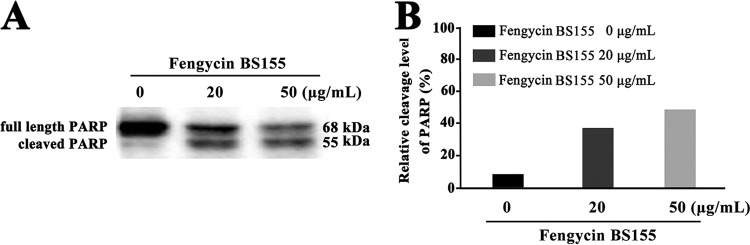
Rice blast caused by the phytopathogen poses a serious threat to global food security and is difficult to control. species have been extensively explored for the biological control of many fungal diseases. In the present study, the marine bacterium BS155 showed a strong antifungal activity against The active metabolites were isolated and identified as cyclic lipopeptides (CLPs) of the fengycin family, named fengycin BS155, by the combination of high-performance liquid chromatography (HPLC) and electrospray ionization mass spectrometry (ESI-MS) and tandem mass spectrometry (ESI-MS/MS). Analyses using scanning and transmission electron microscopy revealed that fengycin BS155 caused morphological changes in the plasma membrane and cell wall of hyphae. Using comparative proteomic and biochemical assays, fengycin BS155 was demonstrated to reduce the mitochondrial membrane potential (MMP), induce bursts of reactive oxygen species (ROS), and downregulate the expression level of ROS-scavenging enzymes. Simultaneously, fengycin BS155 caused chromatin condensation in fungal hyphal cells, which led to the upregulation of DNA repair-related protein expression and the cleavage of poly(ADP-ribose) polymerase (PARP). Altogether, our results indicate that fengycin BS155 acts by inducing membrane damage and dysfunction of organelles, disrupting MMP, oxidative stress, and chromatin condensation, resulting in hyphal cell death. Therefore, fengycin BS155 and its parent bacterium are very promising candidates for the biological control of and the associated rice blast and should be further investigated as such. Rice ( L.) is the most important crop and a primary food source for more than half of the world's population. Notably, scientists in China have developed several types of rice that can be grown in seawater, avoiding the use of precious freshwater resources and potentially creating enough food for 200 million people. The plant-affecting fungus is the causal agent of rice blast disease, and biological rather than chemical control of this threatening disease is highly desirable. In this work, we discovered fengycin BS155, a cyclic lipopeptide material produced by the marine bacterium BS155, which showed strong activity against Our results elucidate the mechanism of fengycin BS155-mediated growth inhibition and highlight the potential of BS155 as a biocontrol agent against in rice cultivation under both fresh- and saltwater conditions.
稻瘟病由植物病原体 引起,对全球粮食安全构成严重威胁,且难以控制。已经广泛探索了 物种来生物防治许多真菌病害。在本研究中,海洋细菌 BS155 对 表现出很强的抗真菌活性。通过高效液相色谱 (HPLC) 和电喷雾电离质谱 (ESI-MS) 以及串联质谱 (ESI-MS/MS) 的组合,分离并鉴定出活性代谢物为丰原素家族的环状脂肽 (CLP),命名为丰原素 BS155。扫描和透射电子显微镜分析表明,丰原素 BS155 导致 菌丝的质膜和细胞壁形态发生变化。通过比较蛋白质组学和生化分析,证明丰原素 BS155 降低了线粒体膜电位 (MMP),诱导活性氧 (ROS) 爆发,并下调了 ROS 清除酶的表达水平。同时,丰原素 BS155 导致真菌菌丝细胞中的染色质浓缩,导致与 DNA 修复相关的蛋白质表达上调和多聚 (ADP-核糖) 聚合酶 (PARP) 的切割。总的来说,我们的结果表明,丰原素 BS155 通过诱导膜损伤和细胞器功能障碍、破坏 MMP、氧化应激和染色质浓缩,导致菌丝细胞死亡。因此,丰原素 BS155 及其亲代细菌是防治稻瘟病和相关稻瘟病的极有前途的候选物,应进一步作为此类候选物进行研究。水稻 ( L.) 是最重要的作物,也是全球一半以上人口的主要食物来源。值得注意的是,中国科学家已经开发出几种可以在海水中生长的水稻,避免了宝贵的淡水资源的使用,并有可能为 2 亿人提供足够的食物。植物致病真菌 是稻瘟病的病原体,生物控制而不是化学控制这种威胁性疾病是非常可取的。在这项工作中,我们发现了丰原素 BS155,一种由海洋细菌 BS155 产生的环状脂肽物质,它对 表现出很强的活性。我们的结果阐明了丰原素 BS155 介导的 生长抑制机制,并强调了 BS155 在淡水和咸水环境下水稻种植中作为防治 的生物防治剂的潜力。