Atherosclerosis Research Laboratory, Wihuri Research Institute, Haartmaninkatu 8, 00290 Helsinki, Finland.
Research Programs Unit, Faculty of Medicine, University of Helsinki, Haartmaninkatu 8, P.O. Box 63, 00014 University of Helsinki, Finland.
Eur Heart J. 2018 Jul 14;39(27):2562-2573. doi: 10.1093/eurheartj/ehy319.
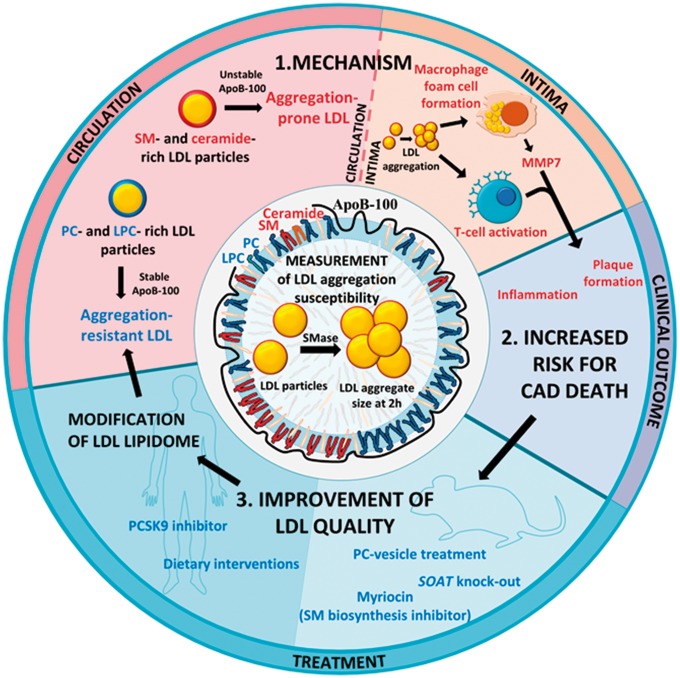
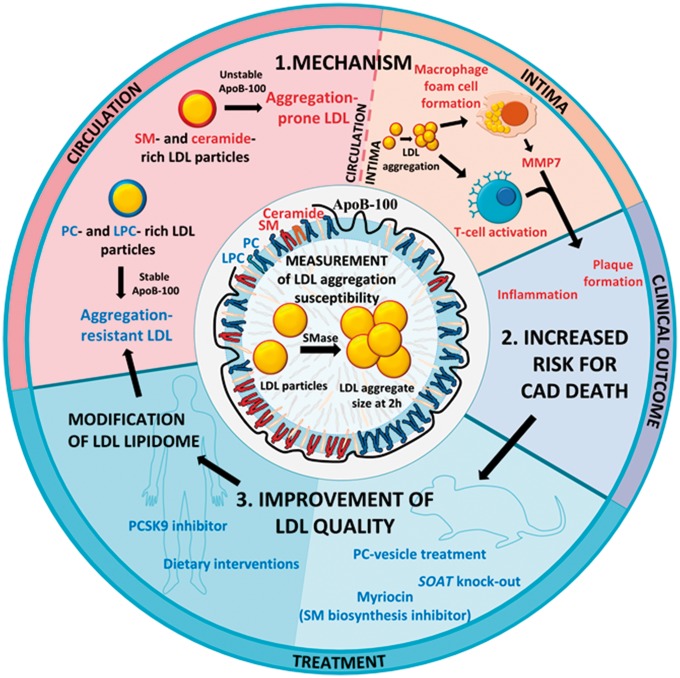
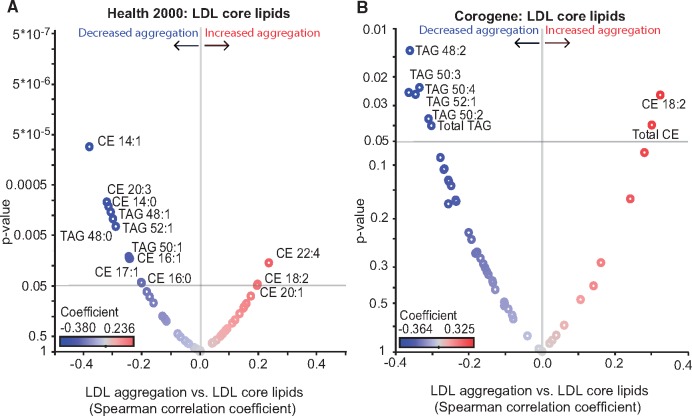
Low-density lipoprotein (LDL) particles cause atherosclerotic cardiovascular disease (ASCVD) through their retention, modification, and accumulation within the arterial intima. High plasma concentrations of LDL drive this disease, but LDL quality may also contribute. Here, we focused on the intrinsic propensity of LDL to aggregate upon modification. We examined whether inter-individual differences in this quality are linked with LDL lipid composition and coronary artery disease (CAD) death, and basic mechanisms for plaque growth and destabilization.
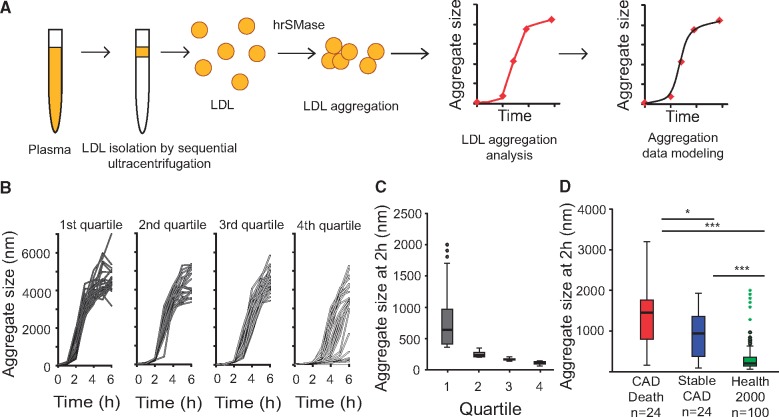
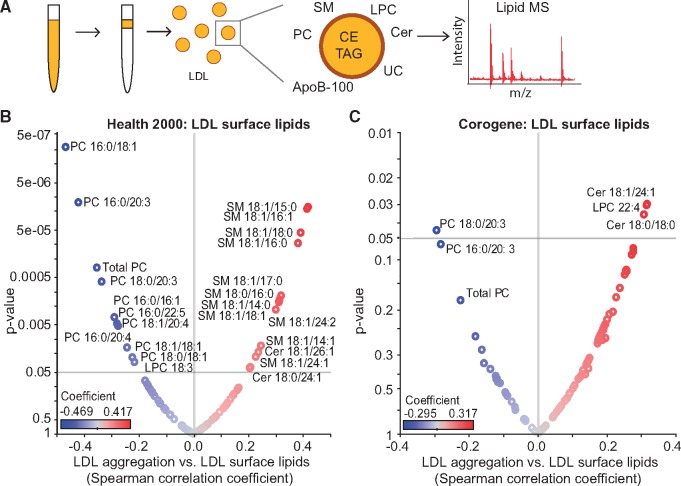
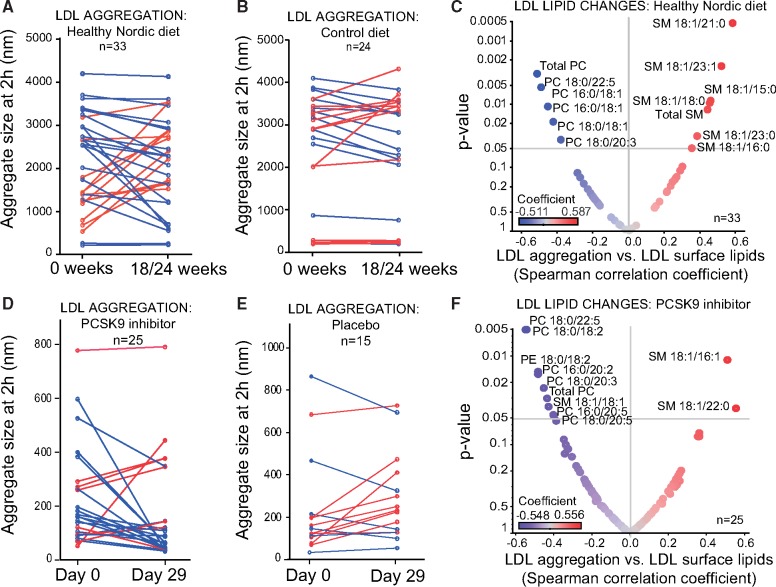
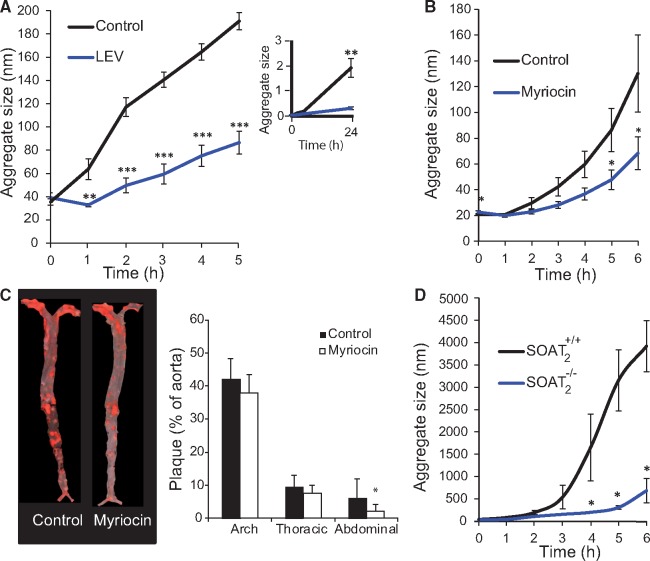
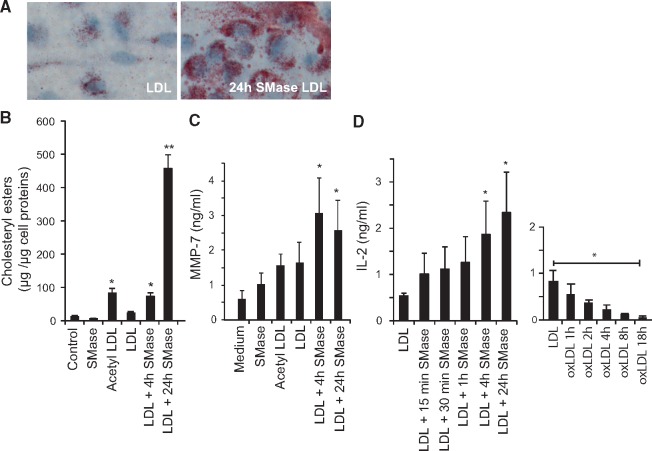
We developed a novel, reproducible method to assess the susceptibility of LDL particles to aggregate during lipolysis induced ex vivo by human recombinant secretory sphingomyelinase. Among patients with an established CAD, we found that the presence of aggregation-prone LDL was predictive of future cardiovascular deaths, independently of conventional risk factors. Aggregation-prone LDL contained more sphingolipids and less phosphatidylcholines than did aggregation-resistant LDL. Three interventions in animal models to rationally alter LDL composition lowered its susceptibility to aggregate and slowed atherosclerosis. Similar compositional changes induced in humans by PCSK9 inhibition or healthy diet also lowered LDL aggregation susceptibility. Aggregated LDL in vitro activated macrophages and T cells, two key cell types involved in plaque progression and rupture.
Our results identify the susceptibility of LDL to aggregate as a novel measurable and modifiable factor in the progression of human ASCVD.
低密度脂蛋白(LDL)颗粒通过在动脉内膜中的滞留、修饰和积累引起动脉粥样硬化性心血管疾病(ASCVD)。LDL 的高血浆浓度驱动这种疾病,但 LDL 的质量也可能有贡献。在这里,我们专注于 LDL 在修饰后聚集的固有倾向。我们研究了这种质量的个体间差异是否与 LDL 脂质组成和冠心病(CAD)死亡有关,以及斑块生长和不稳定的基本机制。
我们开发了一种新的、可重复的方法来评估 LDL 颗粒在人重组分泌鞘磷脂酶体外诱导的脂解过程中聚集的敏感性。在已确诊 CAD 的患者中,我们发现易于聚集的 LDL 的存在可预测未来的心血管死亡,独立于传统的危险因素。与不易聚集的 LDL 相比,易于聚集的 LDL 含有更多的鞘磷脂和更少的磷脂酰胆碱。在动物模型中进行的三种干预措施可以合理地改变 LDL 组成,从而降低其聚集的敏感性并减缓动脉粥样硬化的进展。PCSK9 抑制或健康饮食在人类中引起的类似组成变化也降低了 LDL 聚集的敏感性。体外聚集的 LDL 激活了巨噬细胞和 T 细胞,这两种细胞类型参与了斑块的进展和破裂。
我们的研究结果确定了 LDL 易于聚集作为人类 ASCVD 进展中的一个新的可测量和可调节的因素。