Biological Sciences Institute, Federal University of Goiás, Goiânia, GO, Brazil.
Center for Studies and Toxicological-Pharmacological Research, Faculty of Pharmacy, Federal University of Goiás, Goiânia, Brazil.
Biomed Res Int. 2018 Jun 10;2018:7156435. doi: 10.1155/2018/7156435. eCollection 2018.
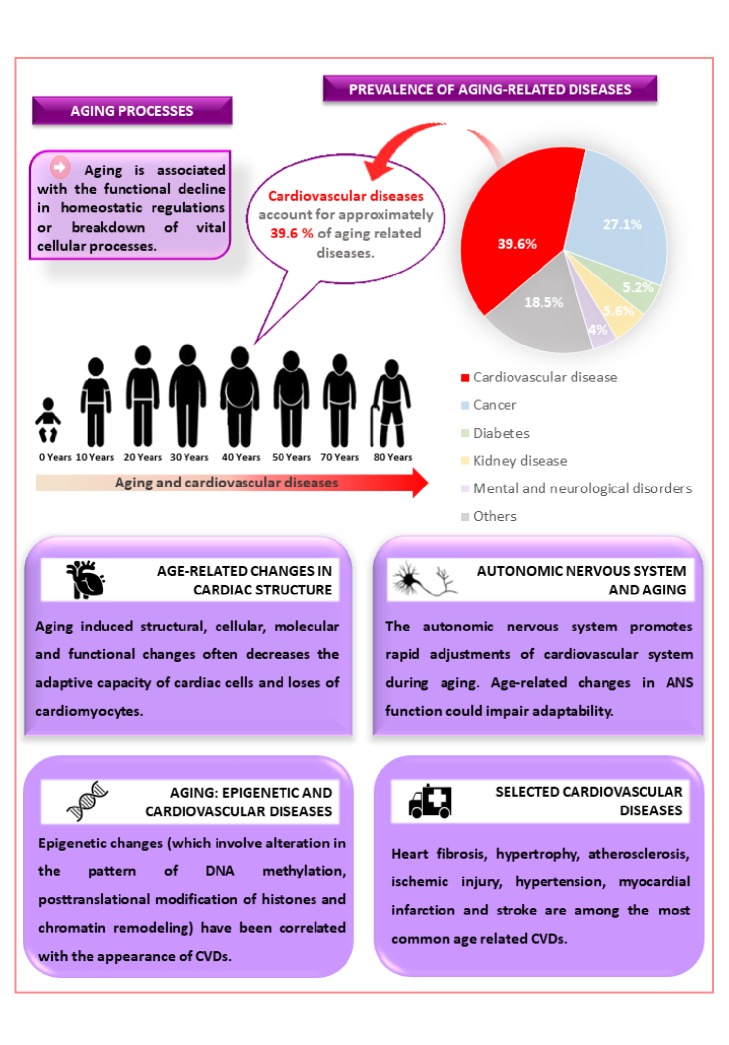
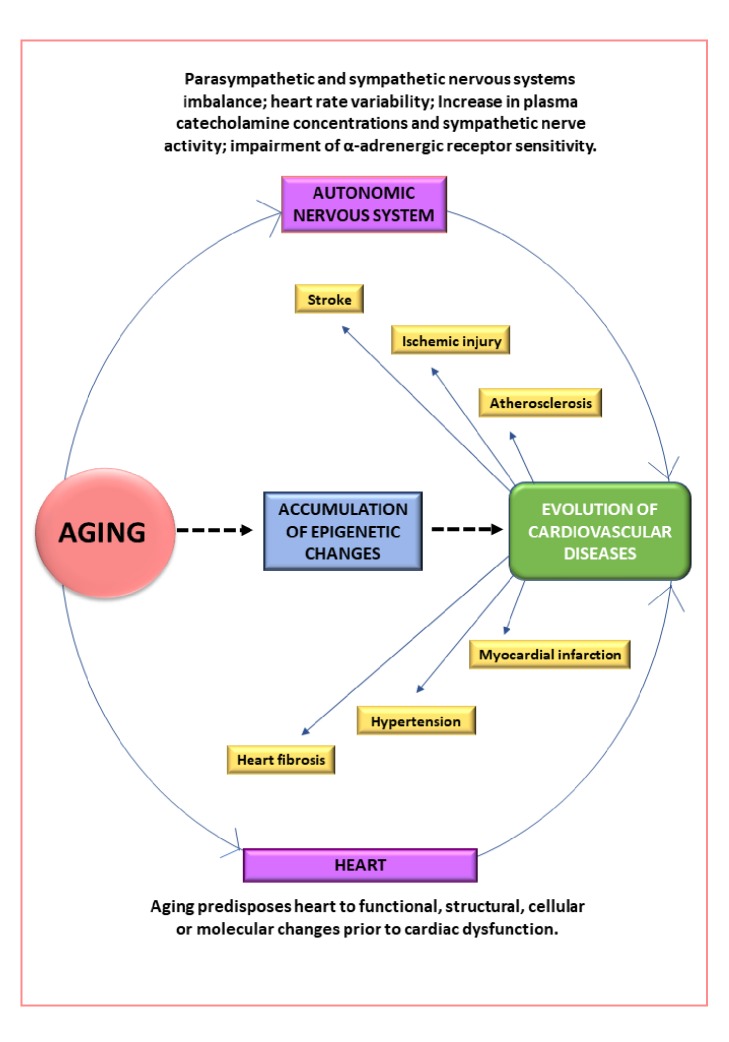
Aging is characterized by functional decline in homeostatic regulation and vital cellular events. This process can be linked with the development of cardiovascular diseases (CVDs). In this review, we discussed aging-induced biological alterations that are associated with CVDs through the following aspects: (i) structural, biochemical, and functional modifications; (ii) autonomic nervous system (ANS) dysregulation; (iii) epigenetic alterations; and (iv) atherosclerosis and stroke development. Aging-mediated structural and biochemical modifications coupled with gradual loss of ANS regulation, vascular stiffening, and deposition of collagen and calcium often disrupt cardiovascular system homeostasis. The structural and biochemical adjustments have been consistently implicated in the progressive increase in mechanical burden and functional breakdown of the heart and vessels. In addition, cardiomyocyte loss in this process often reduces adaptive capacity and cardiovascular function. The accumulation of epigenetic changes also plays important roles in the development of CVDs. In summary, the understanding of the aging-mediated changes remains promising towards effective diagnosis, discovery of new drug targets, and development of new therapies for the treatment of CVDs.
衰老是指体内平衡调节和重要细胞事件的功能下降。这个过程可能与心血管疾病(CVDs)的发展有关。在这篇综述中,我们讨论了衰老引起的生物学改变,这些改变通过以下几个方面与 CVDs 相关:(i)结构、生化和功能改变;(ii)自主神经系统(ANS)失调;(iii)表观遗传改变;和(iv)动脉粥样硬化和中风的发展。衰老介导的结构和生化改变,加上自主神经系统调节逐渐丧失、血管僵硬以及胶原和钙的沉积,常常破坏心血管系统的内稳态。结构和生化的调整一直与心脏和血管的机械负荷逐渐增加以及功能衰竭有关。此外,在此过程中心肌细胞的损失通常会降低适应性和心血管功能。表观遗传变化的积累也在 CVDs 的发展中起着重要作用。总之,对衰老介导的变化的理解对于有效诊断、发现新的药物靶点以及开发治疗 CVDs 的新疗法具有广阔的前景。