Lee Gibok, Park Yong Il
School of Chemical Engineering, Chonnam National University, Gwangju 61186, Korea.
Nanomaterials (Basel). 2018 Jul 9;8(7):511. doi: 10.3390/nano8070511.
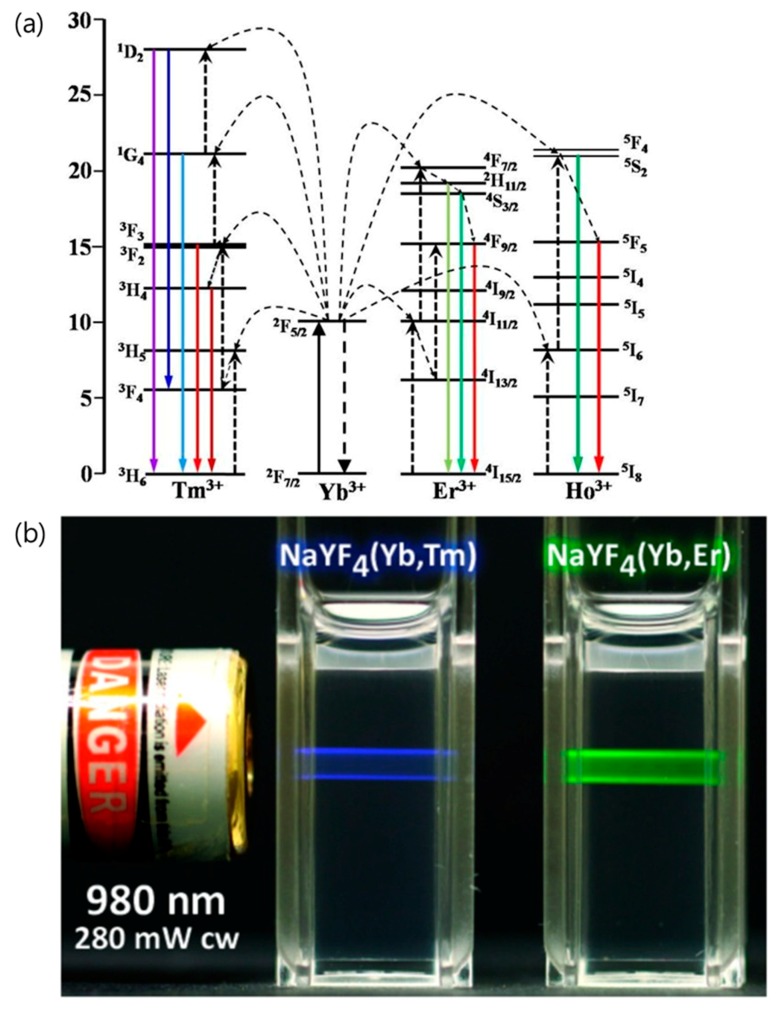
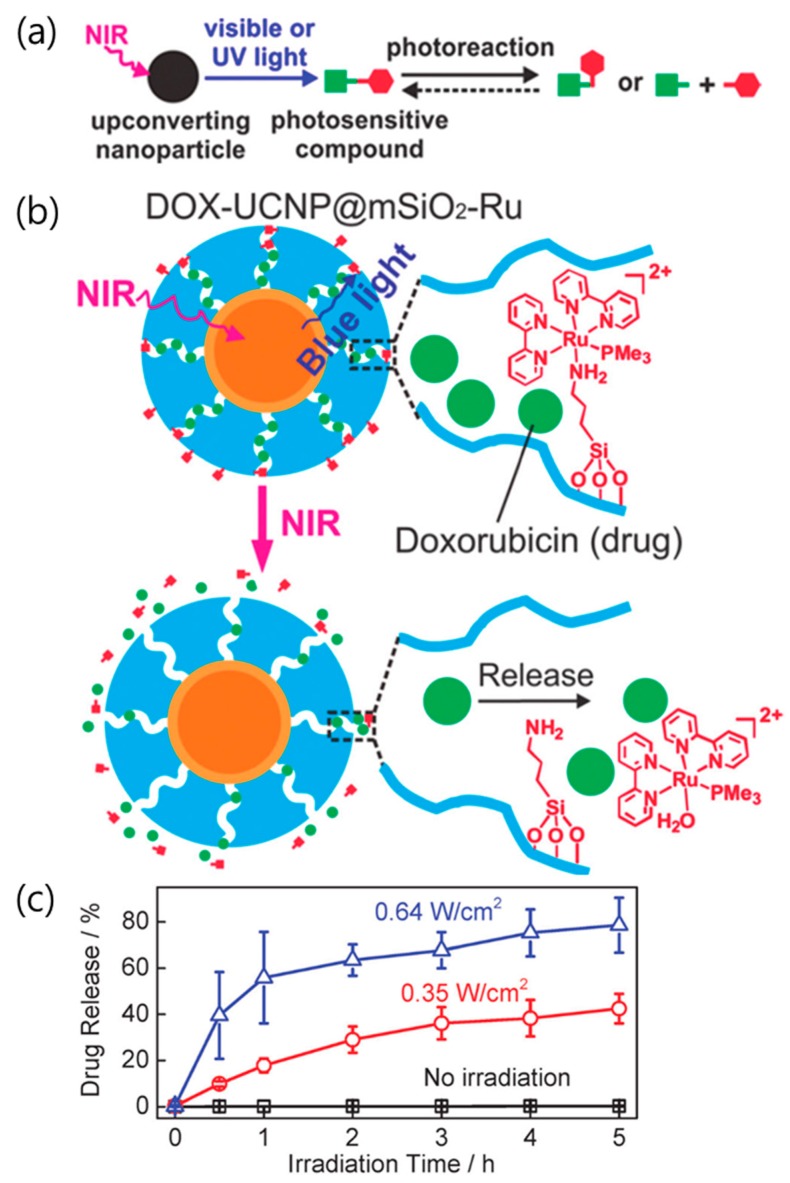
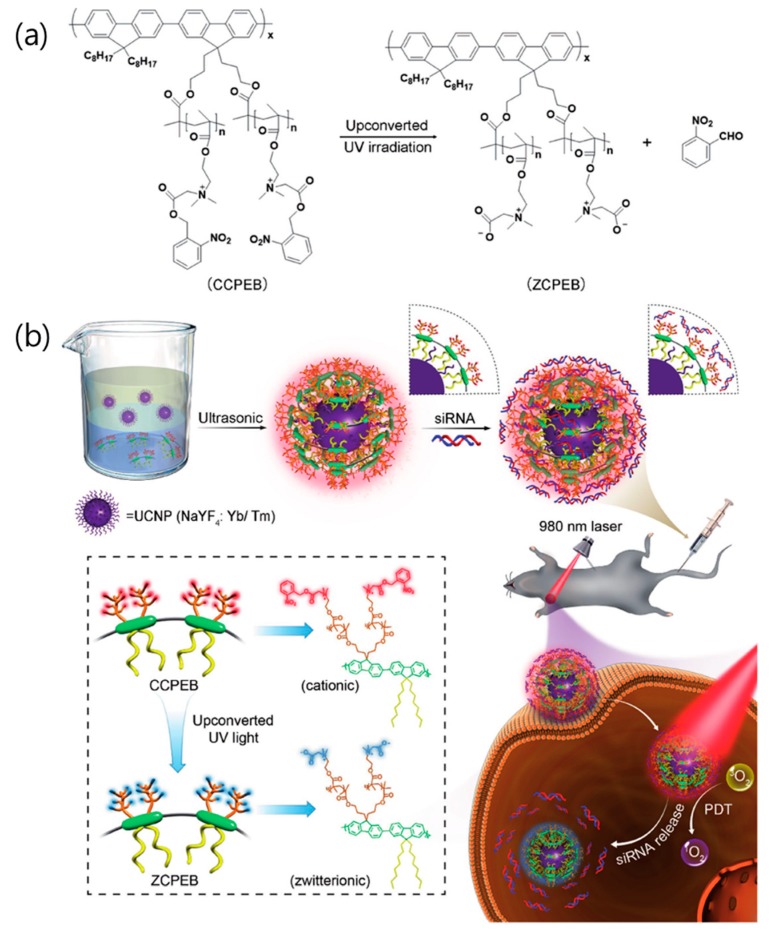
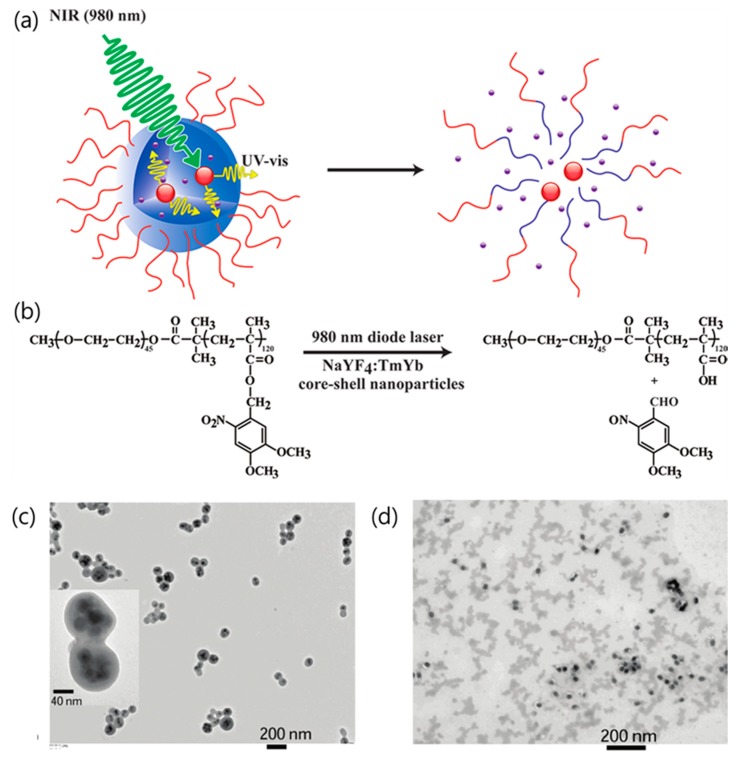
Compared to traditional cancer treatments, drug/gene delivery is an advanced, safe, and efficient method. Nanoparticles are widely used as nanocarriers in a drug/gene delivery system due to their long circulation time and low multi-drug resistance. In particular, lanthanide-doped upconversion nanoparticles (UCNPs) that can emit UV and visible light by near-infrared (NIR) upconversion demonstrated more efficient and safer drug/gene delivery. Because of the low penetration depth of UV and visible light, a photoinduced reaction such as photocleavage or photoisomerization has proven restrictive. However, NIR light has high tissue penetration depth and stimulates the photoinduced reaction through UV and visible emissions from lanthanide-doped UCNPs. This review discusses the optical properties of UCNPs that are useful in bioapplications and drug/gene delivery systems using the UCNPs as a photoreaction inducer.
与传统癌症治疗方法相比,药物/基因递送是一种先进、安全且高效的方法。纳米颗粒因其长循环时间和低多药耐药性而被广泛用作药物/基因递送系统中的纳米载体。特别是,镧系掺杂的上转换纳米颗粒(UCNPs)能够通过近红外(NIR)上转换发射紫外线和可见光,已证明其在药物/基因递送方面更高效、更安全。由于紫外线和可见光的穿透深度较低,光裂解或光异构化等光诱导反应已被证明具有局限性。然而,近红外光具有较高的组织穿透深度,并通过镧系掺杂的UCNPs发射的紫外线和可见光来刺激光诱导反应。本综述讨论了UCNPs的光学性质,这些性质在生物应用以及使用UCNPs作为光反应诱导剂的药物/基因递送系统中很有用。