Saunders K, King A M, McCahon D, Newman J W, Slade W R, Forss S
J Virol. 1985 Dec;56(3):921-9. doi: 10.1128/JVI.56.3.921-929.1985.
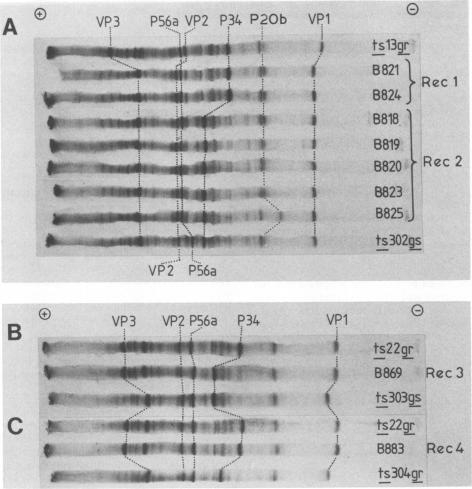
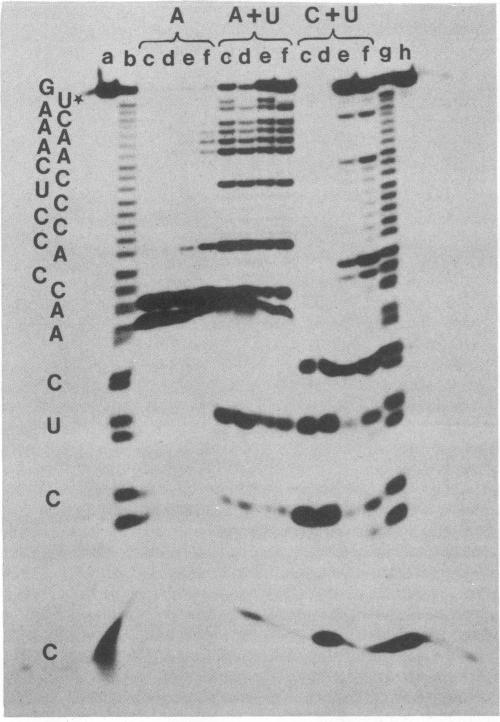
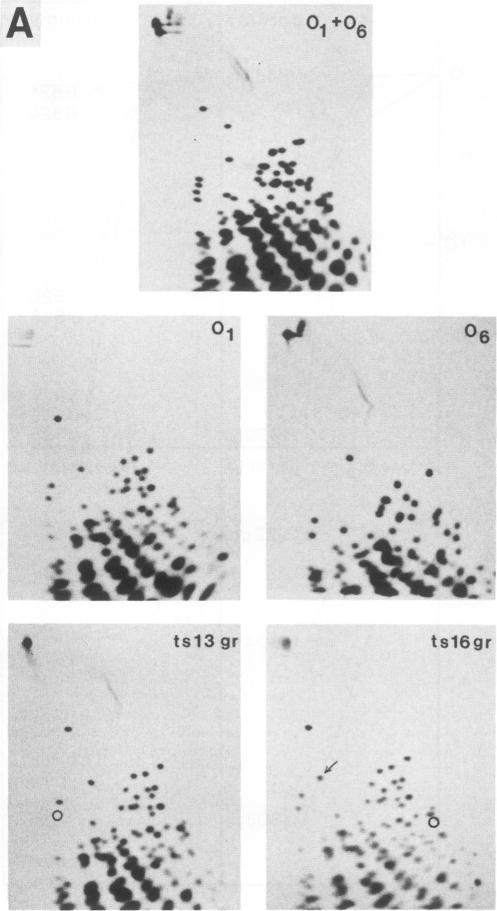
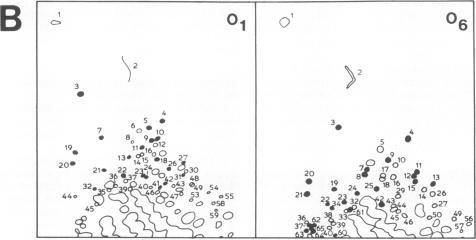
Guanidine resistance (gr) mutations of foot-and-mouth disease virus were mapped by recombining pairs of temperature-sensitive mutants belonging to different subtypes. In each cross, one parent possessed a gr mutation. Recombinants were isolated by selection at the nonpermissive temperature and assayed for the ability to grow in the presence of guanidine. From the progeny of three crosses, four different types of recombinant were distinguished on the basis of protein composition and RNA fingerprint. The sequences of the RNase T1-resistant oligonucleotides were determined and located in the full-length sequence of foot-and-mouth disease virus. The resulting maps show that (i) each recombinant was generated by a single genetic crossover, and (ii) both of the gr mutations studied were located within an internal 2.9-kilobase region which spans the P34 gene. This supports our hypothesis that guanidine inhibits the growth of foot-and-mouth disease virus by acting on nonstructural polypeptide P34. Additional evidence was provided by RNA fingerprinting gr mutants. In two of four cases the gr mutation was associated with a change in an oligonucleotide located near the 3' end of the P34 gene; in one of these the nucleotide substitution was identified.
通过重组属于不同亚型的一对对温度敏感型突变体,对口蹄疫病毒的胍抗性(gr)突变进行了定位。在每次杂交中,一个亲本具有gr突变。通过在非允许温度下进行选择来分离重组体,并检测其在胍存在下生长的能力。从三次杂交的子代中,根据蛋白质组成和RNA指纹图谱区分出四种不同类型的重组体。确定了RNase T1抗性寡核苷酸的序列,并将其定位在口蹄疫病毒的全长序列中。所得图谱表明:(i)每个重组体都是由一次基因交换产生的;(ii)所研究的两个gr突变均位于跨越P34基因的2.9千碱基内部区域内。这支持了我们的假设,即胍通过作用于非结构多肽P34来抑制口蹄疫病毒的生长。RNA指纹图谱分析gr突变体提供了额外的证据。在四个案例中的两个案例中,gr突变与位于P34基因3'端附近的一个寡核苷酸的变化有关;其中一个案例中鉴定出了核苷酸取代。