Department of Physical Education, Sport and Human Movement, Universidad Autónoma de Madrid, Madrid, Spain.
Laboratory of Exercise Physiology Research Group, Department of Health and Human Performance, School of Physical Activity and Sport Sciences-INEF, Universidad Politecnica de Madrid, Madrid, Spain.
PLoS One. 2018 Jul 11;13(7):e0200517. doi: 10.1371/journal.pone.0200517. eCollection 2018.
Nitrate-rich beetroot juice supplementation has been extensively used to increase exercise economy in different populations. However, its use in elite distance runners, and its potential effects on biomechanical aspects of running have not been properly investigated. This study aims to analyze the potential effects of 15 days of beetroot juice supplementation on physiological, psychological and biomechanical variables in elite runners.
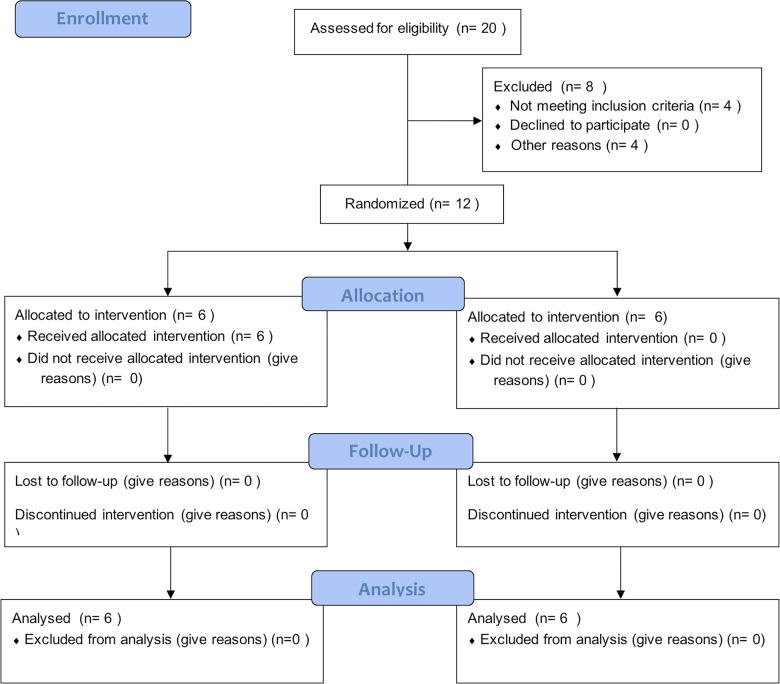
Twelve elite middle and long-distance runners (age = 26.3 ± 5.1yrs, VO2Max = 71.8±5.2 mlkg-1min-1) completed an incremental running test to exhaustion on a treadmill before and after a 15-days supplementation period, in which half of the group (EG) consumed a daily nitrate-rich beetroot juice and the other group (PG) consumed a placebo drink. Time to exhaustion (TEx), running economy, vastus lateralis oxygen saturation (SmO2), leg stiffness and rate of perceived exertion (RPE) were measured at 15, 17.1 and 20 km/h during the incremental test.
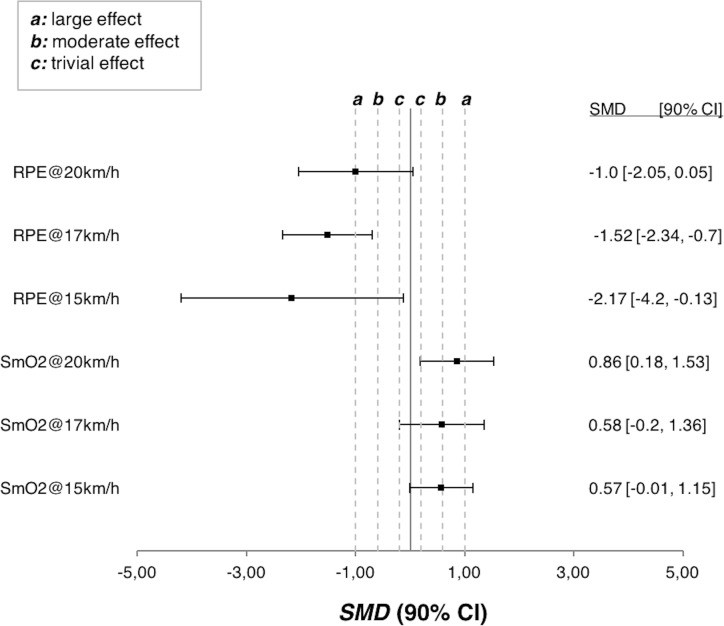
Likely to very likely improvements in EG were observed for the RPE (Standardized mean difference (SMD) = -2.17, 90%CI = -3.23, -1.1), SmO2 (SMD = 0.72, 90%CI = 0.03, 1.41) and TEx (SMD = 1.18, 90%CI = -0.14, 2.5) in comparison with PG. No other physiological or biomechanical variable showed substantial improvements after the supplementation period.
Fifteen days of nitrate-rich beetroot juice supplementation produced substantial improvements in the time to exhaustion in elite runners; however, it didn't produce meaningful improvements in running economy, VO2Max or mechanical parameters.
富含硝酸盐的甜菜根汁补充剂已被广泛用于提高不同人群的运动经济性。然而,它在精英长跑运动员中的应用及其对跑步生物力学方面的潜在影响尚未得到适当研究。本研究旨在分析 15 天甜菜根汁补充对精英跑步者生理、心理和生物力学变量的潜在影响。
12 名精英中长跑运动员(年龄=26.3±5.1 岁,最大摄氧量=71.8±5.2mlkg-1min-1)在 15 天补充期前后在跑步机上进行了一次递增跑步至力竭测试,其中一半组(EG)每天饮用富含硝酸盐的甜菜根汁,另一半组(PG)饮用安慰剂饮料。在递增测试中,以 15、17.1 和 20km/h 的速度测量力竭时间(TEx)、跑步经济性、股外侧肌氧饱和度(SmO2)、腿部僵硬和感知用力程度(RPE)。
与 PG 相比,EG 的 RPE(标准化均数差(SMD)=-2.17,90%CI=-3.23,-1.1)、SmO2(SMD=0.72,90%CI=0.03,1.41)和 TEx(SMD=1.18,90%CI=-0.14,2.5)有较大改善。补充后,其他生理或生物力学变量没有明显改善。
15 天富含硝酸盐的甜菜根汁补充可显著提高精英长跑运动员的力竭时间;然而,它并没有对跑步经济性、最大摄氧量或机械参数产生有意义的改善。