Yamakuchi Munekazu, Hashiguchi Teruto
Department of Laboratory and Vascular Medicine, Cardiovascular and Respiratory Disorders, Kagoshima University Graduate School of Medical and Dental Sciences, 8-35-1, Sakuragaoka, Kagoshima 890-8520, Japan.
J Clin Med. 2018 Jul 10;7(7):170. doi: 10.3390/jcm7070170.
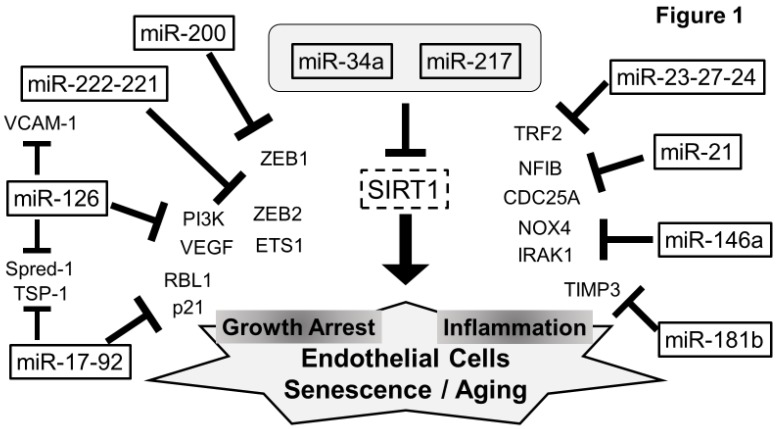
Endothelial cells (ECs) form monolayers and line the interior surfaces of blood vessels in the entire body. In most mammalian systems, the capacity of endothelial cells to divide is limited and endothelial cells are prone to be senescent. Aging of ECs and resultant endothelial dysfunction lead to a variety of vascular diseases such as atherosclerosis, diabetes mellites, hypertension, and ischemic injury. However, the mechanism by which ECs get old and become senescent and the impact of endothelial senescence on the vascular function are not fully understood. Recent research has unveiled the crucial roles of miRNAs, which are small non-coding RNAs, in regulating endothelial cellular functions, including nitric oxide production, vascular inflammation, and anti-thromboformation. In this review, how senescent-related miRNAs are involved in controlling the functions of ECs will be discussed.
内皮细胞(ECs)形成单层并衬于全身血管的内表面。在大多数哺乳动物系统中,内皮细胞的分裂能力有限,且容易衰老。内皮细胞衰老及由此导致的内皮功能障碍会引发多种血管疾病,如动脉粥样硬化、糖尿病、高血压和缺血性损伤。然而,内皮细胞衰老和发生衰老的机制以及内皮衰老对血管功能的影响尚未完全明确。最近的研究揭示了微小RNA(miRNAs,即小的非编码RNA)在调节内皮细胞功能(包括一氧化氮生成、血管炎症和抗血栓形成)中的关键作用。在本综述中,将讨论与衰老相关的微小RNA如何参与调控内皮细胞的功能。