Centre for Oral Immunobiology & Regenerative Medicine, Institute of Dentistry, Barts & The London School of Medicine and Dentistry, Queen Mary University of London, The Blizard Building, 4, Newark Street, E1 2AT, London, England, UK.
Department of Oral & Maxillofacial Surgery, China-British Joint Molecular Head and Neck Cancer Research Laboratory, Affiliated Hospital & School of Stomatology, Guizhou Medical University, Guizhou, China.
Mol Cancer. 2018 Jul 16;17(1):97. doi: 10.1186/s12943-018-0846-5.
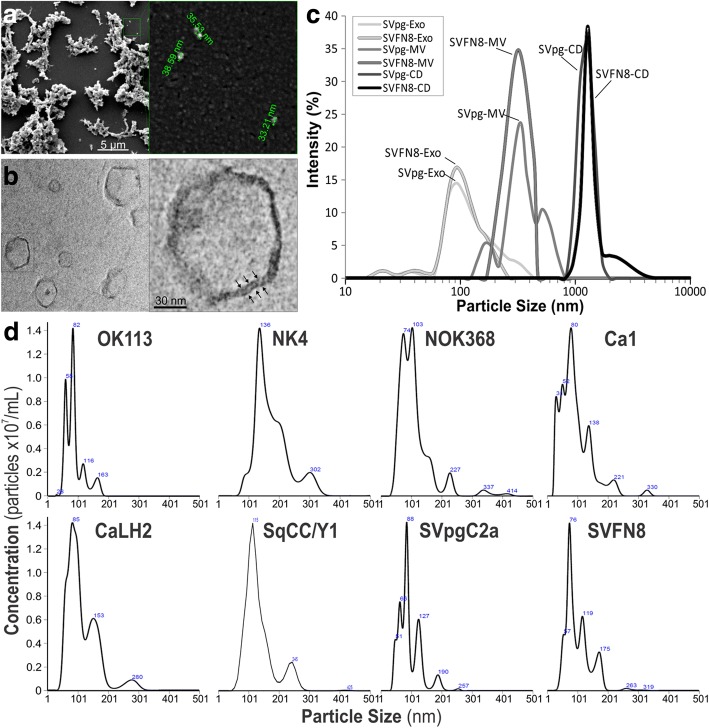
Exosomes are extracellular vesicles released by almost all cell types, including cancer cells, into bodily fluids such as saliva, plasma, breast milk, semen, urine, cerebrospinal fluid, amniotic fluid, synovial fluid and sputum. Their key function being intercellular communication with both neighbouring as well as distant cells. Cancer exosomes have been shown to regulate organ-specific metastasis. However, little is known about the functional differences and molecular consequences of normal cells responding to exosomes derived from normal cells compared to those derived from cancer cells.
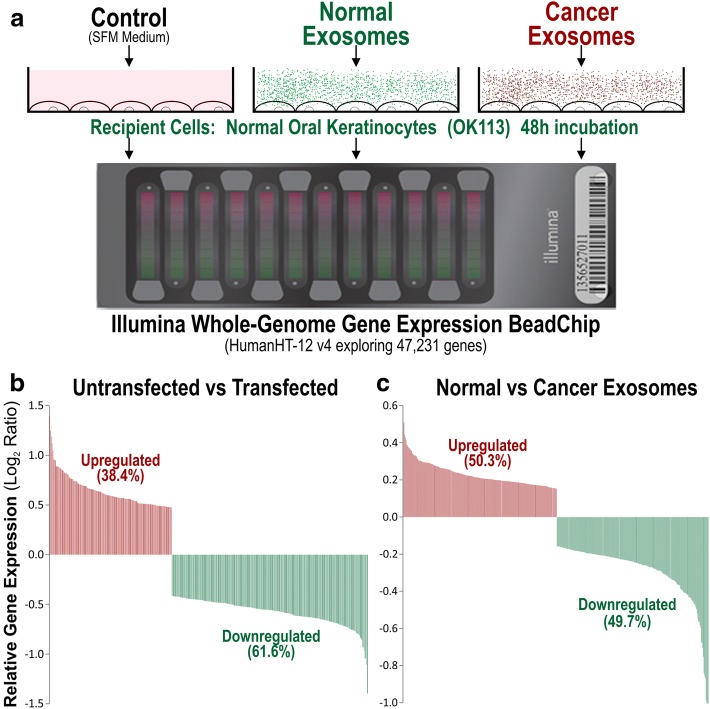
Here, we characterised and compared the transcriptome profiles of primary human normal oral keratinocytes (HNOK) in response to exosomes isolated from either primary HNOK or head and neck squamous cell carcinoma (HNSCC) cell lines.
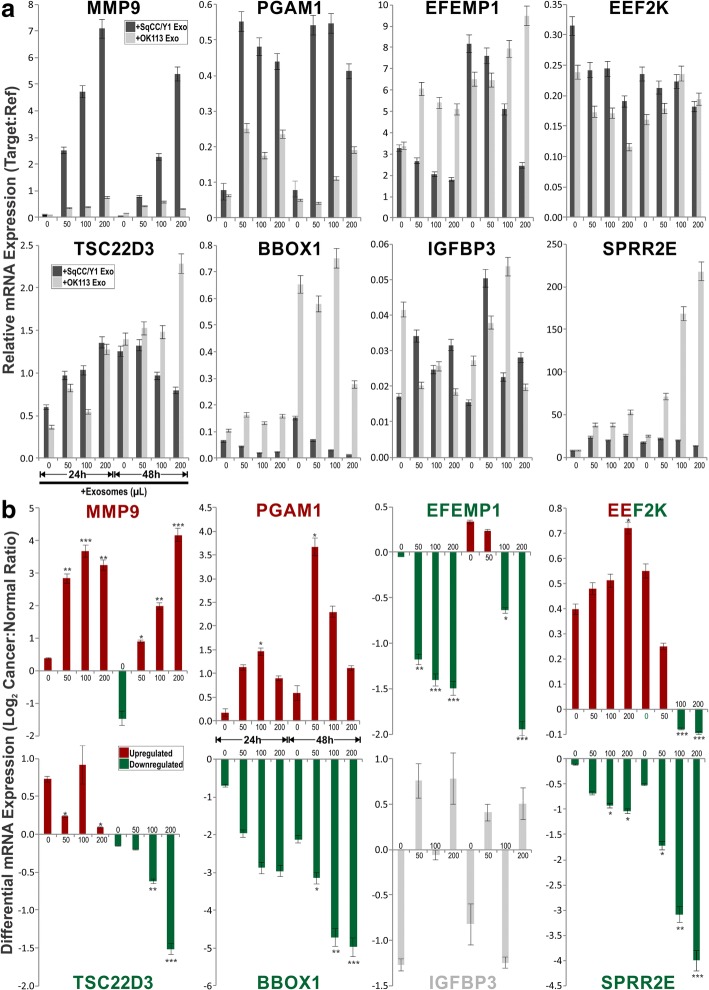
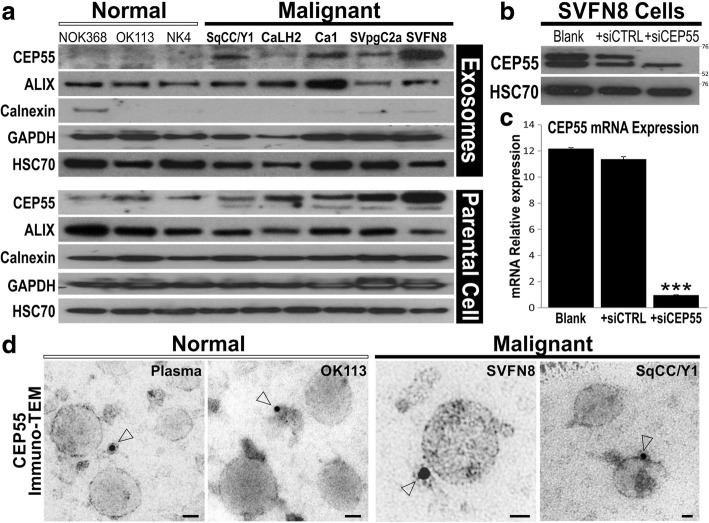
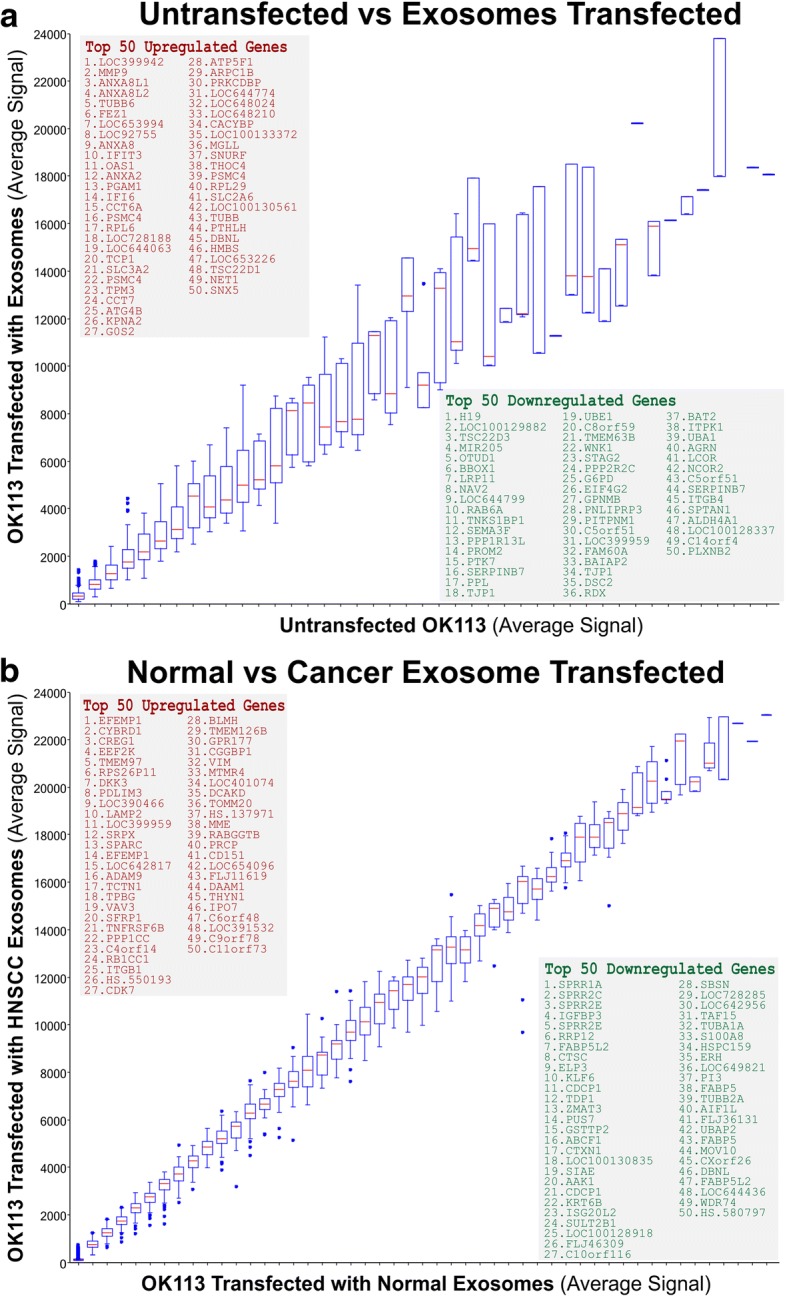
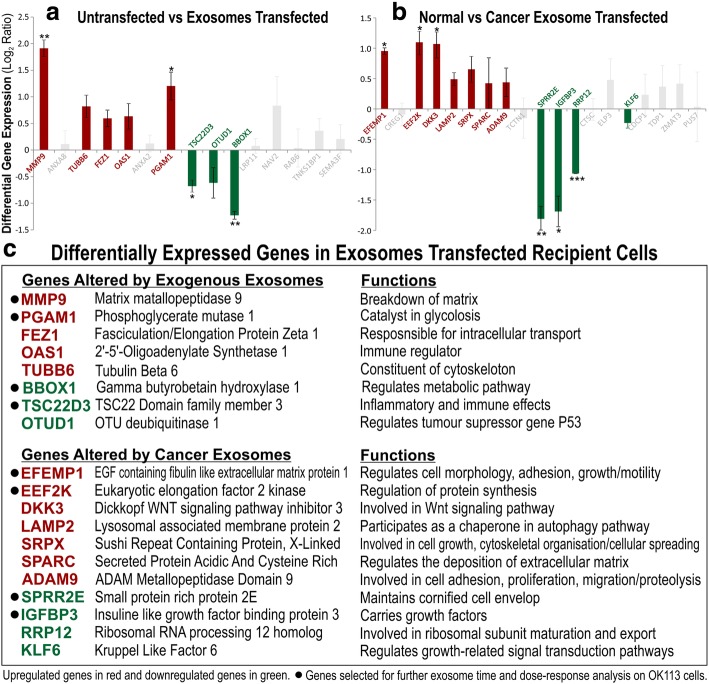
In recipient HNOK cells, we found that regardless of normal or cancer derived, exosomes altered molecular programmes involved in matrix modulation (MMP9), cytoskeletal remodelling (TUBB6, FEZ1, CCT6A), viral/dsRNA-induced interferon (OAS1, IFI6), anti-inflammatory (TSC22D3), deubiquitin (OTUD1), lipid metabolism and membrane trafficking (BBOX1, LRP11, RAB6A). Interestingly, cancer exosomes, but not normal exosomes, modulated expression of matrix remodelling (EFEMP1, DDK3, SPARC), cell cycle (EEF2K), membrane remodelling (LAMP2, SRPX), differentiation (SPRR2E), apoptosis (CTSC), transcription/translation (KLF6, PUS7). We have also identified CEP55 as a potential cancer exosomal marker.
In conclusion, both normal and cancer exosomes modulated unique gene expression pathways in normal recipient cells. Cancer cells may exploit exosomes to confer transcriptome reprogramming that leads to cancer-associated pathologies such as angiogenesis, immune evasion/modulation, cell fate alteration and metastasis. Molecular pathways and biomarkers identified in this study may be clinically exploitable for developing novel liquid-biopsy based diagnostics and immunotherapies.
外泌体是几乎所有细胞类型(包括癌细胞)释放到体液中的细胞外囊泡,如唾液、血浆、母乳、精液、尿液、脑脊液、羊水、滑液和痰液。它们的关键功能是与邻近细胞以及远处细胞进行细胞间通讯。已经表明,癌症外泌体可以调节器官特异性转移。然而,对于正常细胞对来自正常细胞的外泌体的反应与来自癌细胞的外泌体的功能差异和分子后果知之甚少。
在这里,我们对来自原发性人正常口腔角质形成细胞(HNOK)或头颈部鳞状细胞癌(HNSCC)细胞系的外泌体分离物的 HNOK 进行了特征描述和比较,并分析了它们的转录组谱。
在受者 HNOK 细胞中,我们发现,无论外泌体来自正常细胞还是癌症细胞,都改变了参与基质调节(MMP9)、细胞骨架重塑(TUBB6、FEZ1、CCT6A)、病毒/dsRNA 诱导的干扰素(OAS1、IFI6)、抗炎(TSC22D3)、去泛素(OTUD1)、脂质代谢和膜运输(BBOX1、LRP11、RAB6A)的分子程序。有趣的是,癌症外泌体而非正常外泌体调节了基质重塑(EFEMP1、DDK3、SPARC)、细胞周期(EEF2K)、膜重塑(LAMP2、SRPX)、分化(SPRR2E)、凋亡(CTSC)、转录/翻译(KLF6、PUS7)的表达。我们还鉴定了 CEP55 作为潜在的癌症外泌体标志物。
总之,正常和癌症外泌体都在正常受体细胞中调节了独特的基因表达途径。癌细胞可能利用外泌体来赋予转录组重编程,从而导致与癌症相关的病理,如血管生成、免疫逃避/调节、细胞命运改变和转移。本研究中鉴定的分子途径和生物标志物可能可用于开发基于液体活检的新型诊断和免疫疗法。