Hegerl Gabriele C, Brönnimann Stefan, Schurer Andrew, Cowan Tim
School of GeoSciences University of Edinburgh Edinburgh UK.
Oeschger Centre for Climate Change Research University of Bern Bern Switzerland.
Wiley Interdiscip Rev Clim Change. 2018 Jul-Aug;9(4):e522. doi: 10.1002/wcc.522. Epub 2018 Apr 25.
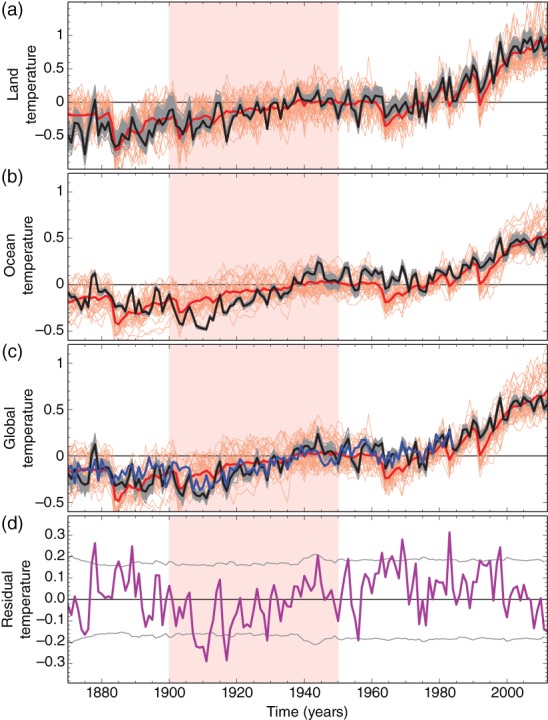
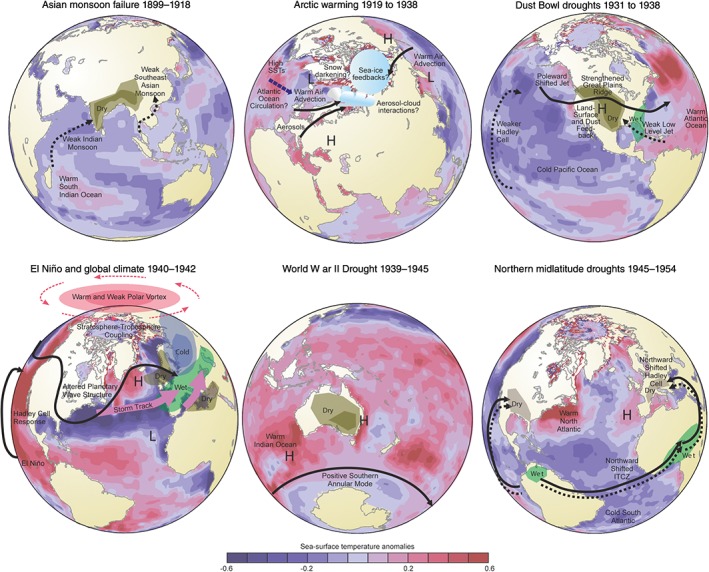
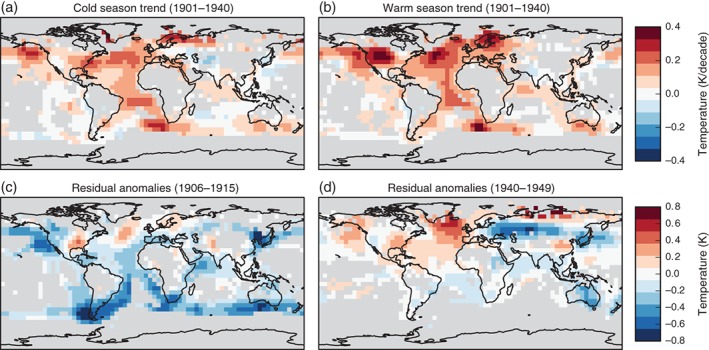
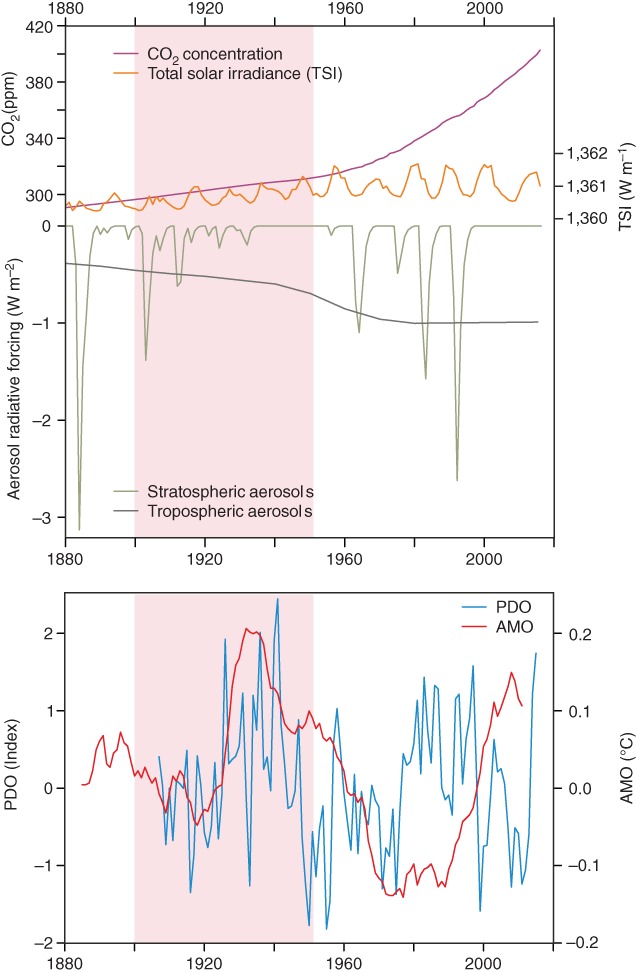
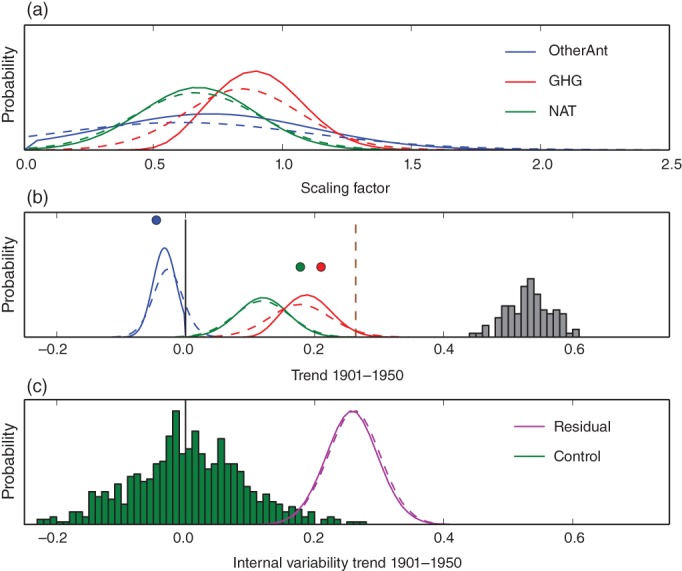
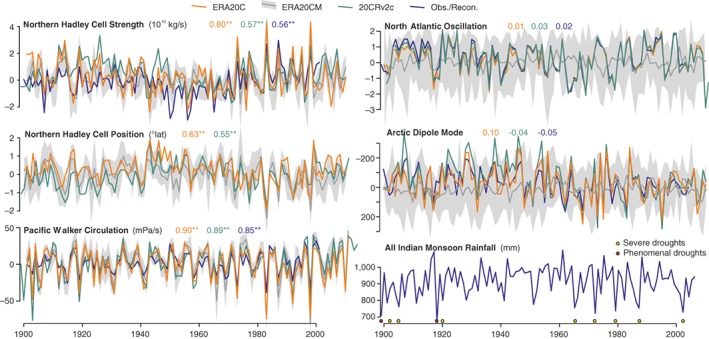
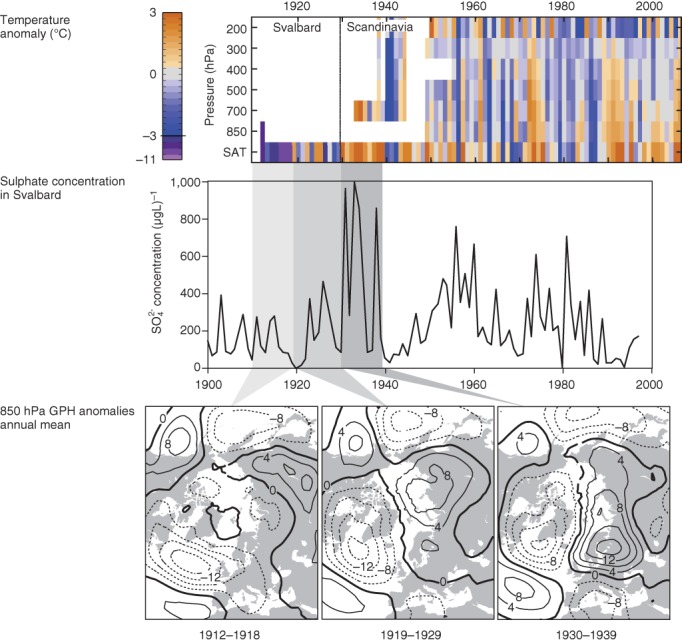
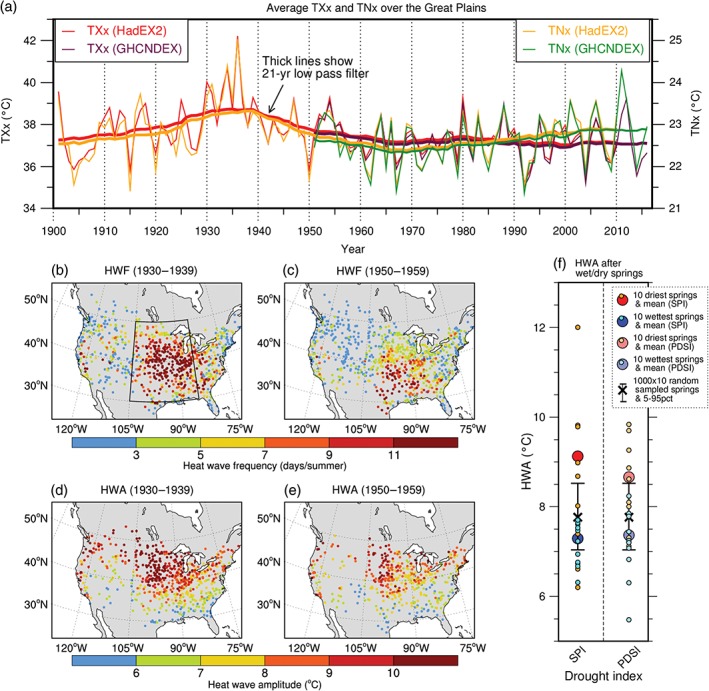
The most pronounced warming in the historical global climate record prior to the recent warming occurred over the first half of the 20th century and is known as the Early Twentieth Century Warming (ETCW). Understanding this period and the subsequent slowdown of warming is key to disentangling the relationship between decadal variability and the response to human influences in the present and future climate. This review discusses the observed changes during the ETCW and hypotheses for the underlying causes and mechanisms. Attribution studies estimate that about a half (40-54%; > .8) of the global warming from 1901 to 1950 was forced by a combination of increasing greenhouse gases and natural forcing, offset to some extent by aerosols. Natural variability also made a large contribution, particularly to regional anomalies like the Arctic warming in the 1920s and 1930s. The ETCW period also encompassed exceptional events, several of which are touched upon: Indian monsoon failures during the turn of the century, the "Dust Bowl" droughts and extreme heat waves in North America in the 1930s, the World War II period drought in Australia between 1937 and 1945; and the European droughts and heat waves of the late 1940s and early 1950s. Understanding the mechanisms involved in these events, and their links to large scale forcing is an important test for our understanding of modern climate change and for predicting impacts of future change. This article is categorized under:Paleoclimates and Current Trends > Modern Climate Change.
在近期变暖之前的历史全球气候记录中,最为显著的变暖发生在20世纪上半叶,被称为20世纪早期变暖(ETCW)。了解这一时期以及随后变暖的放缓,是厘清年代际变率与当前和未来气候中对人类影响的响应之间关系的关键。本综述讨论了ETCW期间观测到的变化以及潜在原因和机制的假说。归因研究估计,1901年至1950年全球变暖的大约一半(40 - 54%;> 0.8)是由温室气体增加和自然强迫共同作用导致的,气溶胶在一定程度上起到了抵消作用。自然变率也有很大贡献,特别是对20世纪20年代和30年代北极变暖等区域异常情况。ETCW时期还包含一些特殊事件,其中有几个被提及:世纪之交印度季风的失败、20世纪30年代北美“尘暴区”的干旱和极端热浪、1937年至1945年澳大利亚二战时期的干旱,以及20世纪40年代末和50年代初欧洲的干旱和热浪。了解这些事件所涉及的机制及其与大规模强迫的联系,是检验我们对现代气候变化的理解以及预测未来变化影响的重要依据。本文分类如下:古气候与当前趋势>现代气候变化。