Xu Zihao, Li Zhuqing, Jiang Shan, Bratlie Kaitlin M
Department of Materials Science & Engineering and Department of Chemical & Biological Engineering, Iowa State University, Ames, Iowa 50011, United States.
Division of Materials Science & Engineering, Ames National Laboratory, Ames, Iowa 50011, United States.
ACS Omega. 2018 Jun 30;3(6):6998-7007. doi: 10.1021/acsomega.8b00683. Epub 2018 Jun 27.
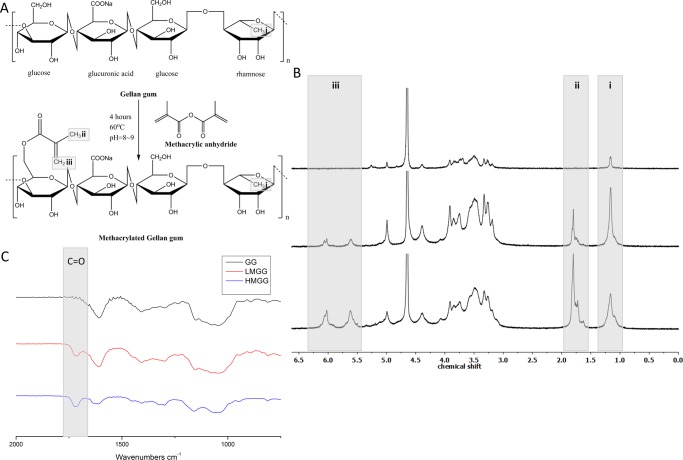
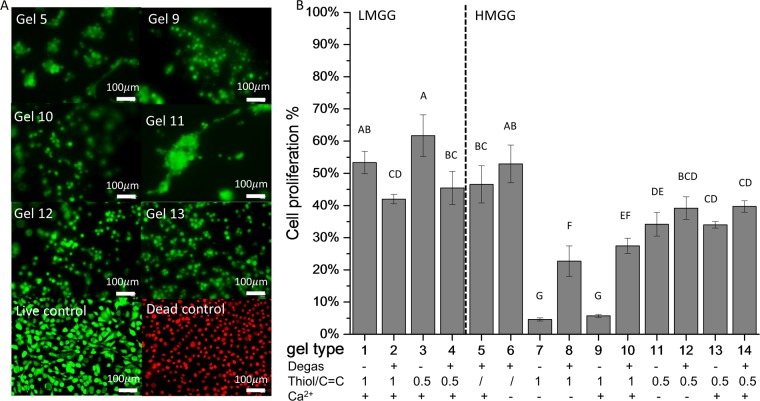
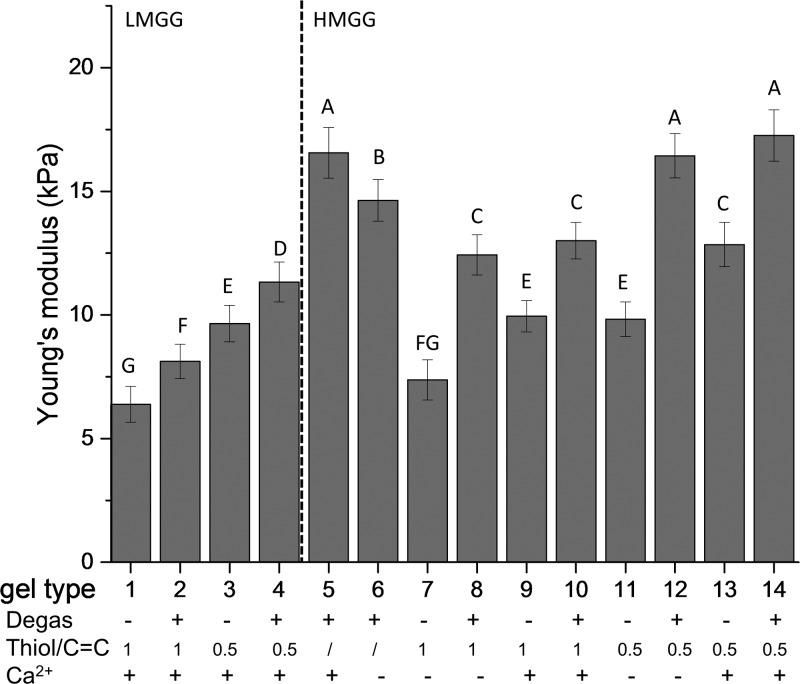
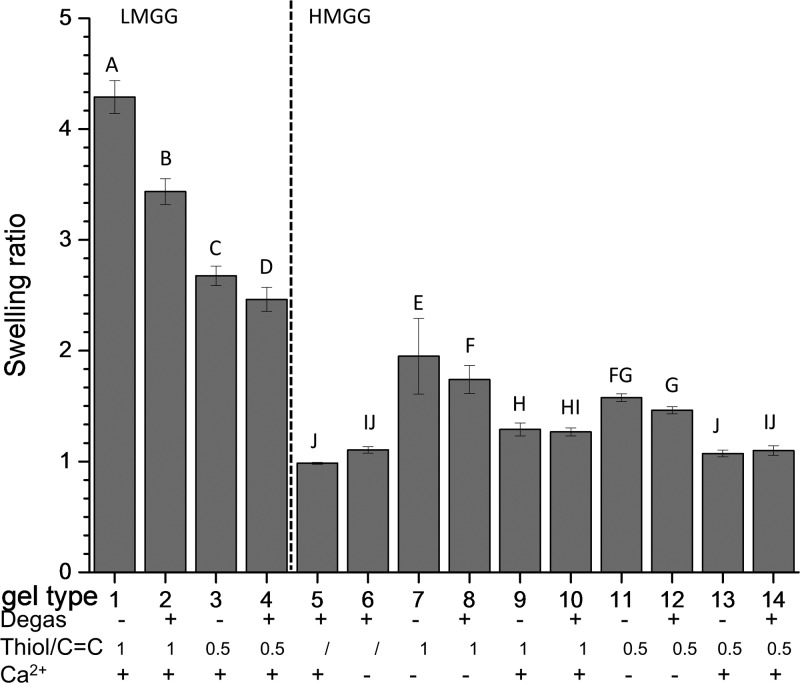
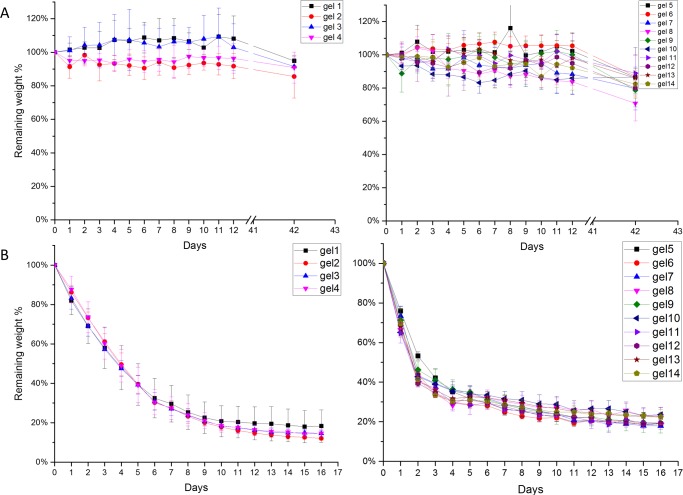
Gellan gum is a naturally occurring polymer that can cross-link in the presence of divalent cations to form biocompatible hydrogels. However, physically cross-linked gellan gum hydrogels lose their stability under physiological conditions, thus restricting the applications of these hydrogels in vivo. To improve the mechanical strength of the gels, we incorporated methacrylate into the gellan gum and chemically cross-linked the hydrogel through three polymerization methods: step growth through thiol-ene photoclick chemistry, chain-growth via photopolymerization, and mixed model in which both mechanisms were employed. Methacrylation was confirmed and quantified by proton nuclear magnetic resonance (H NMR) and Fourier transform infrared spectroscopy. The mechanical properties and chemistry of the cross-linked gels were systematically altered by varying the reaction conditions. The compression moduli of the resulting hydrogels ranged between 6.4 and 17.2 kPa. The swelling ratios of the hydrogels were correlated with the compression moduli and affected by the addition of calcium. In vitro enzymatic degradation rate was found to depend on the degree of methacrylation. NIH/3T3 fibroblast cell proliferation and morphology were related to substrate stiffness, with a high stiffness leading generally to higher proliferation. The proliferation is further affected by the thiol-ene ratio. These results suggest that a hydrogel platform based on the gellan gum can offer versatile chemical modifications and tunable mechanical properties. The influence of these substrates on cell behavior suggests that the gellan gum hydrogels have the flexibility to be engineered for a variety of biomaterials applications.
结冷胶是一种天然存在的聚合物,在二价阳离子存在下可交联形成生物相容性水凝胶。然而,物理交联的结冷胶水凝胶在生理条件下会失去稳定性,从而限制了这些水凝胶在体内的应用。为了提高凝胶的机械强度,我们将甲基丙烯酸酯引入结冷胶中,并通过三种聚合方法对水凝胶进行化学交联:通过硫醇-烯光点击化学进行逐步增长聚合、通过光聚合进行链增长聚合以及同时采用这两种机制的混合模式。通过质子核磁共振(H NMR)和傅里叶变换红外光谱对甲基丙烯酰化进行了确认和定量。通过改变反应条件,系统地改变了交联凝胶的机械性能和化学性质。所得水凝胶的压缩模量在6.4至17.2 kPa之间。水凝胶的溶胀率与压缩模量相关,并受钙添加量的影响。发现体外酶降解速率取决于甲基丙烯酰化程度。NIH/3T3成纤维细胞的增殖和形态与底物硬度有关,高硬度通常导致更高的增殖。增殖进一步受硫醇-烯比例的影响。这些结果表明,基于结冷胶的水凝胶平台可以提供多种化学修饰和可调节的机械性能。这些底物对细胞行为的影响表明,结冷胶水凝胶具有灵活性,可设计用于各种生物材料应用。