Marek Marta, Horyniecki Maciej, Frączek Michał, Kluczewska Ewa
Department of Radiology and Radiodiagnostics, School of Medicine with the Division of Dentistry in Zabrze, Medical University of Silesia, Katowice, Poland.
Department of Neurology, School of Medicine with the Division of Dentistry in Zabrze, Medical University of Silesia, Katowice, Poland.
Pol J Radiol. 2018 Feb 15;83:e76-e81. doi: 10.5114/pjr.2018.74344. eCollection 2018.
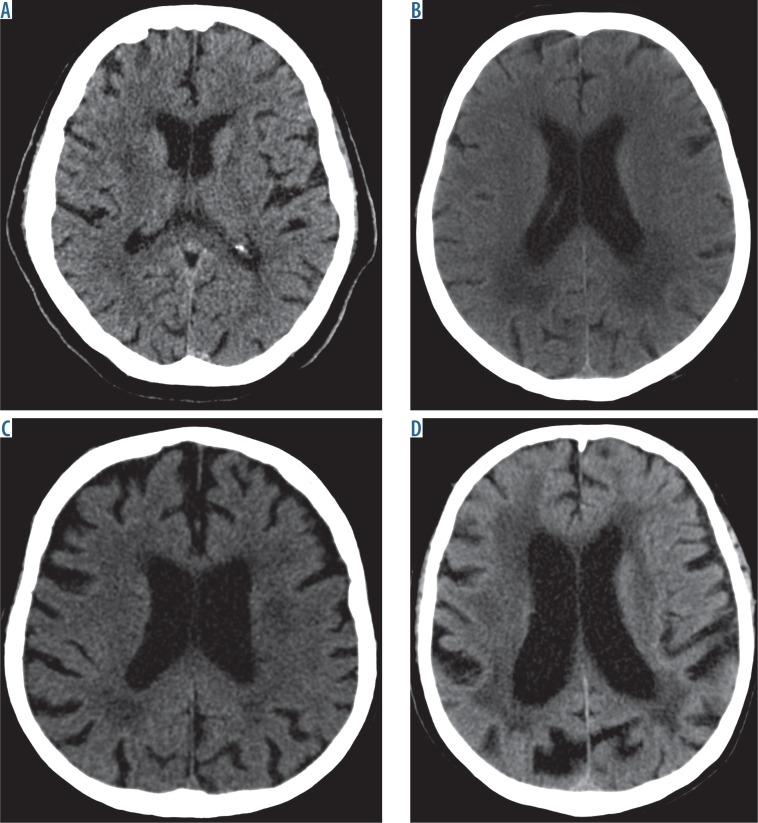
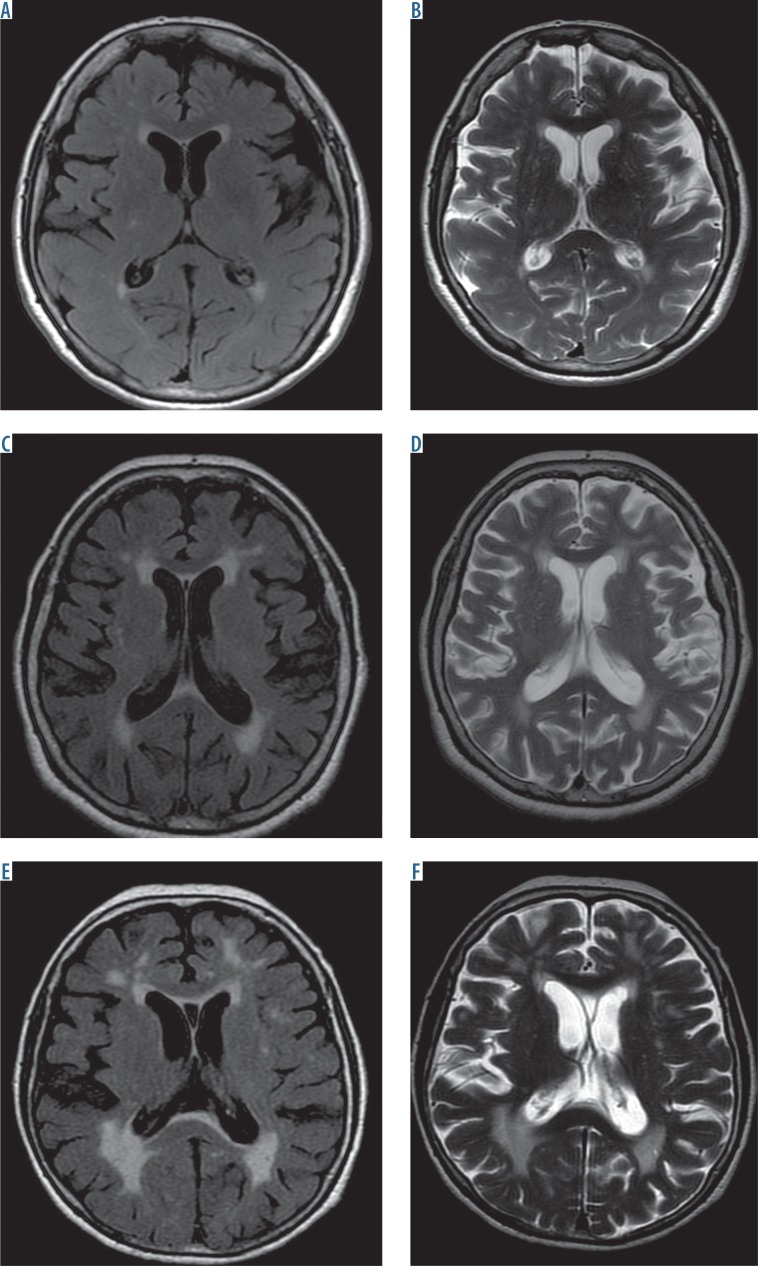
Leukoaraiosis is a pathological appearance of the brain white matter, which has long been believed to be caused by perfusion disturbances within the arterioles perforating through the deep brain structures. Due to its complex etiopathogenesis and clinical relevance, leukoaroisosis has been investigated in a multitude of studies. As regards the clinical implications of leukoaraiosis, this neuroimaging finding is strongly related to ischaemic stroke, unfavourable course of ischaemic stroke in the acute phase, worse long-term outcomes, and cognitive disturbances. The morphological changes in the deep white matter that are collectively described as leukoaraiosis, despite a seemingly homogenous appearance, probably resulting from various causes, such as atherosclerosis, neurotoxic factors including radiation therapy and chemotherapy, and neuroinfections. Based on our experience and recent literature, we present the symptomatology of leukoaroisosis and similar radiological abnormalities of the cerebral white matter.
脑白质疏松是脑白质的一种病理表现,长期以来一直被认为是由穿透深部脑结构的小动脉灌注紊乱所致。由于其复杂的病因病机和临床相关性,脑白质疏松已在众多研究中得到探讨。关于脑白质疏松的临床意义,这一神经影像学发现与缺血性中风、急性期缺血性中风的不良病程、较差的长期预后以及认知障碍密切相关。深部白质的形态学改变被统称为脑白质疏松,尽管其外观看似均匀,但可能由多种原因引起,如动脉粥样硬化、包括放疗和化疗在内的神经毒性因素以及神经感染。基于我们的经验和近期文献,我们介绍脑白质疏松的症状学以及脑白质类似的放射学异常。