Weber Marbod, Steinle Heidrun, Golombek Sonia, Hann Ludmilla, Schlensak Christian, Wendel Hans P, Avci-Adali Meltem
Department of Thoracic and Cardiovascular Surgery, University Hospital Tübingen, Tübingen, Germany.
Front Bioeng Biotechnol. 2018 Jul 16;6:99. doi: 10.3389/fbioe.2018.00099. eCollection 2018.
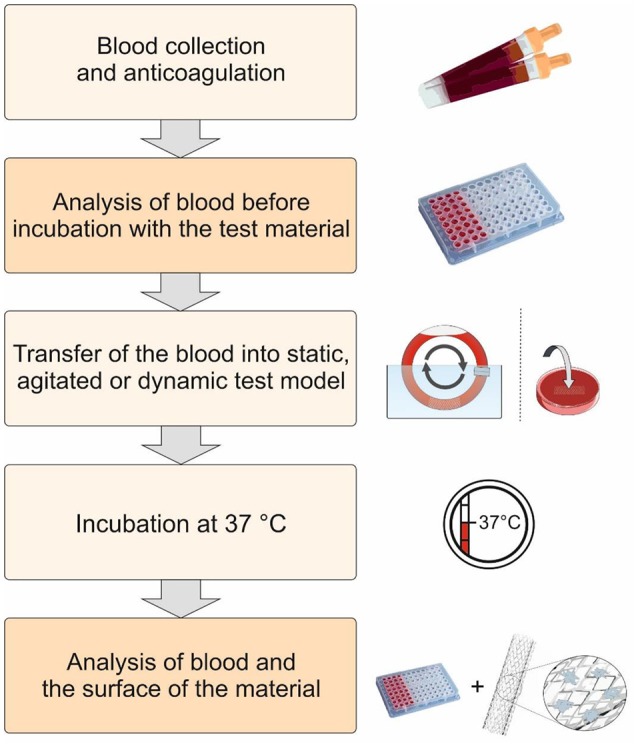
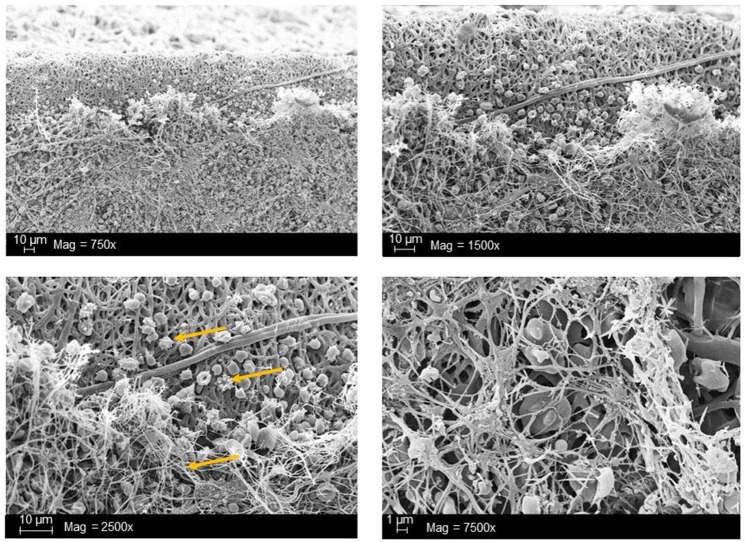
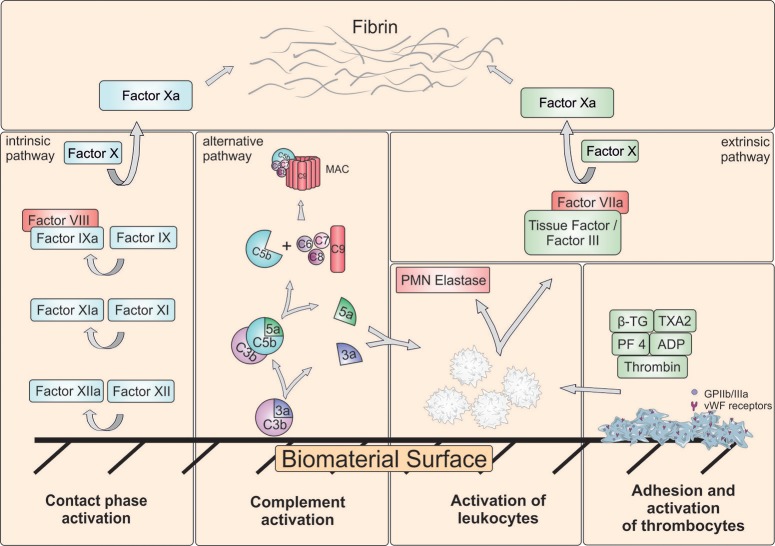
Hemocompatibility of blood-contacting biomaterials is one of the most important criteria for their successful applicability. Thus, extensive analyses according to ISO 10993-4 are required prior to clinical applications. In this review, we summarize essential aspects regarding the evaluation of the hemocompatibility of biomaterials and the required analyses for determining the blood compatibility. Static, agitated, or shear flow models are used to perform hemocompatibility studies. Before and after the incubation of the test material with fresh human blood, hemolysis, cell counts, and the activation of platelets, leukocytes, coagulation and complement system are analyzed. Furthermore, the surface of biomaterials are evaluated concerning attachment of blood cells, adsorption of proteins, and generation of thrombus and fibrin networks.
血液接触生物材料的血液相容性是其成功应用的最重要标准之一。因此,在临床应用之前,需要根据ISO 10993-4进行广泛分析。在本综述中,我们总结了生物材料血液相容性评估的基本方面以及确定血液相容性所需的分析。静态、搅拌或剪切流模型用于进行血液相容性研究。在测试材料与新鲜人血孵育前后,分析溶血、细胞计数以及血小板、白细胞、凝血和补体系统的激活情况。此外,还对生物材料的表面进行评估,包括血细胞的附着、蛋白质的吸附以及血栓和纤维蛋白网络的形成。