Jȩdrzejewski-Szmek Zbigniew, Abrahao Karina P, Jȩdrzejewska-Szmek Joanna, Lovinger David M, Blackwell Kim T
Krasnow Institute of Advanced Study, George Mason University, Fairfax, VA, United States.
Laboratory for Integrative Neuroscience, Section on Synaptic Pharmacology, National Institute on Alcohol Abuse and Alcoholism, National Institutes of Health, Rockville, MD, United States.
Front Neuroinform. 2018 Jul 31;12:47. doi: 10.3389/fninf.2018.00047. eCollection 2018.
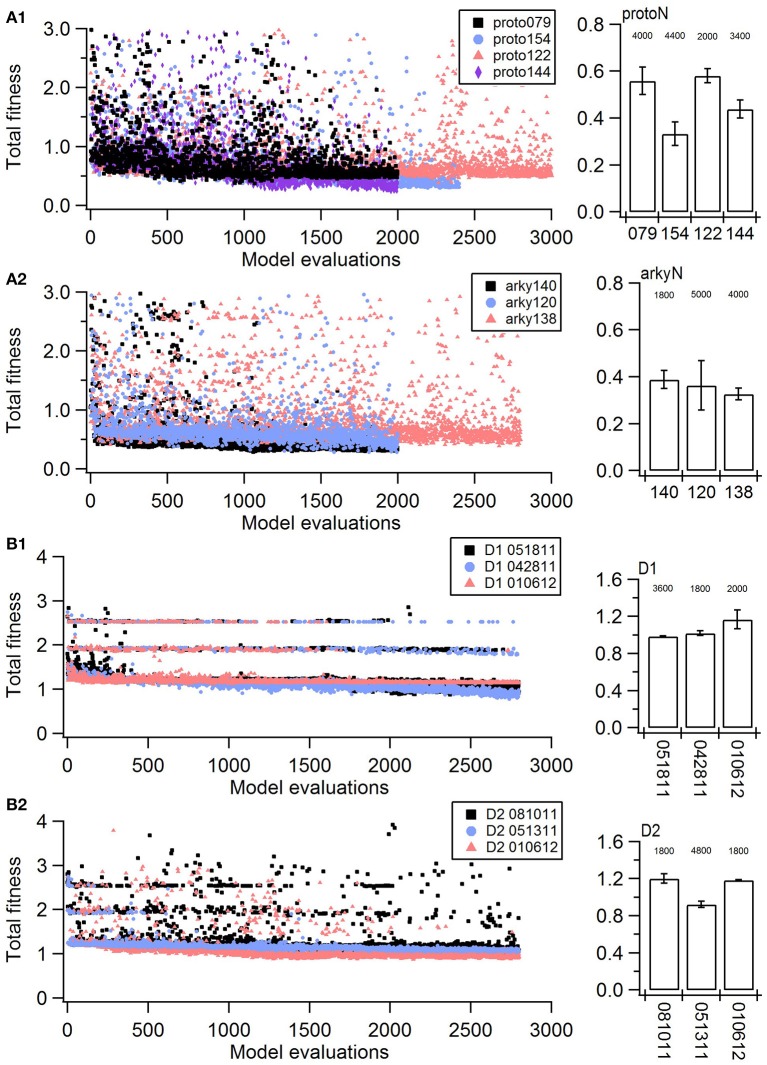
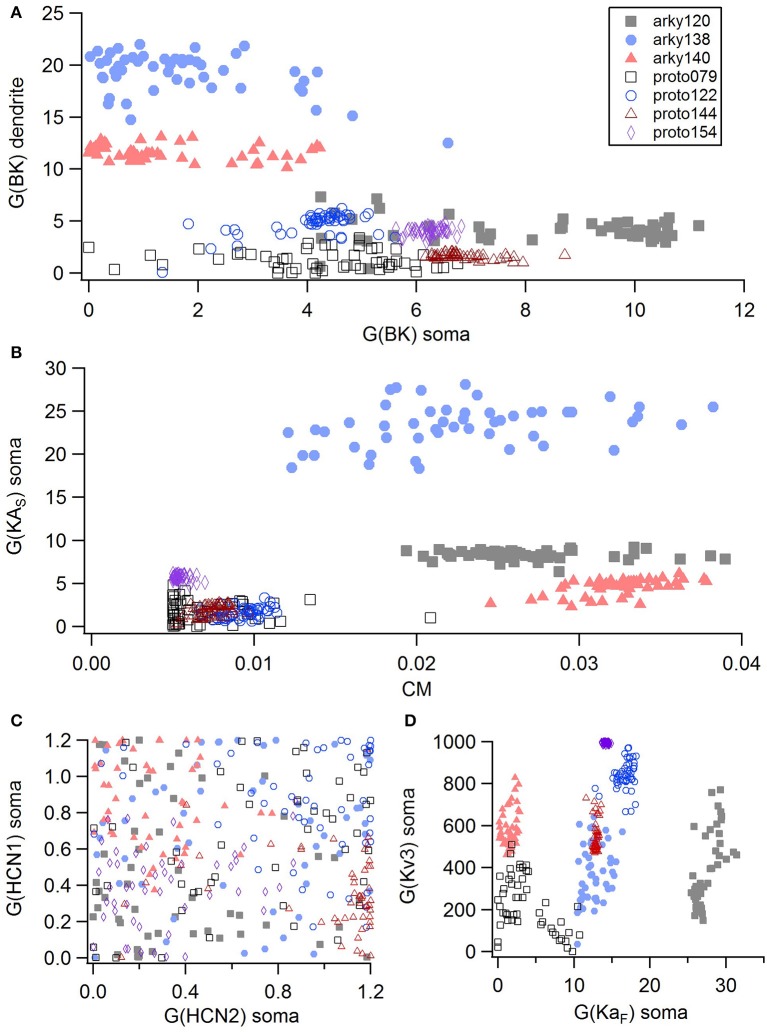
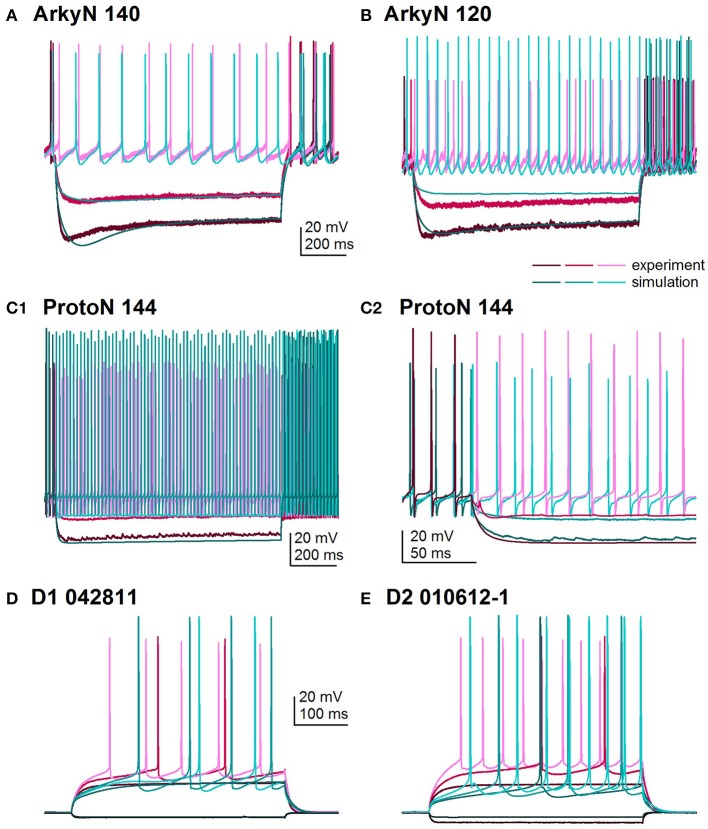
Computational models in neuroscience can be used to predict causal relationships between biological mechanisms in neurons and networks, such as the effect of blocking an ion channel or synaptic connection on neuron activity. Since developing a biophysically realistic, single neuron model is exceedingly difficult, software has been developed for automatically adjusting parameters of computational neuronal models. The ideal optimization software should work with commonly used neural simulation software; thus, we present software which works with models specified in declarative format for the MOOSE simulator. Experimental data can be specified using one of two different file formats. The fitness function is customizable as a weighted combination of feature differences. The optimization itself uses the covariance matrix adaptation-evolutionary strategy, because it is robust in the face of local fluctuations of the fitness function, and deals well with a high-dimensional and discontinuous fitness landscape. We demonstrate the versatility of the software by creating several model examples of each of four types of neurons (two subtypes of spiny projection neurons and two subtypes of globus pallidus neurons) by tuning to current clamp data. Optimizations reached convergence within 1,600-4,000 model evaluations (200-500 generations × population size of 8). Analysis of the parameters of the best fitting models revealed differences between neuron subtypes, which are consistent with prior experimental results. Overall our results suggest that this easy-to-use, automatic approach for finding neuron channel parameters may be applied to current clamp recordings from neurons exhibiting different biochemical markers to help characterize ionic differences between other neuron subtypes.
神经科学中的计算模型可用于预测神经元和神经网络中生物机制之间的因果关系,例如阻断离子通道或突触连接对神经元活动的影响。由于开发具有生物物理真实性的单个神经元模型极其困难,因此已开发出用于自动调整计算神经元模型参数的软件。理想的优化软件应能与常用的神经模拟软件配合使用;因此,我们展示了一种可与以声明格式指定的MOOSE模拟器模型配合使用的软件。实验数据可以使用两种不同的文件格式之一来指定。适应度函数可作为特征差异的加权组合进行定制。优化本身使用协方差矩阵自适应进化策略,因为它在面对适应度函数的局部波动时具有鲁棒性,并且能很好地处理高维和不连续的适应度景观。我们通过调整电流钳数据创建了四种类型神经元(棘状投射神经元的两种亚型和苍白球神经元的两种亚型)中每种神经元的几个模型示例,以此证明该软件的通用性。优化在1600 - 4000次模型评估(200 - 500代×种群大小为8)内达到收敛。对最佳拟合模型参数的分析揭示了神经元亚型之间的差异,这与先前的实验结果一致。总体而言,我们的结果表明,这种用于寻找神经元通道参数的易于使用的自动方法可能适用于来自表现出不同生化标记的神经元的电流钳记录,以帮助表征其他神经元亚型之间的离子差异。