Department of Chemistry and Pharmacy, Organic Chemistry II, Friedrich-Alexander-Universität Erlangen-Nürnberg, Erlangen, Germany.
Department of Internal Medicine 3 - Rheumatology and Immunology, University Hospital Erlangen, Friedrich-Alexander-Universität Erlangen-Nürnberg, Erlangen, Germany.
Front Immunol. 2018 Aug 13;9:1827. doi: 10.3389/fimmu.2018.01827. eCollection 2018.
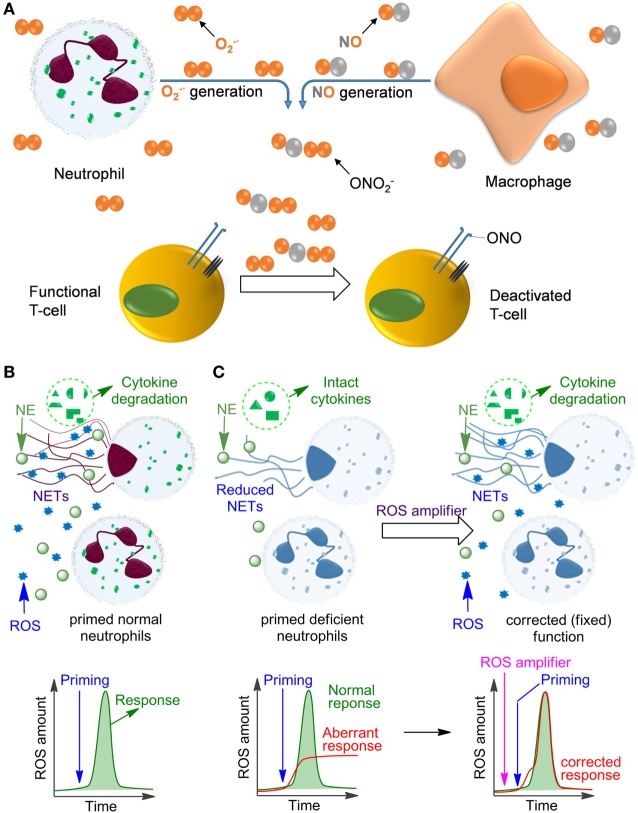
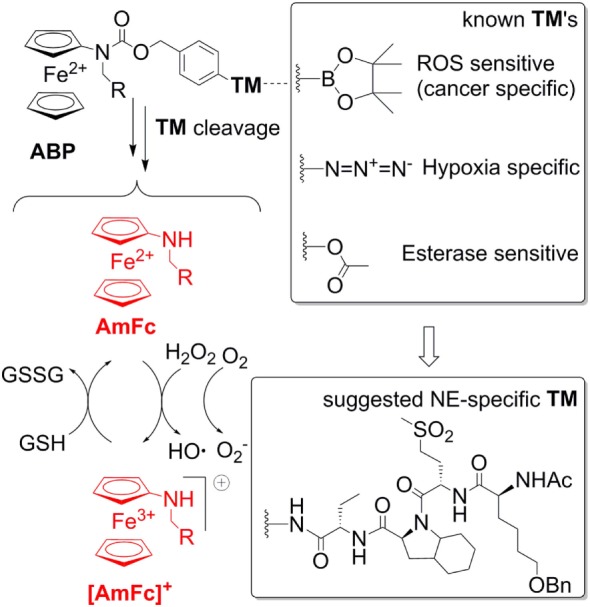
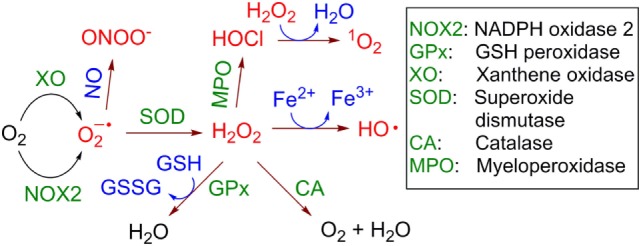
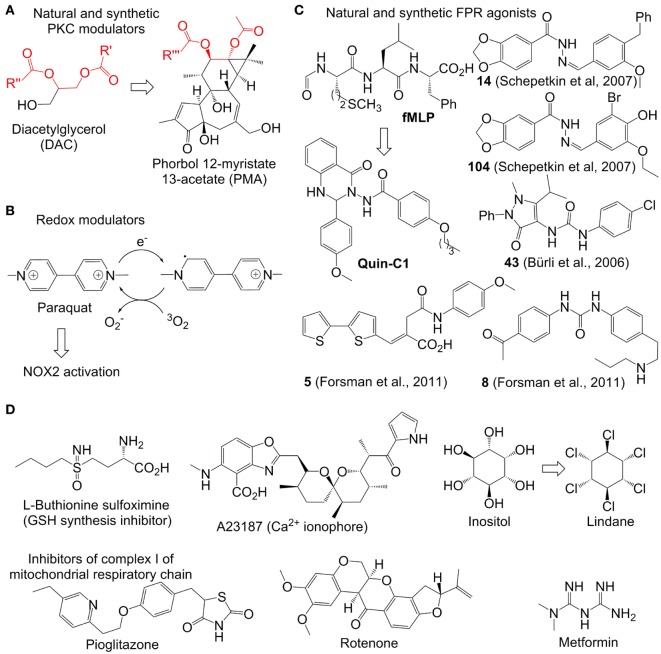
A number of chemical compounds are known, which amplify the availability of reactive oxygen species (ROS) in neutrophils both and . They can be roughly classified into NADPH oxidase 2 (NOX2)-dependent and NOX2-independent reagents. NOX2 activation is triggered by protein kinase C agonists (e.g., phorbol esters, transition metal ions), redox mediators (e.g., paraquat) or formyl peptide receptor (FPR) agonists (e.g., aromatic hydrazine derivatives). NOX2-independent mechanisms are realized by reagents affecting glutathione homeostasis (e.g., l-buthionine sulfoximine), modulators of the mitochondrial respiratory chain (e.g., ionophores, inositol mimics, and agonists of peroxisome proliferator-activated receptor γ) and chemical ROS amplifiers [e.g., aminoferrocene-based prodrugs (ABPs)]. Since a number of inflammatory and autoimmune diseases, as well as cancer and bacterial infections, are triggered or enhanced by aberrant ROS production in neutrophils, it is tempting to use ROS amplifiers as drugs for the treatment of these diseases. However, since the known reagents are not cell specific, their application for treatment likely causes systemic enhancement of oxidative stress, leading to severe side effects. Cell-targeted ROS enhancement can be achieved either by using conjugates of ROS amplifiers with ligands binding to receptors expressed on neutrophils (e.g., the GPI-anchored myeloid differentiation marker Ly6G or FPR) or by designing reagents activated by neutrophil function [e.g., phagocytic activity or enzymatic activity of neutrophil elastase (NE)]. Since binding of an artificial ligand to a receptor may trigger or inhibit priming of neutrophils the latter approach has a smaller potential for severe side effects and is probably better suitable for therapy. Here, we review current approaches for the use of ROS amplifiers and discuss their applicability for treatment. As an example, we suggest a possible design of neutrophil-specific ROS amplifiers, which are based on NE-activated ABPs.
已知许多化学化合物可以增强中性粒细胞中活性氧物质 (ROS) 的可用性, 和 。它们大致可以分为 NADPH 氧化酶 2 (NOX2) 依赖性和非依赖性试剂。NOX2 的激活是由蛋白激酶 C 激动剂 (如佛波醇酯、过渡金属离子)、氧化还原调节剂 (如百草枯) 或甲酰肽受体 (FPR) 激动剂 (如芳族肼衍生物)触发的。非依赖性 NOX2 机制是通过影响谷胱甘肽稳态的试剂来实现的 (如 L-丁硫氨酸亚砜亚胺)、线粒体呼吸链调节剂 (如离子载体、肌醇类似物和过氧化物酶体增殖物激活受体 γ 的激动剂) 和化学 ROS 放大器 [如基于氨基二茂铁的前药 (ABPs)]。由于许多炎症和自身免疫性疾病、癌症和细菌感染是由中性粒细胞中异常的 ROS 产生引发或加剧的,因此人们试图将 ROS 放大器作为治疗这些疾病的药物。然而,由于已知的试剂不是细胞特异性的,它们的应用治疗可能导致全身氧化应激增强,导致严重的副作用。通过使用与表达在中性粒细胞上的受体结合的 ROS 放大器配体的缀合物 (如 GPI 锚定的髓样分化标记物 Ly6G 或 FPR) 或通过设计由中性粒细胞功能激活的试剂 (如吞噬活性或中性粒细胞弹性蛋白酶 (NE) 的酶活性),可以实现细胞靶向的 ROS 增强。由于人工配体与受体的结合可能引发或抑制中性粒细胞的启动,后一种方法的严重副作用潜力较小,可能更适合治疗。在这里,我们综述了 ROS 放大器的应用,并讨论了它们在治疗中的适用性。作为一个例子,我们提出了一种基于 NE 激活的 ABPs 的中性粒细胞特异性 ROS 放大器的可能设计。