Travis W, Glover E N K, Bronstein H, Scanlon D O, Palgrave R G
Department of Chemistry , University College London , 20 Gordon Street , London , WC1H 0AJ , UK . Email:
University College London , Kathleen Lonsdale Materials Chemistry , Department of Chemistry , 20 Gordon Street , London , WC1H 0AJ , UK.
Chem Sci. 2016 Jul 1;7(7):4548-4556. doi: 10.1039/c5sc04845a. Epub 2016 Apr 1.
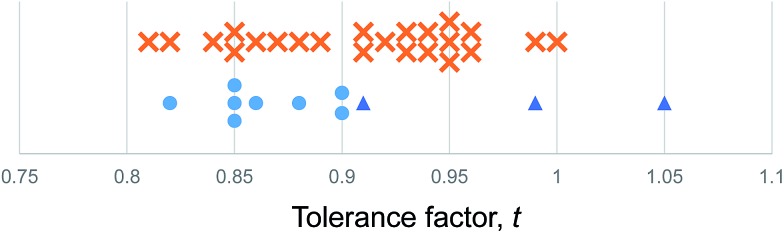
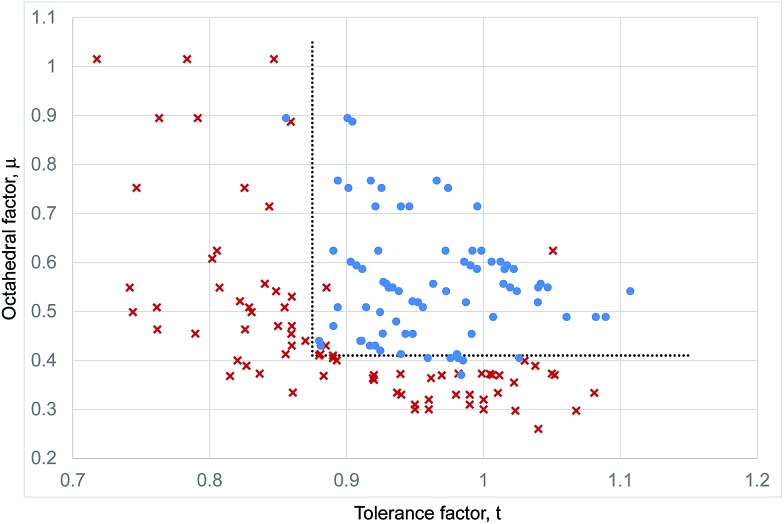
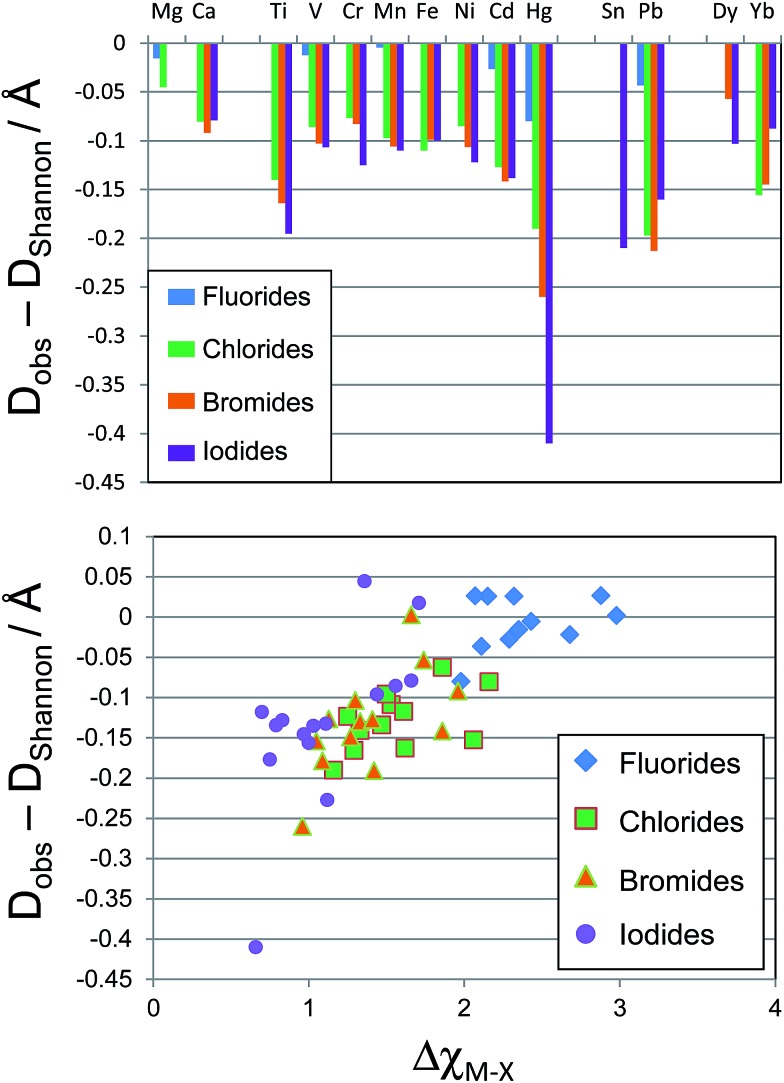
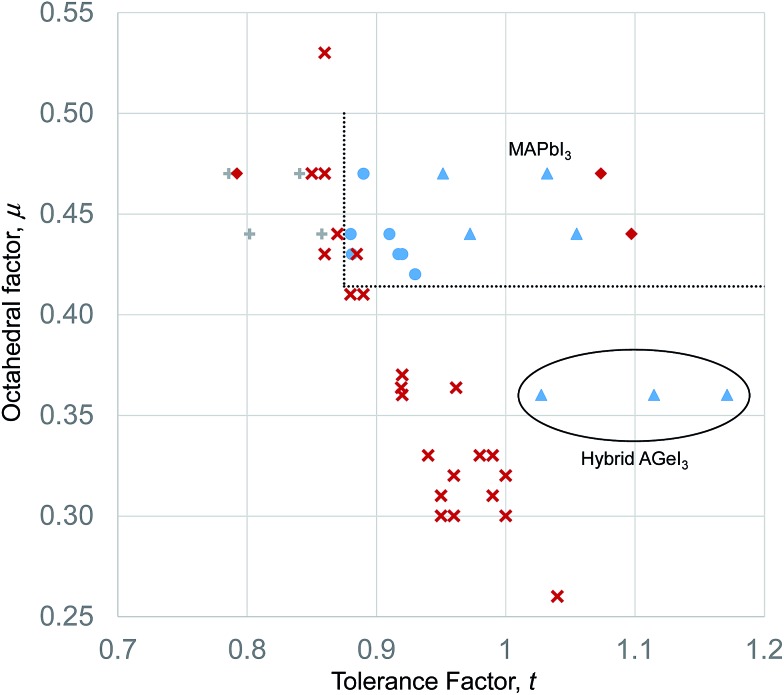
The tolerance factor is a widely used predictor of perovskite stability. The recent interest in hybrid perovskites for use as solar cell absorbers has lead to application of the tolerance factor to these materials as a way to explain and predict structure. Here we critically assess the suitability of the tolerance factor for halide perovskites. We show that the tolerance factor fails to accurately predict the stability of the 32 known inorganic iodide perovskites, and propose an alternative method. We introduce a revised set of ionic radii for cations that is anion dependent, this revision is necessary due to increased covalency in metal-halide bonds for heavier halides compared with the metal-oxide and fluoride bonds used to calculate Shannon radii. We also employ a 2D structural map to account for the size requirements of the halide anions. Together these measures yield a simple system which may assist in the search for new hybrid and inorganic perovskites.
容忍因子是一种广泛用于预测钙钛矿稳定性的指标。近期对用作太阳能电池吸收体的混合钙钛矿的关注,促使人们将容忍因子应用于这些材料,以此来解释和预测其结构。在此,我们严格评估了容忍因子对卤化物钙钛矿的适用性。我们发现,容忍因子无法准确预测32种已知无机碘化物钙钛矿的稳定性,并提出了一种替代方法。我们引入了一套经修订的阳离子离子半径,该半径取决于阴离子,之所以进行此修订,是因为与用于计算香农半径的金属氧化物和氟化物键相比,较重卤化物的金属卤化物键中共价性增加。我们还使用二维结构图来考虑卤化物阴离子的尺寸要求。这些措施共同构成了一个简单的体系,可能有助于寻找新型混合和无机钙钛矿。