Department of Molecular Biology & Biochemistry, Guru Nanak Dev University, Amritsar, Punjab, India.
Department of Human Genetics, Guru Nanak Dev University, Amritsar, Punjab, India.
Cardiovasc Diabetol. 2018 Aug 31;17(1):121. doi: 10.1186/s12933-018-0763-3.
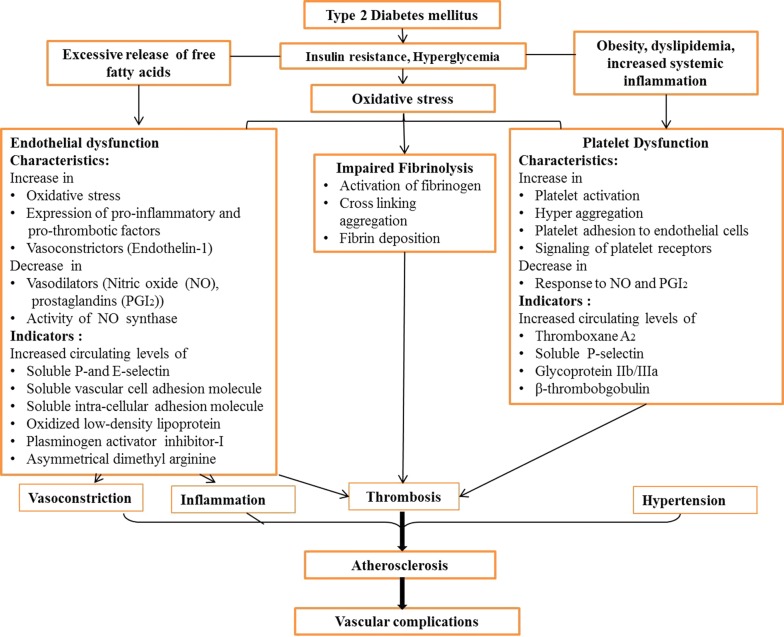
The incidence and prevalence of diabetes mellitus is rapidly increasing worldwide at an alarming rate. Type 2 diabetes mellitus (T2DM) is the most prevalent form of diabetes, accounting for approximately 90-95% of the total diabetes cases worldwide. Besides affecting the ability of body to use glucose, it is associated with micro-vascular and macro-vascular complications. Augmented atherosclerosis is documented to be the key factor leading to vascular complications in T2DM patients. The metabolic milieu of T2DM, including insulin resistance, hyperglycemia and release of excess free fatty acids, along with other metabolic abnormalities affects vascular wall by a series of events including endothelial dysfunction, platelet hyperactivity, oxidative stress and low-grade inflammation. Activation of these events further enhances vasoconstriction and promotes thrombus formation, ultimately resulting in the development of atherosclerosis. All these evidences are supported by the clinical trials reporting the importance of endothelial dysfunction and platelet hyperactivity in the pathogenesis of atherosclerotic vascular complications. In this review, an attempt has been made to comprehensively compile updated information available in context of endothelial and platelet dysfunction in T2DM.
糖尿病的发病率和患病率在全球范围内以惊人的速度迅速增加。2 型糖尿病(T2DM)是最常见的糖尿病类型,约占全球糖尿病总病例的 90-95%。除了影响身体利用葡萄糖的能力外,它还与微血管和大血管并发症有关。有证据表明,动脉粥样硬化加重是导致 T2DM 患者血管并发症的关键因素。T2DM 的代谢环境,包括胰岛素抵抗、高血糖和过量游离脂肪酸的释放,以及其他代谢异常,通过一系列事件影响血管壁,包括内皮功能障碍、血小板高活性、氧化应激和低度炎症。这些事件的激活进一步增强血管收缩并促进血栓形成,最终导致动脉粥样硬化的发展。临床试验报告内皮功能障碍和血小板高活性在动脉粥样硬化血管并发症发病机制中的重要性,为所有这些证据提供了支持。在这篇综述中,我们试图全面综合现有关于 T2DM 中内皮和血小板功能障碍的最新信息。