Li Chengqi, Fu Yuanzhi, Sun Runrun, Wang Yuanyuan, Wang Qinglian
Collaborative Innovation Center of Modern Biological Breeding, School of Life Science and Technology, Henan Institute of Science and Technology, Xinxiang, China.
Front Plant Sci. 2018 Aug 17;9:1083. doi: 10.3389/fpls.2018.01083. eCollection 2018.
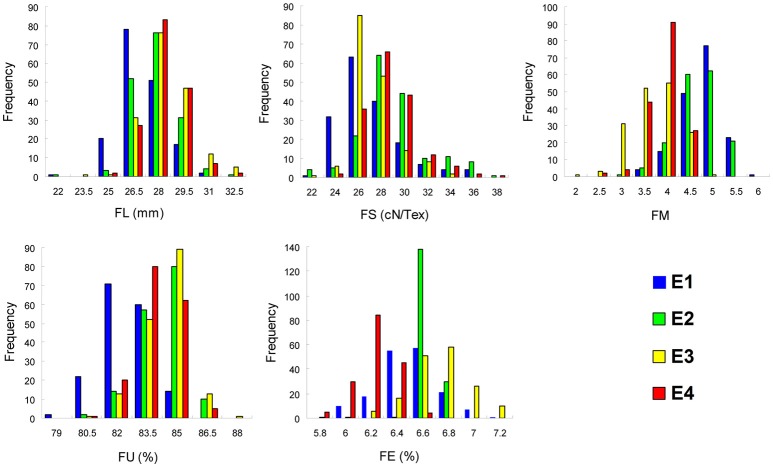
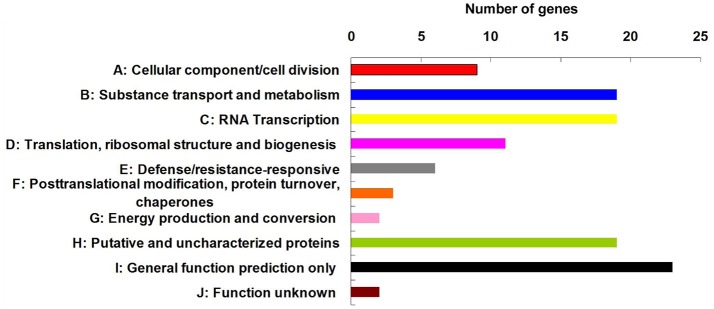
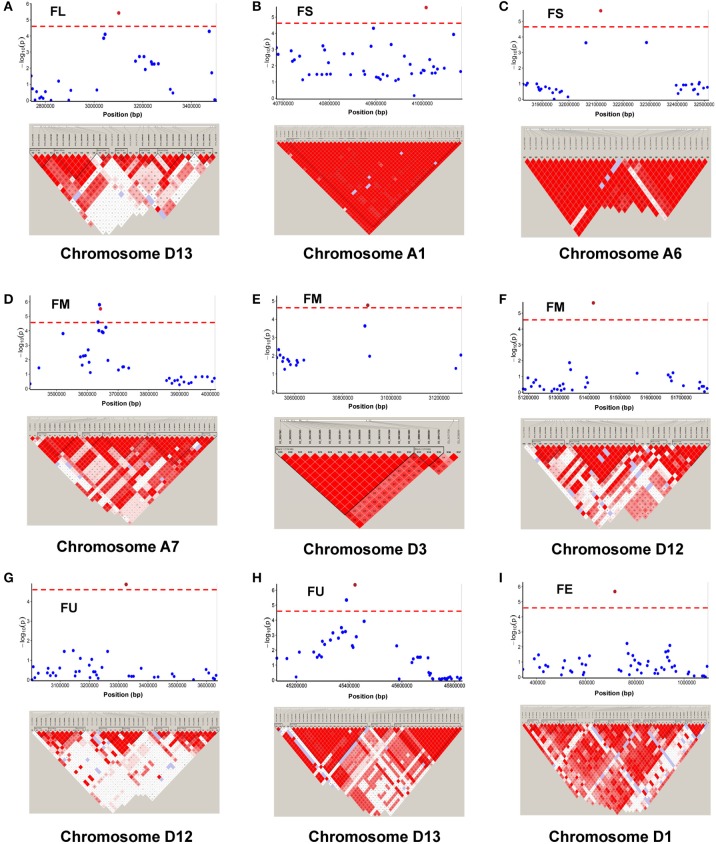
A major breeding target in Upland cotton ( L.) is to improve the fiber quality. To address this issue, 169 diverse accessions, genotyped by 53,848 high-quality single-nucleotide polymorphisms (SNPs) and phenotyped in four environments, were used to conduct genome-wide association studies (GWASs) for fiber quality traits using three single-locus and three multi-locus models. As a result, 342 quantitative trait nucleotides (QTNs) controlling fiber quality traits were detected. Of the 342 QTNs, 84 were simultaneously detected in at least two environments or by at least two models, which include 29 for fiber length, 22 for fiber strength, 11 for fiber micronaire, 12 for fiber uniformity, and 10 for fiber elongation. Meanwhile, nine QTNs with 10% greater sizes () were simultaneously detected in at least two environments and between single- and multi-locus models, which include TM80185 (D13) for fiber length, TM1386 (A1) and TM14462 (A6) for fiber strength, TM18616 (A7), TM54735 (D3), and TM79518 (D12) for fiber micronaire, TM77489 (D12) and TM81448 (D13) for fiber uniformity, and TM47772 (D1) for fiber elongation. This indicates the possibility of marker-assisted selection in future breeding programs. Among 455 genes within the linkage disequilibrium regions of the nine QTNs, 113 are potential candidate genes and four are promising candidate genes. These findings reveal the genetic control underlying fiber quality traits and provide insights into possible genetic improvements in Upland cotton fiber quality.
陆地棉(Gossypium hirsutum L.)的一个主要育种目标是提高纤维品质。为解决这一问题,利用169份不同材料,通过53848个高质量单核苷酸多态性(SNP)进行基因分型,并在四种环境下进行表型鉴定,采用三种单基因座和三种多基因座模型对纤维品质性状进行全基因组关联研究(GWAS)。结果,共检测到342个控制纤维品质性状的数量性状核苷酸(QTN)。在这342个QTN中,有84个在至少两种环境或至少两种模型中同时被检测到,其中包括29个控制纤维长度的、22个控制纤维强度的、11个控制纤维马克隆值的、12个控制纤维均匀度的和10个控制纤维伸长率的。同时,有9个效应值大10%以上的QTN在至少两种环境以及单基因座和多基因座模型之间同时被检测到,其中包括控制纤维长度的TM80185(D13)、控制纤维强度的TM1386(A1)和TM14462(A6)、控制纤维马克隆值的TM18616(A7)、TM54735(D3)和TM79518(D12)、控制纤维均匀度的TM77489(D12)和TM81448(D13)以及控制纤维伸长率的TM47772(D1)。这表明在未来育种计划中进行标记辅助选择的可能性。在这九个QTN的连锁不平衡区域内的455个基因中,有113个是潜在候选基因,四个是有前景的候选基因。这些发现揭示了纤维品质性状的遗传控制机制,并为陆地棉纤维品质的可能遗传改良提供了见解。