College of Materials Science and Engineering, Shenzhen Key Laboratory of Polymer Science and Technology, Guangdong Research Center for Interfacial Engineering of Functional Materials, Nanshan District Key Lab for Biopolymers and Safety Evaluation, Shenzhen University, 518055, Shenzhen, China.
Shenzhen Key Laboratory of Nanobiomechanics, Shenzhen Institutes of Advanced Technology, Chinese Academy of Sciences, Shenzhen University Town, 1068 Xueyuan Avenue, 518055, Shenzhen, Guangdong, China.
Nat Commun. 2018 Sep 4;9(1):3584. doi: 10.1038/s41467-018-05902-1.
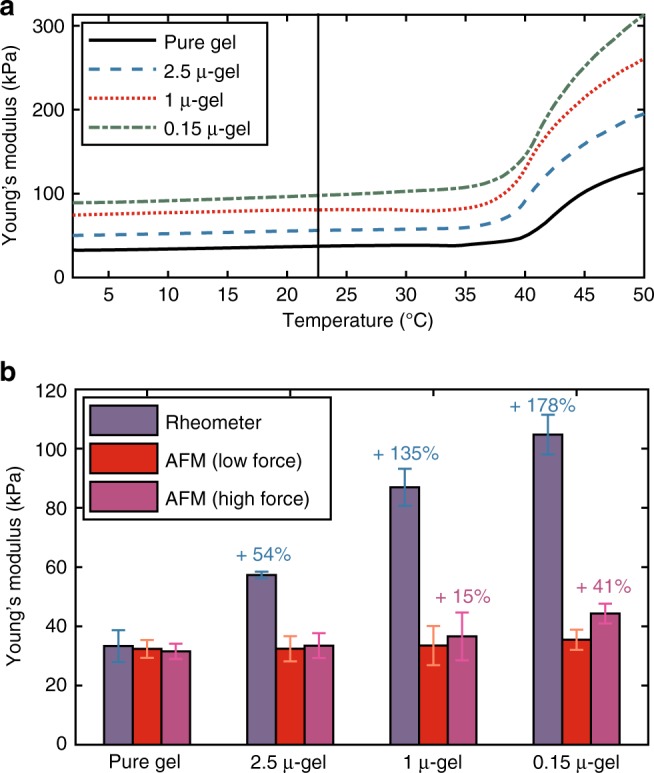
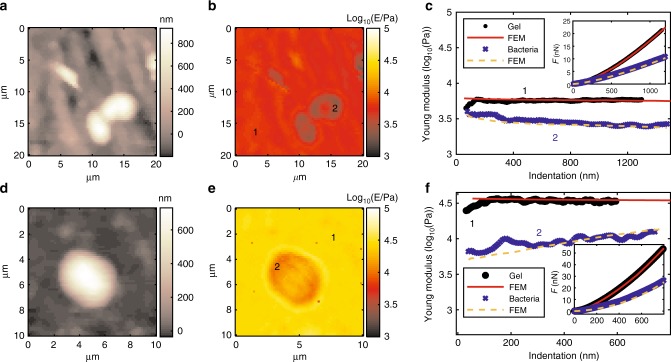
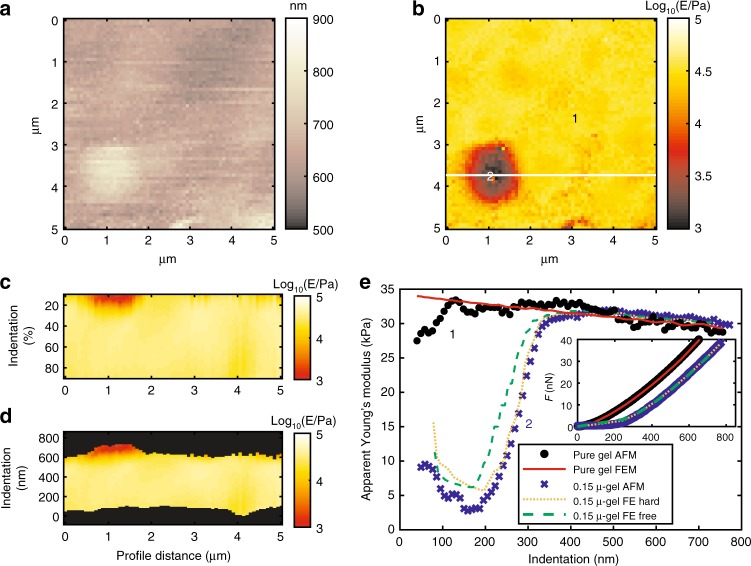
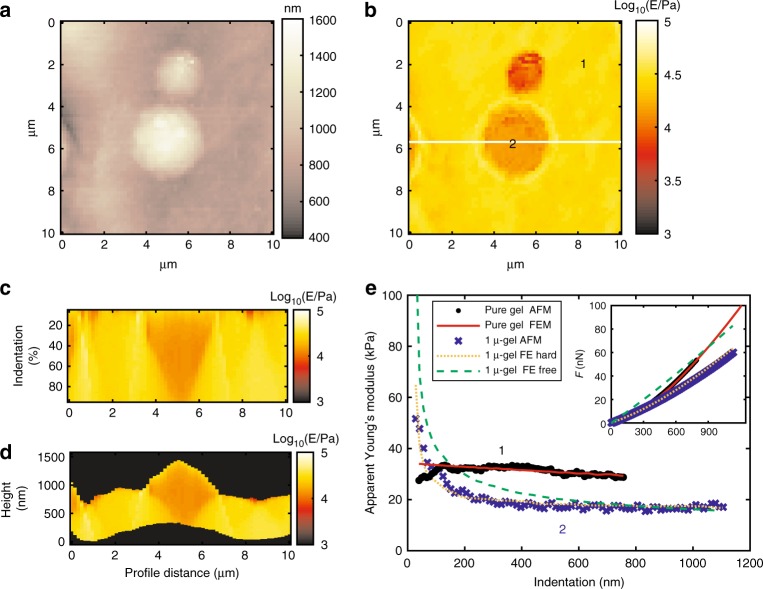
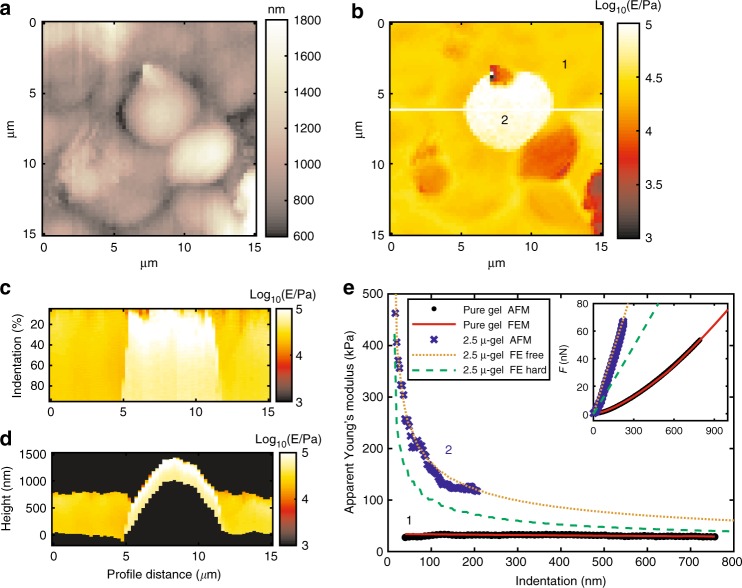
Atomic force microscopy has proven to be a valuable technique to characterize the mechanical and morphological properties of heterogeneous soft materials such as biological specimens in liquid environment. Here we propose a 3-step method in order to investigate biological specimens where heterogeneity hinder a quantitative characterization: (1) precise AFM calibration, (2) nano-indentation in force volume mode, (3) array of finite element simulations built from AFM indentation events. We combine simulations to determine internal geometries, multi-layer material properties, and interfacial friction. In order to easily perform this analysis from raw AFM data to simulation comparison, we propose a standalone software, AFMech Suite comprising five interacting interfaces for simultaneous calibration, morphology, adhesion, mechanical, and simulation analysis. We test the methodology on soft hydrogels with hard spherical inclusions, as a soft-matter model system. Finally, we apply the method on E. coli bacteria supported on soft/hard hydrogels to prove usefulness in biological field.
原子力显微镜已被证明是一种有价值的技术,可以用于表征不均匀软物质的机械和形态特性,如液体环境中的生物样本。在这里,我们提出了一种 3 步方法,以研究阻碍定量表征的生物样本:(1)精确的 AFM 校准,(2)力体积模式下的纳米压痕,(3)由 AFM 压痕事件构建的有限元模拟阵列。我们结合模拟来确定内部几何形状、多层材料特性和界面摩擦。为了能够从原始 AFM 数据轻松地进行这种分析并与模拟进行比较,我们提出了一个独立的软件,AFMech Suite,它由五个交互界面组成,用于同时进行校准、形貌、附着力、力学和模拟分析。我们在具有硬球形内含物的软水凝胶上测试了该方法,作为软物质模型系统。最后,我们将该方法应用于在软/硬水凝胶上支撑的大肠杆菌细菌,以证明其在生物学领域的有用性。