Semaniuk Uliana V, Gospodaryov Dmytro V, Feden'ko Khrystyna M, Yurkevych Ihor S, Vaiserman Alexander M, Storey Kenneth B, Simpson Stephen J, Lushchak Oleh
Department of Biochemistry and Biotechnology, Vasyl Stefanyk Precarpathian National University, Ivano-Frankivsk, Ukraine.
D.F. Chebotarev Institute of Gerontology, NAMS, Kiev, Ukraine.
Front Physiol. 2018 Aug 24;9:1083. doi: 10.3389/fphys.2018.01083. eCollection 2018.
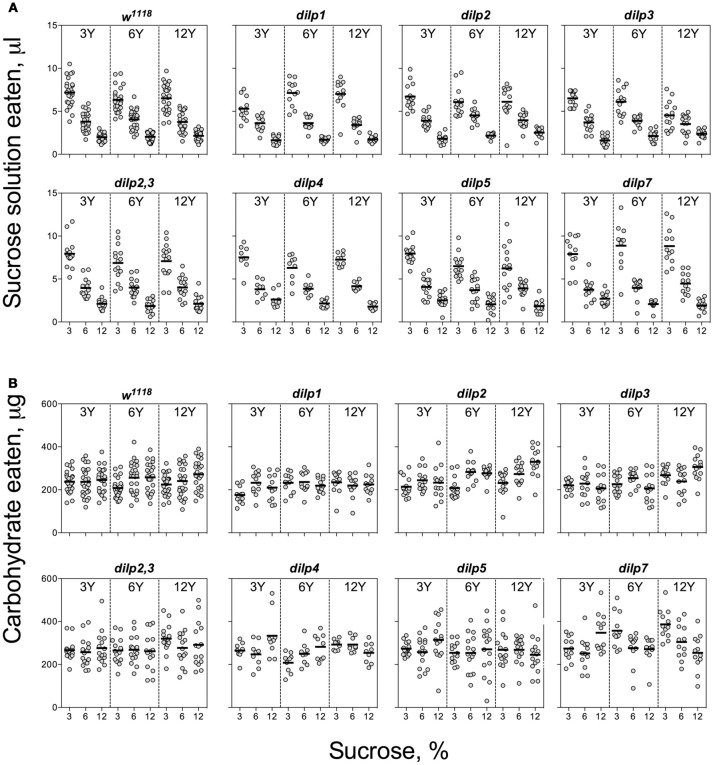
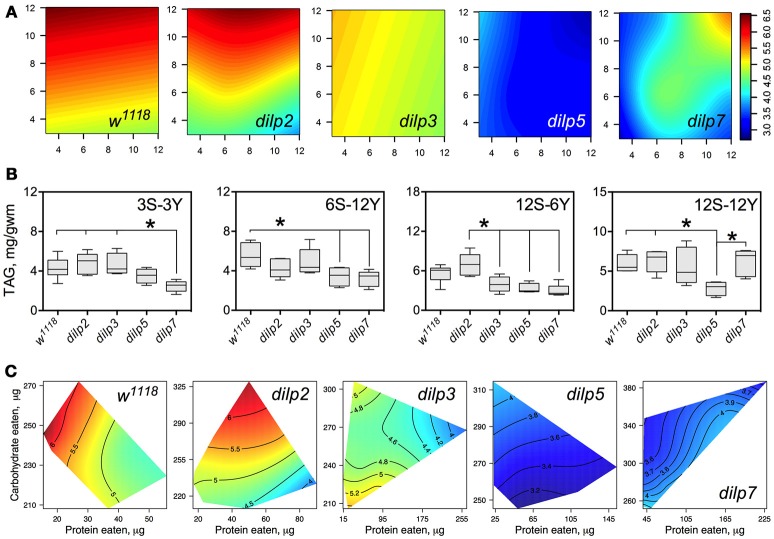
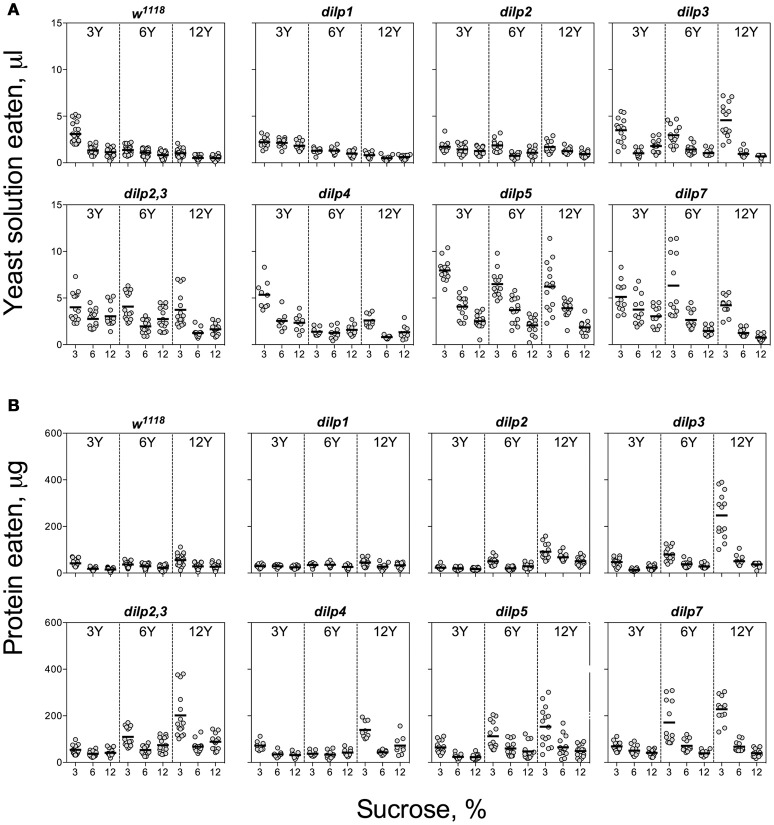
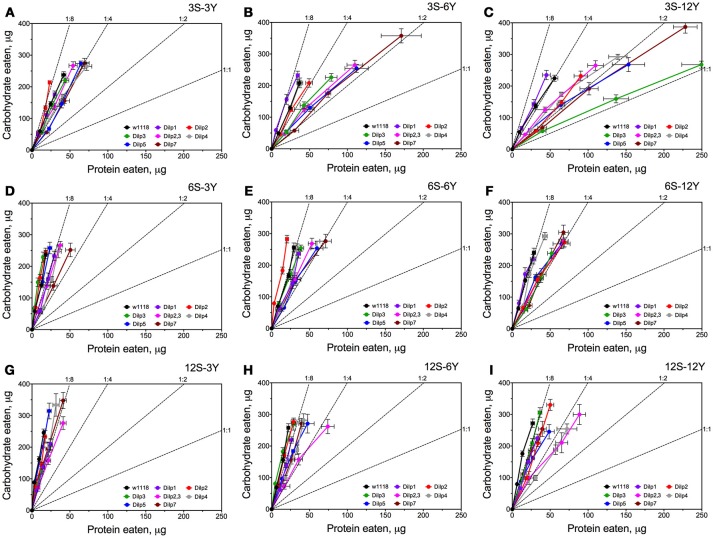
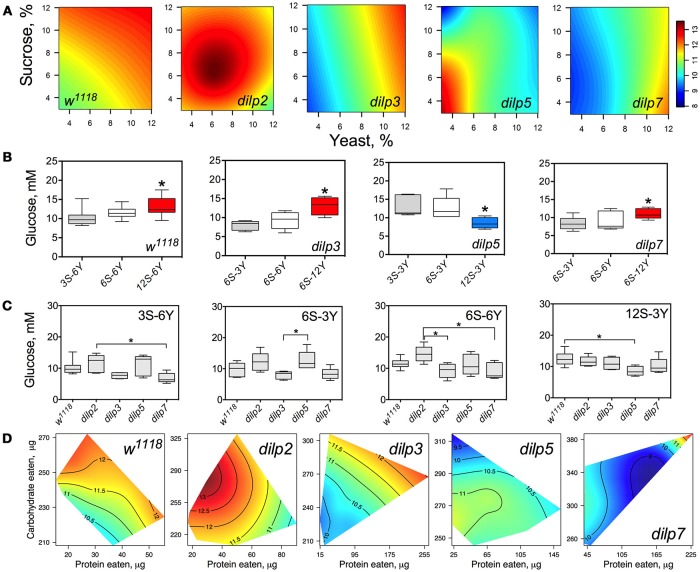
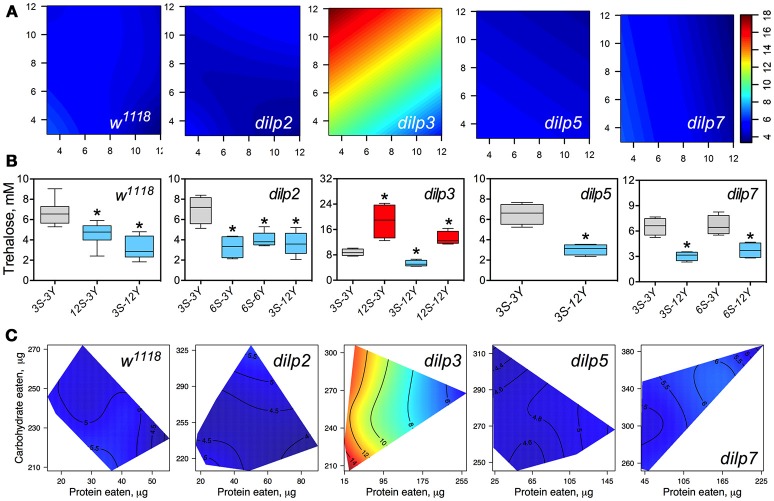
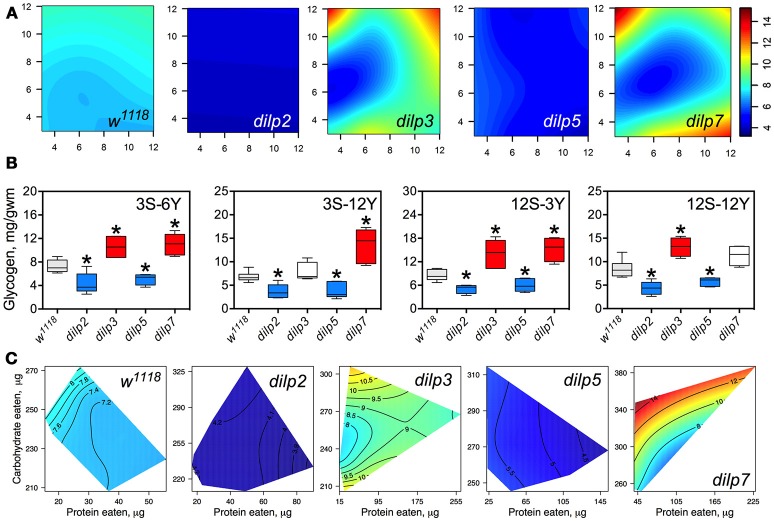
Fruit flies have eight identified insulin-like peptides (DILPs) that are involved in the regulation of carbohydrate concentrations in hemolymph as well as in accumulation of storage metabolites. In the present study, we investigated diet-dependent roles of DILPs encoded by the genes -, and in the regulation of insect appetite, food choice, accumulation of triglycerides, glycogen, glucose, and trehalose in fruit fly bodies and carbohydrates in hemolymph. We have found that the wild type and the mutant lines demonstrate compensatory feeding for carbohydrates. However, mutants on , and showed higher consumption of proteins on high yeast diets. To evaluate metabolic differences between studied lines on different diets we applied response surface methodology. High nutrient diets led to a moderate increase in concentration of glucose in hemolymph of the wild type flies. Mutations on genes changed this pattern. We have revealed that the mutation led to a drop in glycogen levels independently on diet, lack of led to dramatic increase in circulating trehalose and glycogen levels, especially at low protein consumption. Lack of led to decreased levels of glycogen and triglycerides on all diets, whereas knockout on caused increase in glycogen levels and simultaneous decrease in triglyceride levels at low protein consumption. Fruit fly appetite was influenced by and genes. Our data contribute to the understanding of as a model for further studies of metabolic diseases and may serve as a guide for uncovering the evolution of metabolic regulatory pathways.
果蝇有8种已确定的胰岛素样肽(DILPs),它们参与调节血淋巴中的碳水化合物浓度以及储存代谢物的积累。在本研究中,我们调查了由基因-、和编码的DILPs在果蝇体内昆虫食欲、食物选择、甘油三酯、糖原、葡萄糖和海藻糖积累以及血淋巴中碳水化合物调节方面的饮食依赖性作用。我们发现野生型和突变系对碳水化合物表现出补偿性进食。然而,基因、和的突变体在高酵母饮食中对蛋白质的消耗量更高。为了评估不同饮食条件下所研究品系之间的代谢差异,我们应用了响应面法。高营养饮食导致野生型果蝇血淋巴中葡萄糖浓度适度增加。基因上的突变改变了这种模式。我们发现,突变导致糖原水平下降,与饮食无关;基因缺失导致循环海藻糖和糖原水平显著增加,尤其是在低蛋白消耗时。基因缺失导致所有饮食条件下糖原和甘油三酯水平下降,而基因敲除导致低蛋白消耗时糖原水平增加,同时甘油三酯水平下降。果蝇的食欲受基因和的影响。我们的数据有助于将果蝇作为代谢疾病进一步研究的模型来理解,并可作为揭示代谢调节途径进化的指南。