Université de Lyon, ENSL, UCBL, CNRS, LBMC, UMS 3444 Biosciences Lyon Gerland, Lyon, France.
Institut des Neurosciences de Montpellier, INSERM U1051, CHU St Eloi, Montpellier, France.
PLoS Genet. 2018 Sep 10;14(9):e1007627. doi: 10.1371/journal.pgen.1007627. eCollection 2018 Sep.
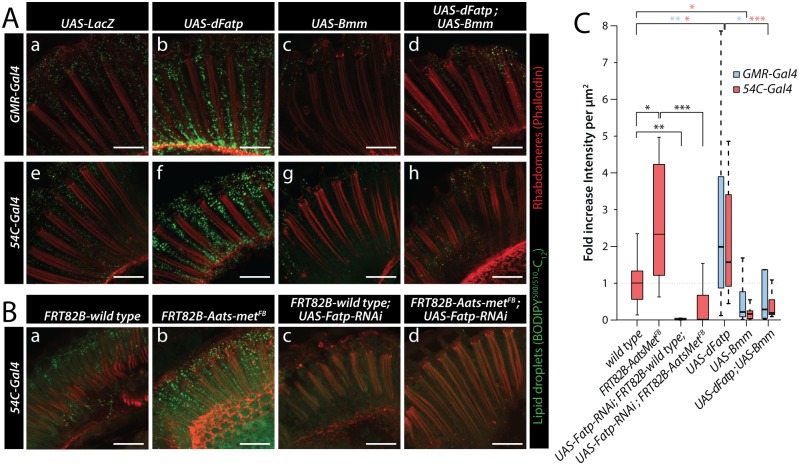
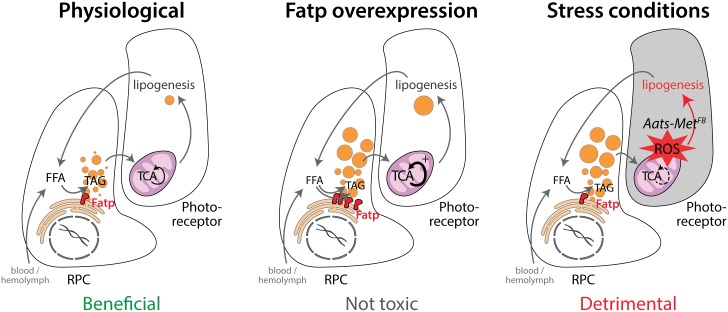
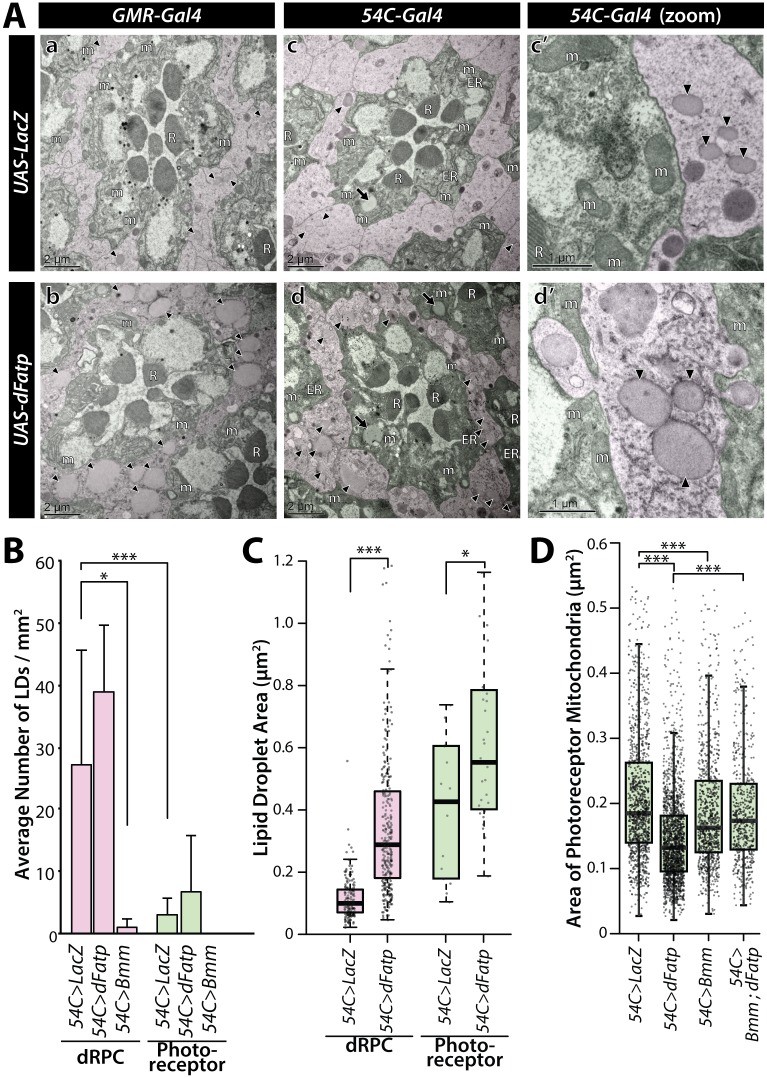
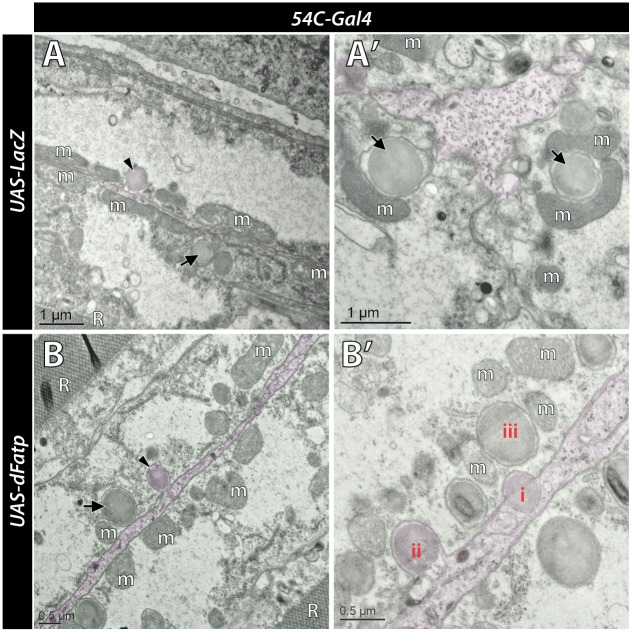
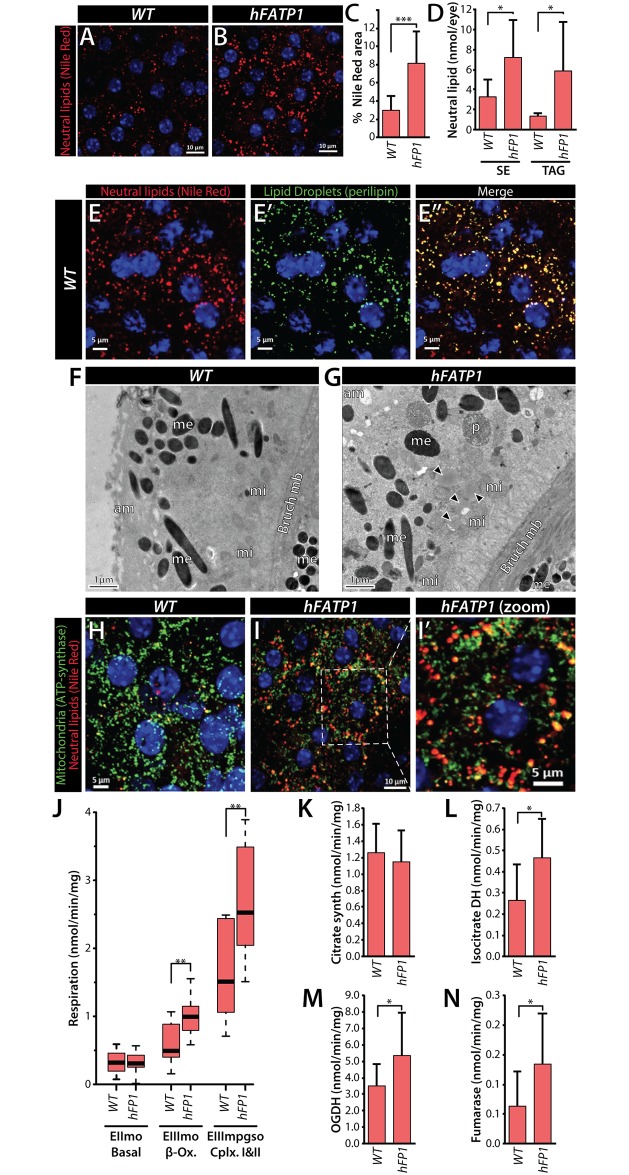
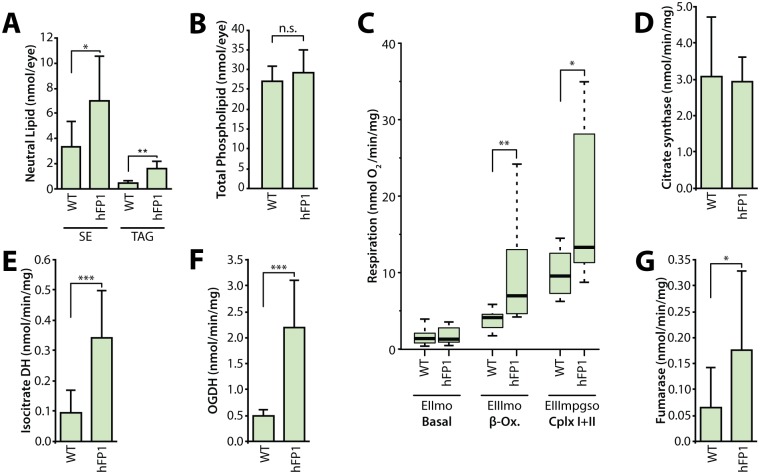
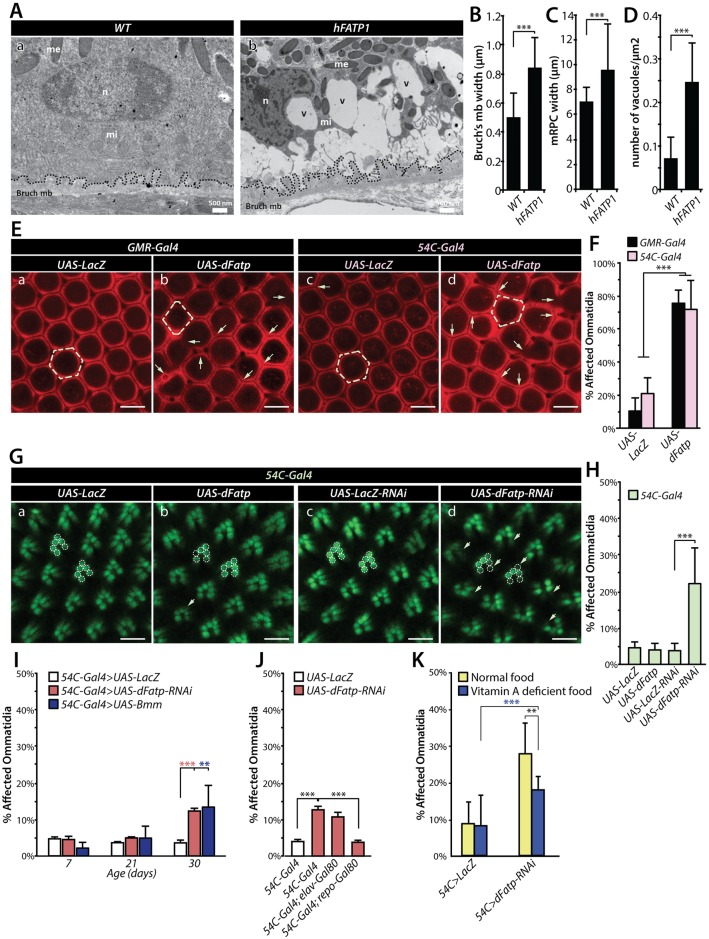
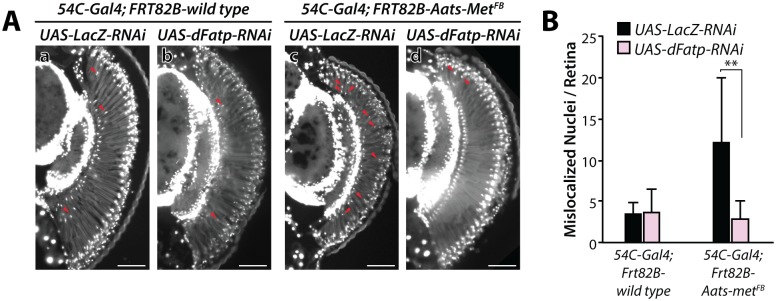
Increasing evidence suggests that dysregulation of lipid metabolism is associated with neurodegeneration in retinal diseases such as age-related macular degeneration and in brain disorders such as Alzheimer's and Parkinson's diseases. Lipid storage organelles (lipid droplets, LDs), accumulate in many cell types in response to stress, and it is now clear that LDs function not only as lipid stores but also as dynamic regulators of the stress response. However, whether these LDs are always protective or can also be deleterious to the cell is unknown. Here, we investigated the consequences of LD accumulation on retinal cell homeostasis under physiological and stress conditions in Drosophila and in mice. In wild-type Drosophila, we show that dFatp is required and sufficient for expansion of LD size in retinal pigment cells (RPCs) and that LDs in RPCs are required for photoreceptor survival during aging. Similarly, in mice, LD accumulation induced by RPC-specific expression of human FATP1 was non-toxic and promoted mitochondrial energy metabolism in RPCs and non-autonomously in photoreceptor cells. In contrast, the inhibition of LD accumulation by dFatp knockdown suppressed neurodegeneration in Aats-metFB Drosophila mutants, which carry elevated levels of reactive oxygen species (ROS). This suggests that abnormal turnover of LD may be toxic for photoreceptors cells of the retina under oxidative stress. Collectively, these findings indicate that FATP-mediated LD formation in RPCs promotes RPC and neuronal homeostasis under physiological conditions but could be deleterious for the photoreceptors under pathological conditions.
越来越多的证据表明,脂质代谢失调与视网膜疾病(如年龄相关性黄斑变性)和脑部疾病(如阿尔茨海默病和帕金森病)中的神经退行性变有关。脂质储存细胞器(脂滴,LDs)在许多细胞类型中会因应激而积累,现在已经清楚 LDs 的功能不仅是作为脂质储存,而且还是应激反应的动态调节剂。然而,这些 LDs 是否总是具有保护作用,或者也可能对细胞有害,目前尚不清楚。在这里,我们研究了在果蝇和小鼠中,生理和应激条件下 LD 积累对视网膜细胞内稳态的影响。在野生型果蝇中,我们表明 dFatp 是视网膜色素细胞(RPCs)中 LD 大小扩张所必需和充分的,并且 RPCs 中的 LD 对于感光细胞在衰老过程中的存活是必需的。同样,在小鼠中,由 RPC 特异性表达人 FATP1 引起的 LD 积累没有毒性,并促进了 RPC 中的线粒体能量代谢以及非自主性的感光细胞代谢。相比之下,通过 dFatp 敲低抑制 LD 积累可抑制 Aats-metFB 果蝇突变体中的神经退行性变,该突变体中活性氧(ROS)水平升高。这表明,在氧化应激下,LD 的异常周转可能对视网膜感光细胞有毒。总的来说,这些发现表明,在生理条件下,RPC 中 FATP 介导的 LD 形成可促进 RPC 和神经元内稳态,但在病理条件下可能对感光细胞有害。