• 文献检索
  • 文档翻译
  • 深度研究
  • 学术资讯
  • Suppr Zotero 插件Zotero 插件
  • 邀请有礼
  • 套餐&价格
  • 历史记录
应用&插件
Suppr Zotero 插件Zotero 插件浏览器插件Mac 客户端Windows 客户端微信小程序
定价
高级版会员购买积分包购买API积分包
服务
文献检索文档翻译深度研究API 文档MCP 服务
关于我们
关于 Suppr公司介绍联系我们用户协议隐私条款
关注我们

Suppr 超能文献

核心技术专利:CN118964589B侵权必究
粤ICP备2023148730 号-1Suppr @ 2026

文献检索

告别复杂PubMed语法,用中文像聊天一样搜索,搜遍4000万医学文献。AI智能推荐,让科研检索更轻松。

立即免费搜索

文件翻译

保留排版,准确专业,支持PDF/Word/PPT等文件格式,支持 12+语言互译。

免费翻译文档

深度研究

AI帮你快速写综述,25分钟生成高质量综述,智能提取关键信息,辅助科研写作。

立即免费体验

质子耦合电子转移反应性的连续统。

A Continuum of Proton-Coupled Electron Transfer Reactivity.

机构信息

Department of Chemistry , Yale University , New Haven , Connecticut 06520-8107 , United States.

出版信息

Acc Chem Res. 2018 Oct 16;51(10):2391-2399. doi: 10.1021/acs.accounts.8b00319. Epub 2018 Sep 20.

DOI:10.1021/acs.accounts.8b00319
PMID:30234963
原文链接:https://pmc.ncbi.nlm.nih.gov/articles/PMC6197915/
Abstract

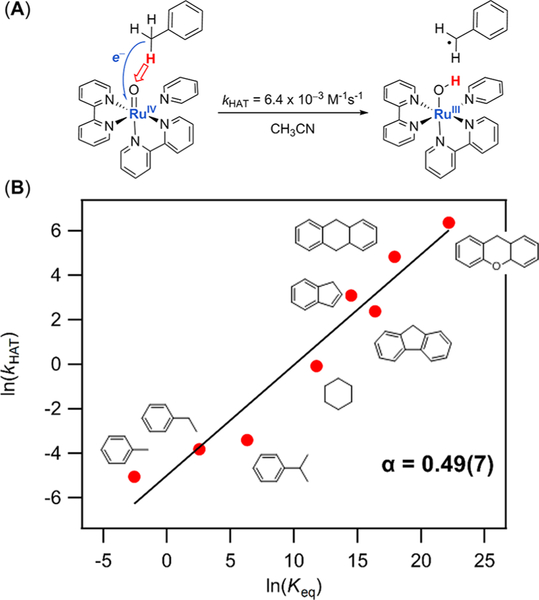
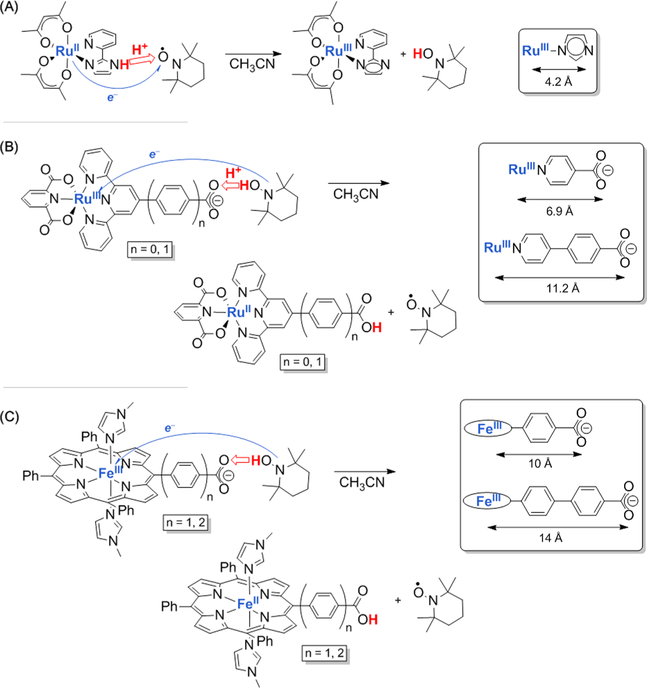
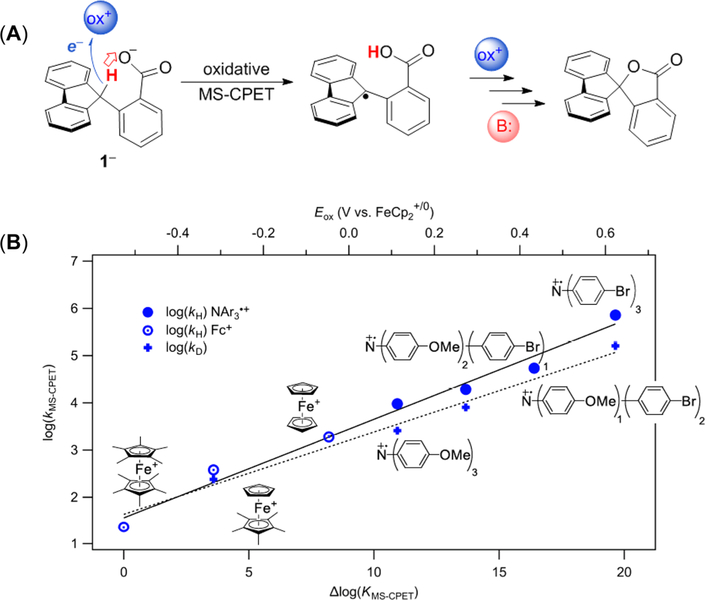
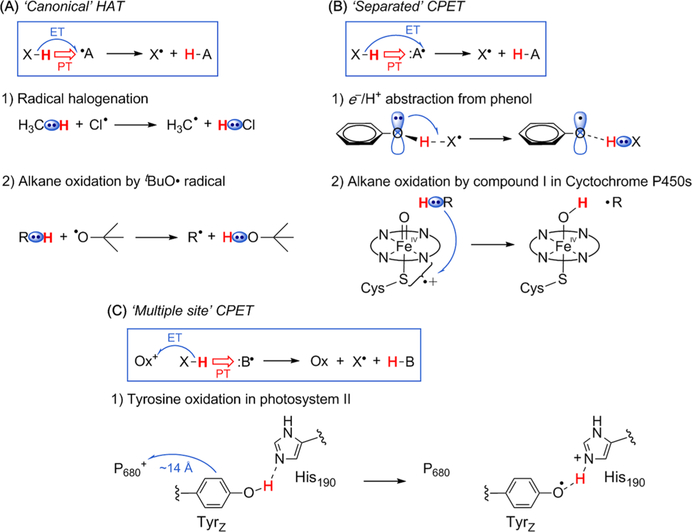
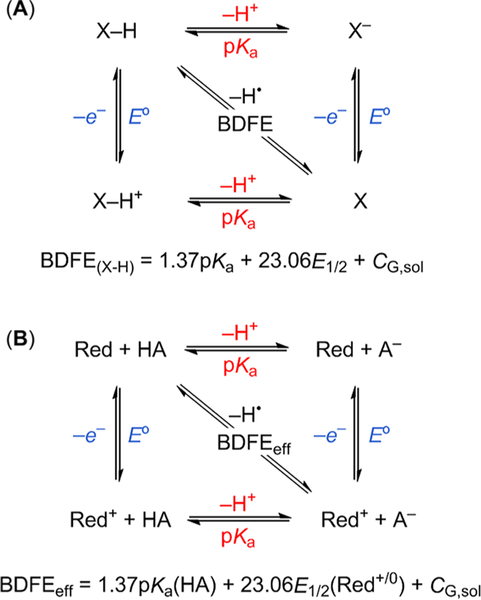
Proton-coupled electron transfer (PCET) covers a wide range of reactions involving the transfer(s) of electrons and protons. The best-known PCET reaction, hydrogen atom transfer (HAT), has been studied in detail for more than a century. HAT is generally described as the concerted transfer of a hydrogen atom (H ≡ H + e) from one group to another, Y + H-X → Y-H + X, but a strict definition of HAT has been difficult to establish. Distinctions are more challenging when the transfer of "H" involves e and H that transfer to/from spatially distinct sites or even completely separate reagents (multiple-site concerted proton-electron transfer, MS-CPET). MS-CPET reactivity is increasingly proposed in biological and synthetic contexts, and some reactions typically described as HAT more resemble MS-CPET. Despite that HAT and MS-CPET reactions "look different," we argue here that these reactions lie on a reactivity continuum, and that they are governed by many of the same key parameters. This Account walks the reader across this PCET reactivity continuum, using a series of studies to show the strong similarities of reactions that move protons and electrons in seemingly different ways. To prepare for our stroll, we describe the thermochemical and kinetic frameworks for HAT and MS-CPET. The driving force for a solution HAT reaction is most easily discussed as the difference in the bond dissociation free energies (BDFEs) of the reactants and products. BDFEs can be analyzed as sums of electron and proton transfer steps and can therefore be obtained from p K and E° values. Even though MS-CPET reactions do not make and break H-X bonds in the same way as HAT, the same thermochemical description can be used with the introduction of an effective BDFE (BDFE). The BDFE of a reductant/acid pair is the free energy of that pair to form H, which can be obtained from p K and E° values in an analogous fashion to a standard BDFE. When the PCET thermochemistry is known, HAT and PCET rate constants can be understood and often predicted using linear free energy relationships (the Brønsted catalysis law) and Marcus theory type approaches. After this background, we walk the reader through a continuum of PCET reactivity. Our journey begins with a study of metal-mediated HAT from hydrocarbon substrates to a metal-oxo complex and travels to the MS-CPET end of the reactivity spectrum, involving the transfer of H and e from the hydroxylamine TEMPOH to two completely separate molecules. These examples, and those in between, are all analyzed within the same thermodynamic and kinetic framework. A description of the first examples of MS-CPET with C-H bonds uses the same framework and highlights the importance of hydrogen bonding and preorganization. The examples and analyses show that the reactions along the PCET continuum are more similar than they are different, and that attempts to divide these reactions into subcategories can obscure much of the essential chemistry. We hope that developing the many common features of these reactions will help experts and newcomers alike to explore exciting new territories in PCET reactivity.

https://cdn.ncbi.nlm.nih.gov/pmc/blobs/4ab3/6197915/a989a52ea1d1/nihms-990057-f0009.jpg
https://cdn.ncbi.nlm.nih.gov/pmc/blobs/4ab3/6197915/3a01877b8b22/nihms-990057-f0002.jpg
https://cdn.ncbi.nlm.nih.gov/pmc/blobs/4ab3/6197915/f062b164e72d/nihms-990057-f0003.jpg
https://cdn.ncbi.nlm.nih.gov/pmc/blobs/4ab3/6197915/a93e7a0da2c3/nihms-990057-f0004.jpg
https://cdn.ncbi.nlm.nih.gov/pmc/blobs/4ab3/6197915/3f76ec92c011/nihms-990057-f0005.jpg
https://cdn.ncbi.nlm.nih.gov/pmc/blobs/4ab3/6197915/4976b71045ca/nihms-990057-f0006.jpg
https://cdn.ncbi.nlm.nih.gov/pmc/blobs/4ab3/6197915/66312691a04e/nihms-990057-f0007.jpg
https://cdn.ncbi.nlm.nih.gov/pmc/blobs/4ab3/6197915/dde75a4c34dd/nihms-990057-f0008.jpg
https://cdn.ncbi.nlm.nih.gov/pmc/blobs/4ab3/6197915/a989a52ea1d1/nihms-990057-f0009.jpg
https://cdn.ncbi.nlm.nih.gov/pmc/blobs/4ab3/6197915/3a01877b8b22/nihms-990057-f0002.jpg
https://cdn.ncbi.nlm.nih.gov/pmc/blobs/4ab3/6197915/f062b164e72d/nihms-990057-f0003.jpg
https://cdn.ncbi.nlm.nih.gov/pmc/blobs/4ab3/6197915/a93e7a0da2c3/nihms-990057-f0004.jpg
https://cdn.ncbi.nlm.nih.gov/pmc/blobs/4ab3/6197915/3f76ec92c011/nihms-990057-f0005.jpg
https://cdn.ncbi.nlm.nih.gov/pmc/blobs/4ab3/6197915/4976b71045ca/nihms-990057-f0006.jpg
https://cdn.ncbi.nlm.nih.gov/pmc/blobs/4ab3/6197915/66312691a04e/nihms-990057-f0007.jpg
https://cdn.ncbi.nlm.nih.gov/pmc/blobs/4ab3/6197915/dde75a4c34dd/nihms-990057-f0008.jpg
https://cdn.ncbi.nlm.nih.gov/pmc/blobs/4ab3/6197915/a989a52ea1d1/nihms-990057-f0009.jpg
摘要

质子偶联电子转移 (PCET) 涵盖了广泛的涉及电子和质子转移的反应。最著名的质子偶联电子转移反应,氢原子转移 (HAT),已经被研究了一个多世纪。HAT 通常被描述为氢原子 (H ≡ H + e) 从一个基团到另一个基团的协同转移,Y + H-X → Y-H + X,但 HAT 的严格定义一直难以确立。当“H”的转移涉及到空间上不同的位置或甚至完全分离的试剂(多位置协同质子-电子转移,MS-CPET)时,区分就更加具有挑战性。MS-CPET 反应性在生物和合成背景中越来越多地被提出,并且一些通常被描述为 HAT 的反应更类似于 MS-CPET。尽管 HAT 和 MS-CPET 反应“看起来不同”,但我们在这里认为这些反应位于一个反应性连续体上,并且它们受到许多相同的关键参数的控制。本专题介绍了一系列研究,展示了看似以不同方式移动质子和电子的反应之间的强烈相似性,引导读者穿越这个 PCET 反应性连续体。为了为我们的漫步做好准备,我们描述了 HAT 和 MS-CPET 的热化学和动力学框架。溶液 HAT 反应的驱动力最容易讨论为反应物和产物的键离解自由能 (BDFE) 的差异。BDFE 可以分析为电子和质子转移步骤的总和,因此可以从 p K 和 E° 值获得。尽管 MS-CPET 反应不像 HAT 那样以相同的方式形成和断裂 H-X 键,但可以使用有效 BDFE(BDFE)引入相同的热化学描述。还原剂/酸对的 BDFE 是形成 H 的该对的自由能,这可以以类似于标准 BDFE 的方式从 p K 和 E° 值获得。当 PCET 热化学已知时,可以使用线性自由能关系(布朗斯台德催化定律)和马库斯理论类型方法理解和经常预测 HAT 和 PCET 速率常数。有了这个背景知识,我们带领读者穿越 PCET 反应性的连续体。我们的旅程从烃底物到金属-氧络合物的金属介导 HAT 开始,然后到达涉及从羟胺 TEMPOH 到两个完全分离的分子转移 H 和 e 的 MS-CPET 反应性谱的末端。这些例子以及它们之间的例子都在相同的热力学和动力学框架内进行了分析。对第一个涉及 C-H 键的 MS-CPET 例子的描述使用了相同的框架,并强调了氢键和预组织的重要性。这些例子和分析表明,PCET 连续体上的反应比它们之间的差异更相似,试图将这些反应划分为亚类可能会掩盖许多基本化学。我们希望发展这些反应的许多共同特征将帮助专家和新手 alike 探索 PCET 反应性的令人兴奋的新领域。

相似文献

1
A Continuum of Proton-Coupled Electron Transfer Reactivity.质子耦合电子转移反应性的连续统。
Acc Chem Res. 2018 Oct 16;51(10):2391-2399. doi: 10.1021/acs.accounts.8b00319. Epub 2018 Sep 20.
2
Understanding hydrogen atom transfer: from bond strengths to Marcus theory.理解氢原子转移:从键强度到马库斯理论。
Acc Chem Res. 2011 Jan 18;44(1):36-46. doi: 10.1021/ar100093z. Epub 2010 Oct 26.
3
Separating Proton and Electron Transfer Effects in Three-Component Concerted Proton-Coupled Electron Transfer Reactions. 三重协同质子耦合电子转移反应中质子转移和电子转移效应的分离。
J Am Chem Soc. 2017 Aug 2;139(30):10312-10319. doi: 10.1021/jacs.7b03562. Epub 2017 Jul 21.
4
Hydrogen Atom Transfer Reactions of Mononuclear Nonheme Metal-Oxygen Intermediates.单核非血红素金属-氧中间体的氢原子转移反应
Acc Chem Res. 2018 Sep 18;51(9):2014-2022. doi: 10.1021/acs.accounts.8b00299. Epub 2018 Sep 4.
5
Models for proton-coupled electron transfer in photosystem II.光系统II中质子耦合电子转移的模型。
Photosynth Res. 2006 Jan;87(1):3-20. doi: 10.1007/s11120-005-8164-3. Epub 2006 Jan 21.
6
Proton-coupled electron transfer: a reaction chemist's view.质子耦合电子转移:反应化学家的视角。
Annu Rev Phys Chem. 2004;55:363-90. doi: 10.1146/annurev.physchem.55.091602.094446.
7
Synthetic Applications of Proton-Coupled Electron Transfer.质子耦合电子转移的合成应用。
Acc Chem Res. 2016 Aug 16;49(8):1546-56. doi: 10.1021/acs.accounts.6b00272. Epub 2016 Jul 29.
8
Proton-coupled electron transfer with photoexcited metal complexes.质子耦合电子转移与光激发金属配合物。
Acc Chem Res. 2013 Jul 16;46(7):1517-26. doi: 10.1021/ar300289x. Epub 2013 Feb 13.
9
Concerted proton-electron transfer in a ruthenium terpyridyl-benzoate system with a large separation between the redox and basic sites.在氧化还原位点和碱性位点之间有较大间距的钌三联吡啶 - 苯甲酸酯体系中的协同质子 - 电子转移
J Am Chem Soc. 2009 Jul 29;131(29):9874-5. doi: 10.1021/ja902942g.
10
Breaking bonds with electrons and protons. Models and examples.打破电子和质子的键。模型和例子。
Acc Chem Res. 2014 Jan 21;47(1):271-80. doi: 10.1021/ar4001444. Epub 2013 Sep 9.

引用本文的文献

1
Proton transfer during reduction of the catalytic metallo-cofactors of the three nitrogenase isozymes.三种固氮酶同工酶的催化金属辅因子还原过程中的质子转移。
Chem Sci. 2025 Sep 12. doi: 10.1039/d5sc05488e.
2
Comparing the Electronic Structure and Hydride Atom Transfer Reactivities of Nickel(III) vs Cu(III) Complexes.镍(III)与铜(III)配合物的电子结构及氢化物原子转移反应活性比较
JACS Au. 2025 Jun 23;5(7):3275-3287. doi: 10.1021/jacsau.5c00430. eCollection 2025 Jul 28.
3
On the mechanism of photodriven hydrogenations of N and other substrates by Hantzsch ester: Buffer is key to reactive H-atom donors.

本文引用的文献

1
A new strategy to efficiently cleave and form C-H bonds using proton-coupled electron transfer.使用质子耦合电子转移高效裂解和形成 C-H 键的新策略。
Sci Adv. 2018 Jul 13;4(7):eaat5776. doi: 10.1126/sciadv.aat5776. eCollection 2018 Jul.
2
Separating Proton and Electron Transfer Effects in Three-Component Concerted Proton-Coupled Electron Transfer Reactions. 三重协同质子耦合电子转移反应中质子转移和电子转移效应的分离。
J Am Chem Soc. 2017 Aug 2;139(30):10312-10319. doi: 10.1021/jacs.7b03562. Epub 2017 Jul 21.
3
Synthetic Applications of Proton-Coupled Electron Transfer.
关于汉斯酯对氮及其他底物的光驱动氢化反应机理:缓冲剂是活性氢原子供体的关键。
Proc Natl Acad Sci U S A. 2025 Jul;122(26):e2502484122. doi: 10.1073/pnas.2502484122. Epub 2025 Jun 25.
4
Heterobimetallic multi-site concerted proton electron transfer (MS-CPET) promotes coordination-induced O-H bond weakening.异双金属多位协同质子电子转移(MS-CPET)促进配位诱导的O-H键弱化。
Chem Sci. 2025 Jun 5. doi: 10.1039/d5sc03298a.
5
Proton-coupled electron transfer controls peroxide activation initiated by a solid-water interface.质子耦合电子转移控制由固水界面引发的过氧化物活化。
Nat Commun. 2025 Apr 22;16(1):3789. doi: 10.1038/s41467-025-58917-w.
6
Organic photoredox-catalyzed unimolecular PCET of benzylic alcohols.有机光氧化还原催化的苄醇单分子质子耦合电子转移反应
Chem Sci. 2025 Jan 8;16(7):3150-3156. doi: 10.1039/d4sc07048h. eCollection 2025 Feb 12.
7
Enhanced Proton-Coupled Electron-Transfer Reactivity by a Mononuclear Nickel(II) Hydroxide Radical Complex.单核氢氧化镍自由基配合物增强质子耦合电子转移反应活性
Inorg Chem. 2024 Dec 30;63(52):24453-24465. doi: 10.1021/acs.inorgchem.4c03370. Epub 2024 Dec 16.
8
Fe nuclear resonance vibrational spectroscopic studies of tetranuclear iron clusters bearing terminal iron(iii)-oxido/hydroxido moieties.含末端铁(III)-氧化/羟基部分的四核铁簇的铁核磁共振振动光谱研究。
Chem Sci. 2024 Sep 9;15(39):16222-33. doi: 10.1039/d4sc03396e.
9
A nonconjugated radical polymer enables bimodal memory and in-sensor computing operation.一种非共轭自由基聚合物可实现双峰记忆和传感器内计算操作。
Sci Adv. 2024 Aug 9;10(32):eadp0778. doi: 10.1126/sciadv.adp0778.
10
Proton-Coupled Electron Transfer and Hydrogen Tunneling in Olive Oil Phenol Reactions.橄榄酚反应中的质子耦合电子转移和氢隧穿。
Int J Mol Sci. 2024 Jun 7;25(12):6341. doi: 10.3390/ijms25126341.
质子耦合电子转移的合成应用。
Acc Chem Res. 2016 Aug 16;49(8):1546-56. doi: 10.1021/acs.accounts.6b00272. Epub 2016 Jul 29.
4
Concerted proton-coupled electron transfer from a metal-hydride complex.协同质子耦合电子转移来自金属-氢化物配合物。
Nat Chem. 2014 Feb;7(2):140-5. doi: 10.1038/nchem.2157.
5
Iron(IV)hydroxide pK(a) and the role of thiolate ligation in C-H bond activation by cytochrome P450.高铁(IV)羟化物的 pKa 值以及硫醇配体在细胞色素 P450 中 C-H 键活化中的作用。
Science. 2013 Nov 15;342(6160):825-9. doi: 10.1126/science.1244373.
6
Reversible, long-range radical transfer in E. coli class Ia ribonucleotide reductase.大肠杆菌Ⅰa 核糖核苷酸还原酶中可逆的长程自由基转移。
Acc Chem Res. 2013 Nov 19;46(11):2524-35. doi: 10.1021/ar4000407. Epub 2013 Jun 4.
7
Long Range Proton-Coupled Electron Transfer Reactions of Bis(imidazole) Iron Tetraphenylporphyrins Linked to Benzoates.与苯甲酸酯相连的双(咪唑)铁四苯基卟啉的远程质子耦合电子转移反应
J Phys Chem Lett. 2013 Feb 7;4(3):519-523. doi: 10.1021/jz400029w. Epub 2013 Jan 14.
8
Effect of basic site substituents on concerted proton-electron transfer in hydrogen-bonded pyridyl-phenols.氢键吡啶苯酚中碱性取代基对协同质子-电子转移的影响。
J Phys Chem A. 2012 Dec 20;116(50):12249-59. doi: 10.1021/jp311388n. Epub 2012 Dec 11.
9
Multiple-site concerted proton-electron transfer reactions of hydrogen-bonded phenols are nonadiabatic and well described by semiclassical Marcus theory.氢键酚的多部位协同质子-电子转移反应是非绝热的,可以用半经典 Marcus 理论很好地描述。
J Am Chem Soc. 2012 Oct 10;134(40):16635-45. doi: 10.1021/ja305668h. Epub 2012 Sep 27.
10
Proton-coupled electron transfer.质子耦合电子转移
Chem Rev. 2012 Jul 11;112(7):4016-93. doi: 10.1021/cr200177j. Epub 2012 Jun 18.