Max Planck Institute of Biochemistry, Martinsried, Germany.
Biomolecular Self-Organization, Instituto de Tecnologia Química e Biológica António Xavier, Universidade Nova de Lisboa, Oeiras, Portugal.
Nat Cell Biol. 2018 Oct;20(10):1172-1180. doi: 10.1038/s41556-018-0199-8. Epub 2018 Sep 24.
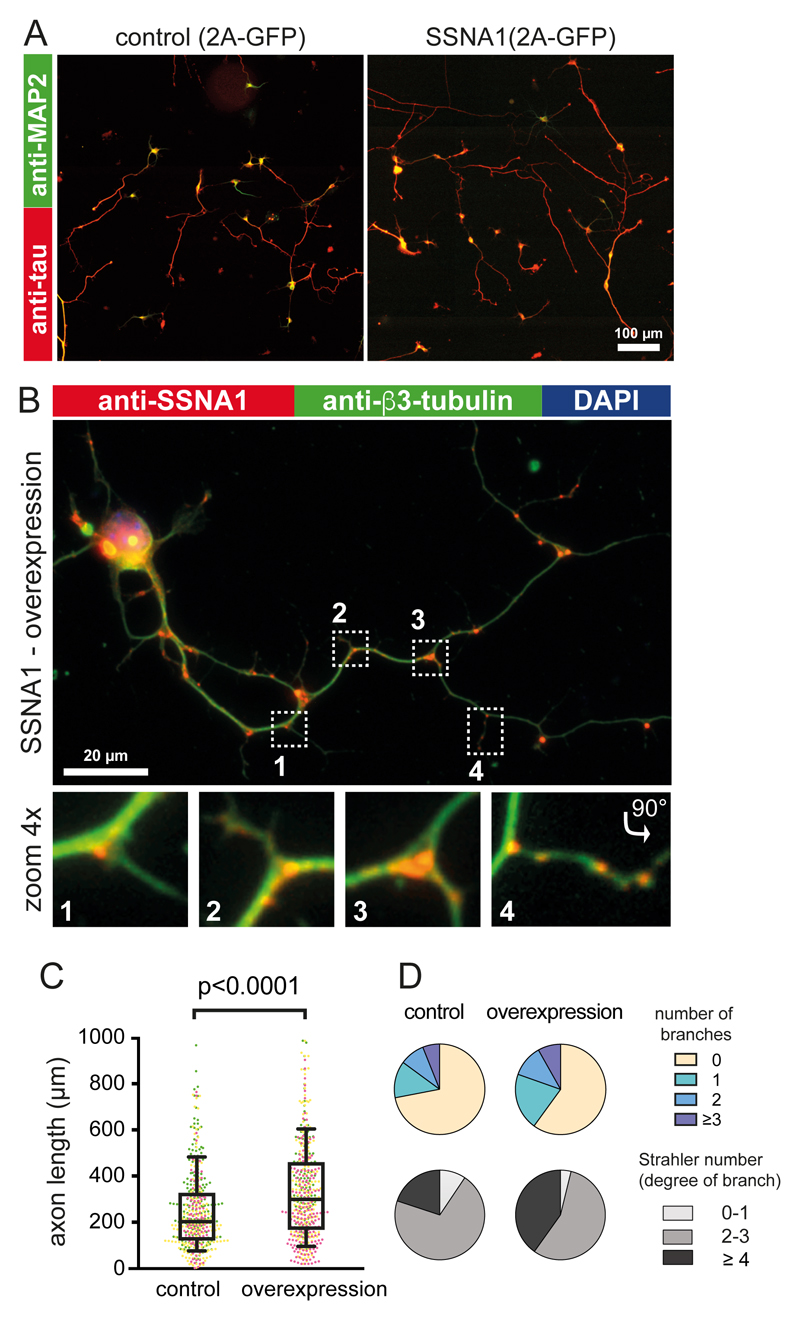
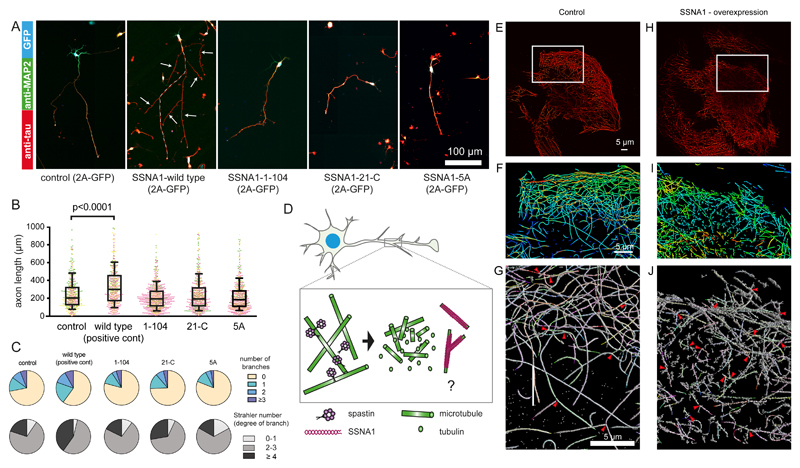
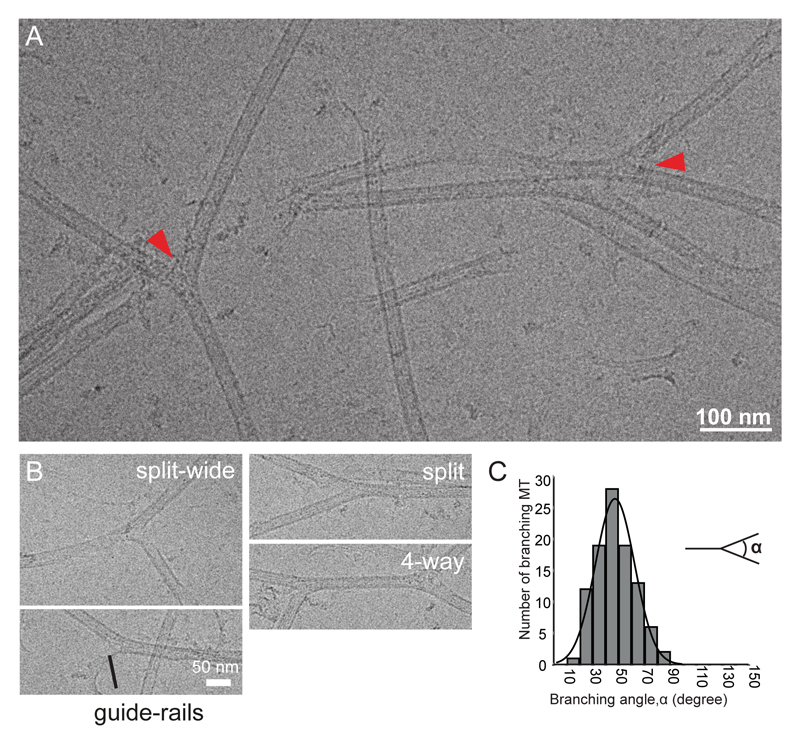
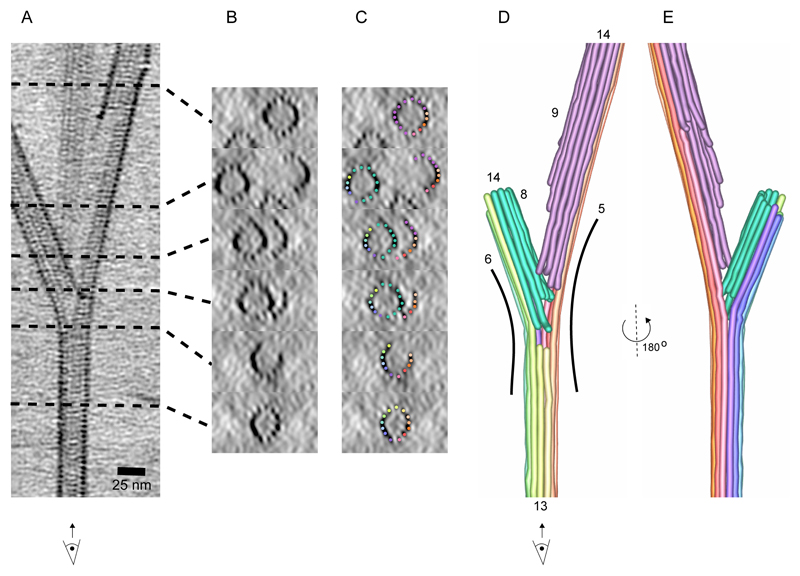
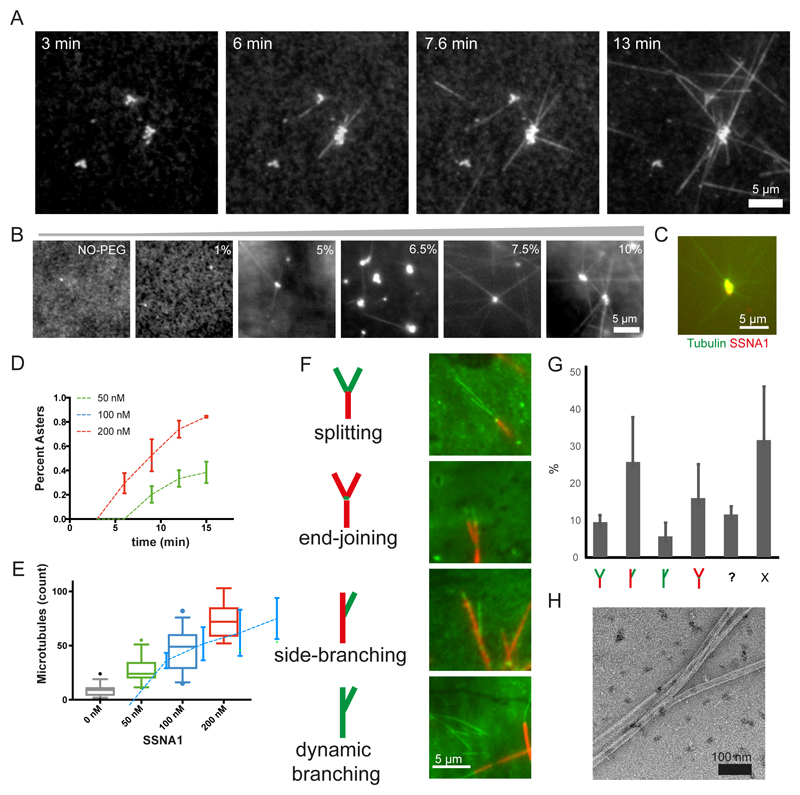
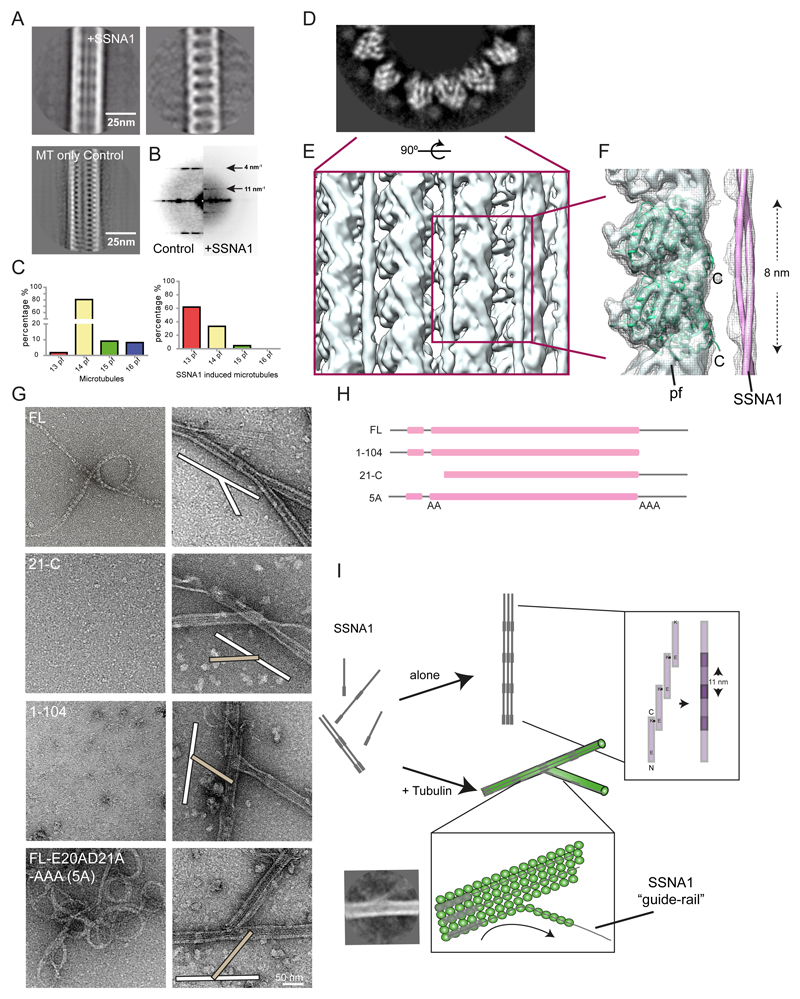
Microtubules are central elements of the eukaryotic cytoskeleton that often function as part of branched networks. Current models for branching include nucleation of new microtubules from severed microtubule seeds or from γ-tubulin recruited to the side of a pre-existing microtubule. Here, we found that microtubules can be directly remodelled into branched structures by the microtubule-remodelling factor SSNA1 (also known as NA14 or DIP13). The branching activity of SSNA1 relies on its ability to self-assemble into fibrils in a head-to-tail fashion. SSNA1 fibrils guide protofilaments of a microtubule to split apart to form daughter microtubules. We further found that SSNA1 localizes at axon branching sites and has a key role in neuronal development. SSNA1 mutants that abolish microtubule branching in vitro also fail to promote axon development and branching when overexpressed in neurons. We have, therefore, discovered a mechanism for microtubule branching and implicated its role in neuronal development.
微管是真核细胞骨架的核心组成部分,通常作为分支网络的一部分发挥作用。目前的分支模型包括从切断的微管种子或从招募到预先存在的微管侧面的γ-微管蛋白中引发新的微管。在这里,我们发现微管可以通过微管重塑因子 SSNA1(也称为 NA14 或 DIP13)直接重塑成分支结构。SSNA1 的分支活性依赖于其能够以头尾方式自组装成原纤维的能力。SSNA1 原纤维引导微管的原丝分开形成子微管。我们还发现 SSNA1 定位于轴突分支位点,并在神经元发育中起关键作用。体外实验中,破坏微管分支的 SSNA1 突变体在神经元中过表达时也不能促进轴突发育和分支。因此,我们发现了一种微管分支的机制,并暗示其在神经元发育中的作用。