Department of Anatomy and Neurosciences, MS Centres Amsterdam, Amsterdam Neuroscience, VU University Medical Center, Amsterdam, The Netherlands.
Department of Anatomy and Neurosciences, MS Centres Amsterdam, Amsterdam Neuroscience, VU University Medical Center, Amsterdam, The Netherlands.
Neuroimage Clin. 2018;20:844-850. doi: 10.1016/j.nicl.2018.09.021. Epub 2018 Sep 26.
Cognitive deficits, especially those of information processing speed (IPS), are common in multiple sclerosis (MS), however, the underlying neurobiological mechanisms remain poorly understood. In this study, we examined structural and functional brain changes separately, but also in an integrative manner, in relation to IPS performance.
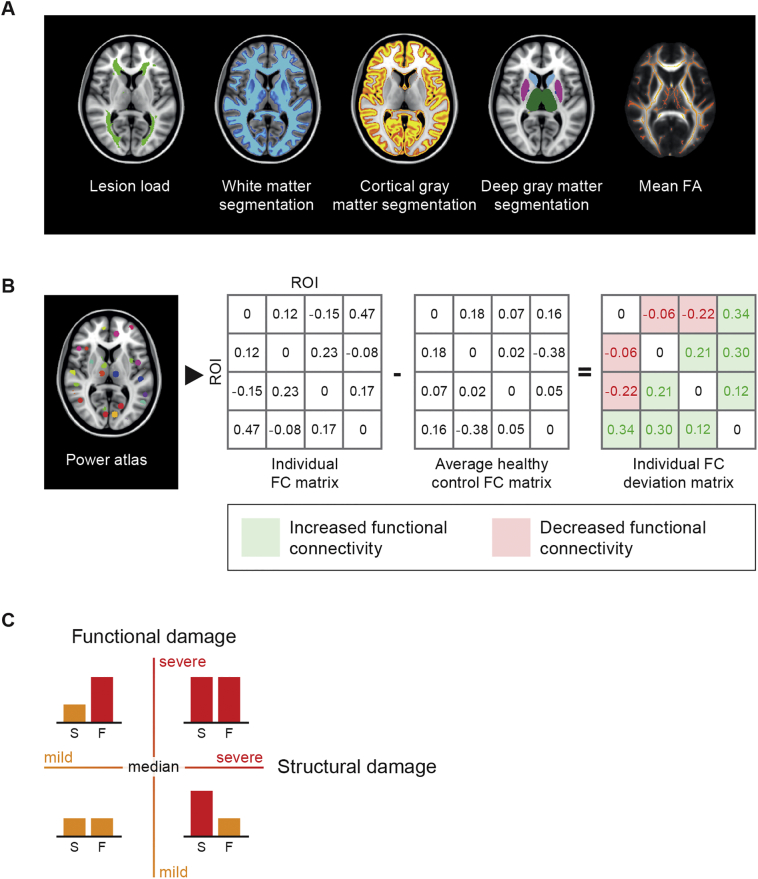
IPS was measured using the symbol digit modalities test (SDMT) in 330 MS patients and 96 controls. Patients with IPS impairment (IPS-I, z-score < -1.5) were compared to patients with preserved IPS performance (IPS-P) on volumetric measures, white matter integrity loss (using diffusion tensor imaging) and the severity of functional connectivity changes (using resting-state fMRI). Significant predictors of IPS performance were used to create groups of mild or severe structural and/or functional damage to determine the relative effect of structural and/or functional changes on IPS.
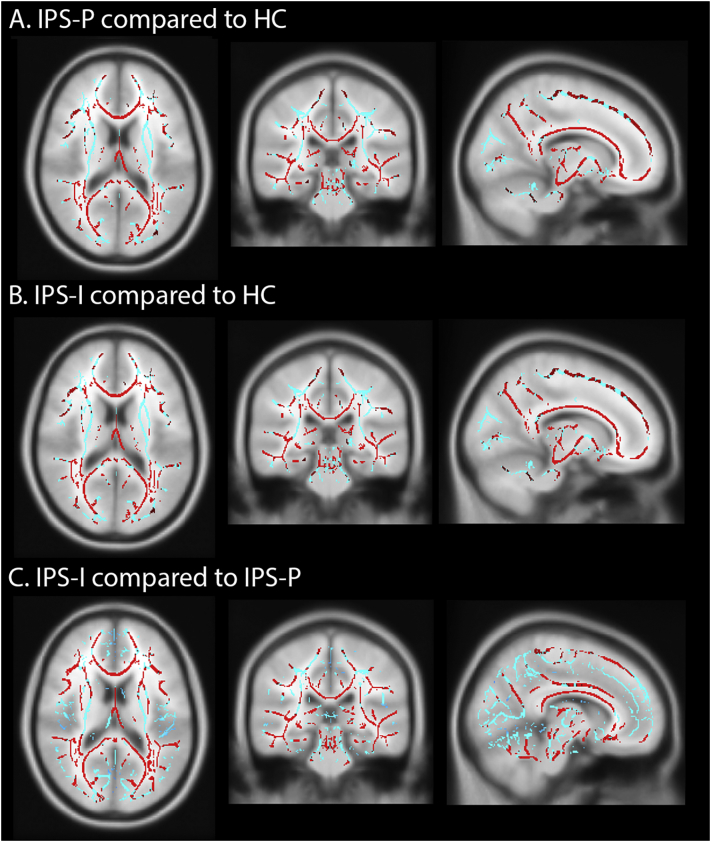
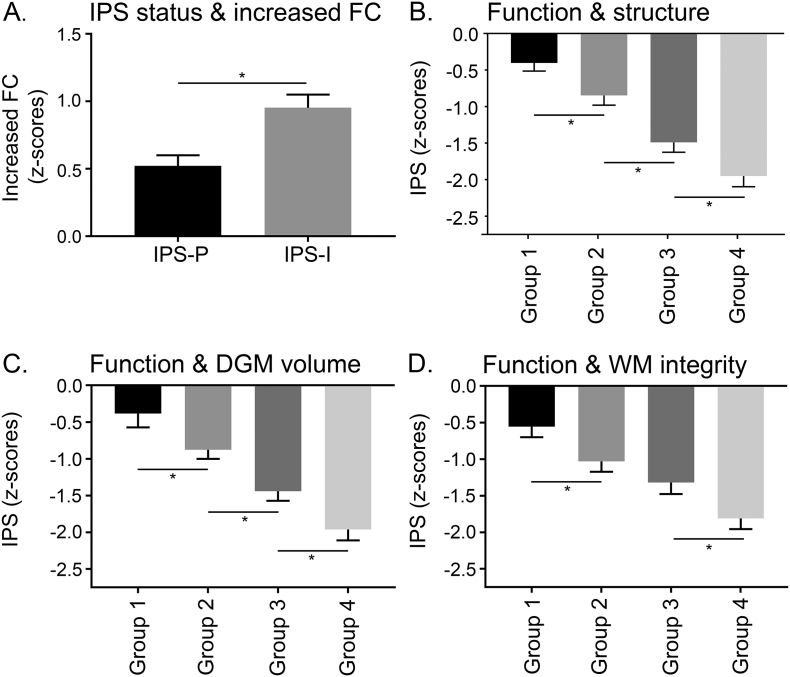
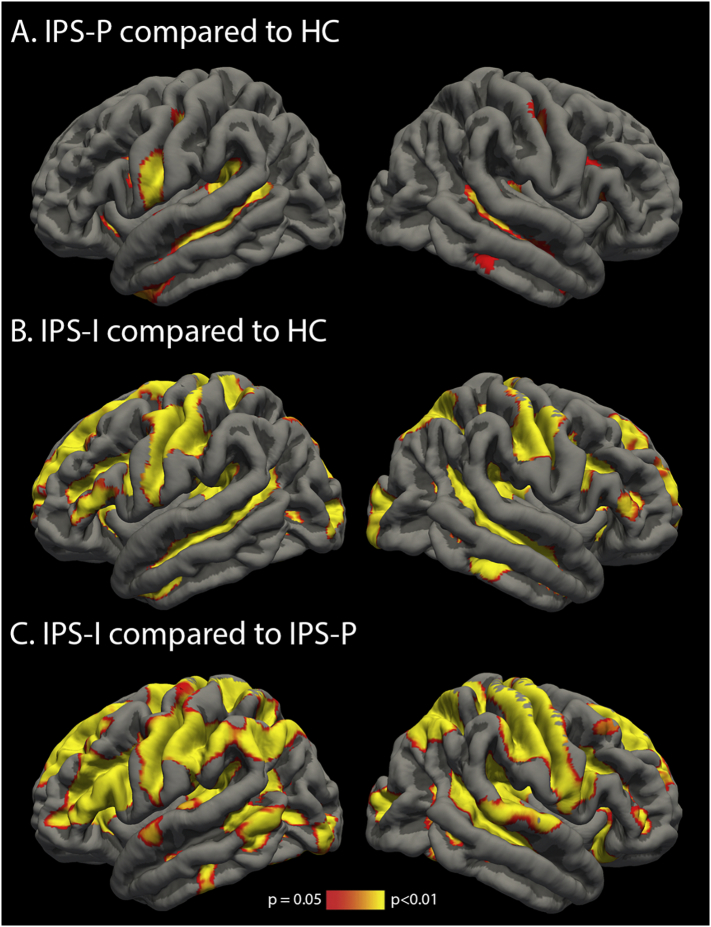
IPS-I patients, compared to IPS-P patients, showed lower deep gray matter volume and less WM integrity, but stronger increases in functional connectivity. Patients with predominantly structural damage had worse IPS (z-score = -1.49) than patients with predominantly functional changes (z-score = -0.84), although both structural and functional measures remained significant in a regression model. Patients with severe structural and functional changes had worst IPS (z-score = -1.95).
The level of structural damage explains IPS performance better than functional changes. After integrating functional and structural changes, however, we were able to detect more subtle and stepwise decline in IPS. In subgroups with a similar degree of structural damage, more severe functional changes resulted in worse IPS scores than those with only mild functional changes.
认知缺陷,尤其是信息处理速度(IPS)的缺陷,在多发性硬化症(MS)中很常见,但潜在的神经生物学机制仍知之甚少。在这项研究中,我们分别检查了结构和功能脑变化,也以整合的方式检查了与 IPS 表现的关系。
使用符号数字模态测试(SDMT)在 330 名 MS 患者和 96 名对照中测量 IPS。将 IPS 受损(IPS-I,z 分数<−1.5)的患者与 IPS 表现正常(IPS-P)的患者进行比较,比较指标包括体积测量、白质完整性损失(使用弥散张量成像)和功能连接变化的严重程度(使用静息态 fMRI)。使用 IPS 表现的显著预测因子来创建轻度或重度结构和/或功能损伤的组,以确定结构和/或功能变化对 IPS 的相对影响。
与 IPS-P 患者相比,IPS-I 患者的深部灰质体积较低,白质完整性较低,但功能连接增加较强。以结构损伤为主的患者 IPS 较差(z 分数=−1.49),而以功能改变为主的患者 IPS 较差(z 分数=−0.84),尽管在回归模型中,结构和功能测量均有显著意义。严重结构和功能改变的患者 IPS 最差(z 分数=−1.95)。
结构损伤程度比功能变化能更好地解释 IPS 表现。然而,在整合功能和结构变化后,我们能够检测到 IPS 更微妙和逐步的下降。在结构损伤程度相似的亚组中,更严重的功能变化导致 IPS 评分比只有轻度功能变化的患者更差。