Sugiura Katsuaki, Haga Takeshi
Department of Global Agricultural Sciences, Graduate School of Agricultural and Life Sciences, The University of Tokyo, 1-1-1 Yayoi, Bunkyo-ku, Tokyo, 113-8657.
Department of Veterinary Medical Sciences, Graduate School of Agricultural and Life Sciences, The University of Tokyo, 1-1-1 Yayoi, Bunkyo-ku, Tokyo, 113-8657.
J Vet Med Sci. 2018 Nov 23;80(11):1743-1746. doi: 10.1292/jvms.18-0543. Epub 2018 Oct 4.
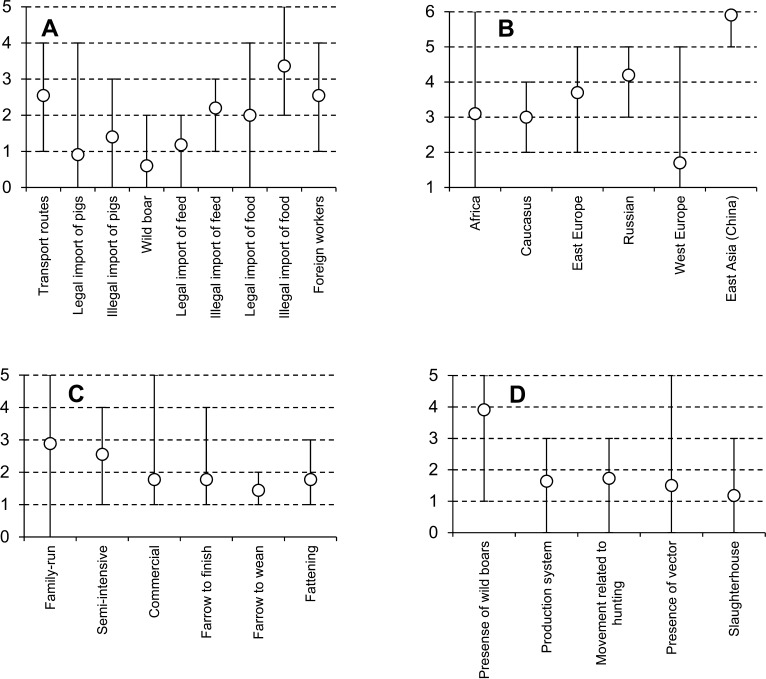
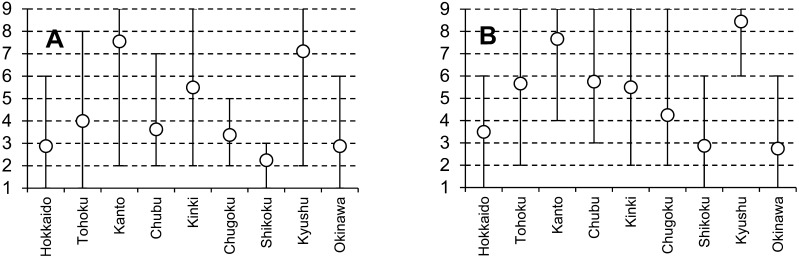
A rapid risk assessment was conducted using a questionnaire composed of 10 questions asking experts in African swine fever (ASF) to identify and rank the potential risk factors associated with the introduction and spread of ASF in Japan. The experts participating in this risk assessment considered illegal food import, followed by transport routes and foreign workers, to be the most relevant pathway of ASF introduction into Japan. Kanto and Kyushu were identified as the most likely regions for ASF introduction. All experts agreed that China is the most likely source of ASF introduction into Japan. Most Japanese experts were of the view that the risk of ASF spread if introduced into Japan would be low, while foreign experts considered the risk to be moderate or high. Most experts answered that wild boars would play an important role in the persistence of ASF if the disease were to spread in Japan.
通过一份由10个问题组成的问卷进行了快速风险评估,该问卷要求非洲猪瘟(ASF)专家识别并排列与ASF传入和在日本传播相关的潜在风险因素。参与此次风险评估的专家认为,非法食品进口,其次是运输路线和外国工人,是ASF传入日本最相关的途径。关东和九州被确定为ASF最有可能传入的地区。所有专家一致认为,中国是ASF传入日本最有可能的来源地。大多数日本专家认为,如果ASF传入日本,其传播风险较低,而外国专家则认为风险为中等或较高。大多数专家回答说,如果该疾病在日本传播,野猪将在ASF的持续存在中发挥重要作用。