Harpaintner Marcel, Trumpp Natalie M, Kiefer Markus
Department of Psychiatry, Ulm University, Ulm, Germany.
Front Psychol. 2018 Sep 19;9:1748. doi: 10.3389/fpsyg.2018.01748. eCollection 2018.
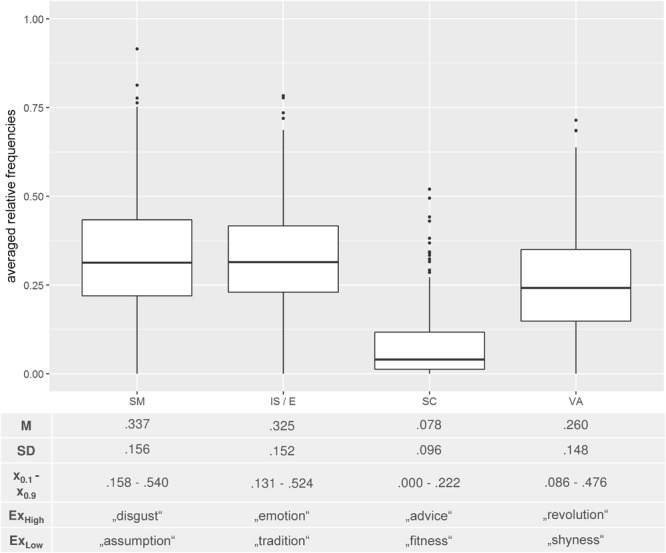
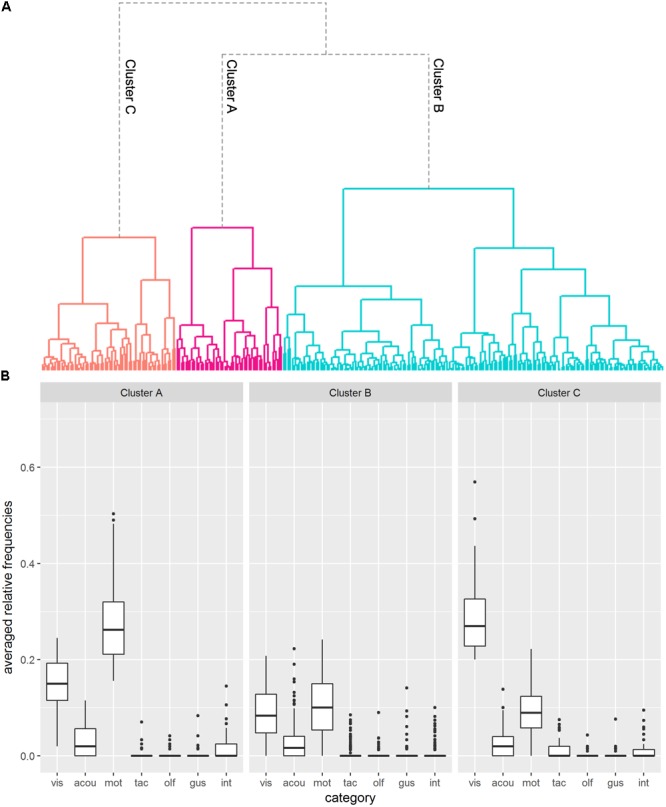
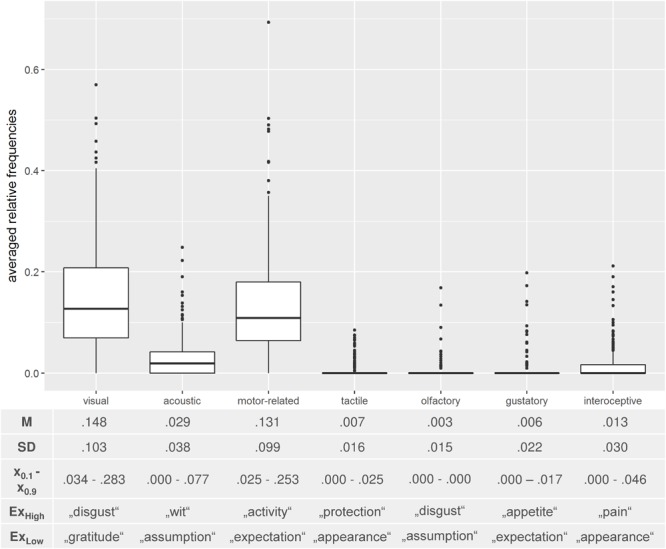
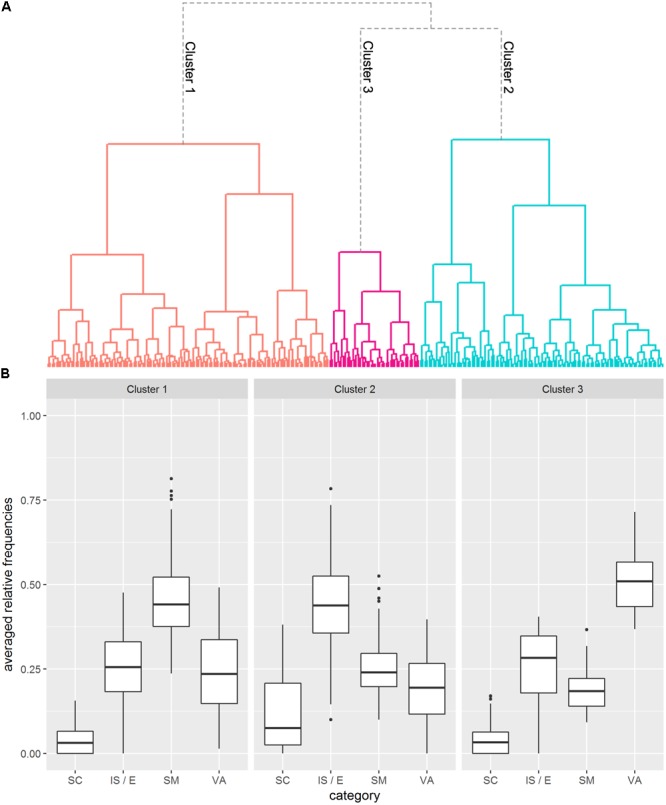
The relation of abstract concepts to the modality-specific systems is discussed controversially. According to classical approaches, the semantic content of abstract concepts can only be coded by amodal or verbal-symbolic representations distinct from the sensory and motor systems, because abstract concepts lack a clear physical referent. Grounded cognition theories, in contrast, propose that abstract concepts do not depend only on the verbal system, but also on a variety of modal systems involving perception, action, emotion and internal states. In order to contribute to this debate, we investigated the semantic content of abstract concepts using a property generation task. Participants were asked to generate properties for 296 abstract concepts, which are relevant for constituting their meaning. These properties were categorized by a coding-scheme making a classification into modality-specific and verbal contents possible. Words were additionally rated with regard to concreteness/abstractness and familiarity. To identify possible subgroups of abstract concepts with distinct profiles of generated features, hierarchical cluster analyses were conducted. Participants generated a substantial proportion of introspective, affective, social, sensory and motor-related properties, in addition to verbal associations. Cluster analyses revealed different subcategories of abstract concepts, which can be characterized by the dominance of certain conceptual features. The present results are therefore compatible with grounded cognition theories, which emphasize the importance of linguistic, social, introspective and affective experiential information for the representation of abstract concepts. Our findings also indicate that abstract concepts are highly heterogeneous requiring the investigation of well-specified subcategories of abstract concepts, for instance as revealed by the present cluster analyses. The present study could thus guide future behavioral or imaging work further elucidating the representation of abstract concepts.
抽象概念与特定模态系统之间的关系存在争议。根据经典方法,抽象概念的语义内容只能由与感觉和运动系统不同的无模态或语言符号表征来编码,因为抽象概念缺乏明确的物理指称。相比之下,具身认知理论提出,抽象概念不仅依赖于语言系统,还依赖于涉及感知、行动、情感和内部状态的多种模态系统。为了对这一争论有所贡献,我们使用属性生成任务研究了抽象概念的语义内容。要求参与者为296个抽象概念生成构成其意义相关的属性。这些属性通过一种编码方案进行分类,从而能够将其分为特定模态内容和语言内容。此外,还根据具体性/抽象性和熟悉程度对单词进行了评级。为了识别具有不同生成特征概况的抽象概念可能的子组,我们进行了层次聚类分析。除了语言联想外,参与者还生成了大量内省、情感、社会、感觉和运动相关的属性。聚类分析揭示了抽象概念的不同子类别,这些子类别可以通过某些概念特征的主导性来表征。因此,目前的结果与具身认知理论相符,该理论强调语言、社会、内省和情感体验信息在抽象概念表征中的重要性。我们的研究结果还表明,抽象概念具有高度的异质性,需要对抽象概念的特定子类别进行研究,例如本聚类分析所揭示的那样。因此,本研究可以指导未来的行为或成像工作,进一步阐明抽象概念的表征。