Human Nutrition Unit, Department of Public Health, Wollo University, Dessie, Ethiopia.
Department Public Health, Wollo University, Dessie, Ethiopia.
BMC Public Health. 2018 Oct 3;18(1):1152. doi: 10.1186/s12889-018-6066-5.
Iodine deficiency disorder is the leading cause of mental retardation and poor economic performance in developing countries. Worldwide, universal salt iodization has been implemented to eliminate iodine deficiency. However, the adequacy of iodine in salts needs close monitoring to meet its intended goal and this study was aimed at investigating the adequacy of iodine in dietary salt at household level in Dessie and Combolcha Towns.
A community-based cross-sectional study was employed at household level in Dessie and Combolcha towns from January to February, 2017. Data were collected from 753 households using systematic sampling technique. The adequacy of iodine in salt was analyzed using rapid testing kit. Socio-demographic and economic, dietary sources, labeling, packaging, storage and cooking methods of household's characteristics were collected via questionnaire developed using open data kit tool and STATA version 12 was used for further statistical analysis. Ordinal Logistic regression was performed to assess associations between explanatory variables and the response variable.
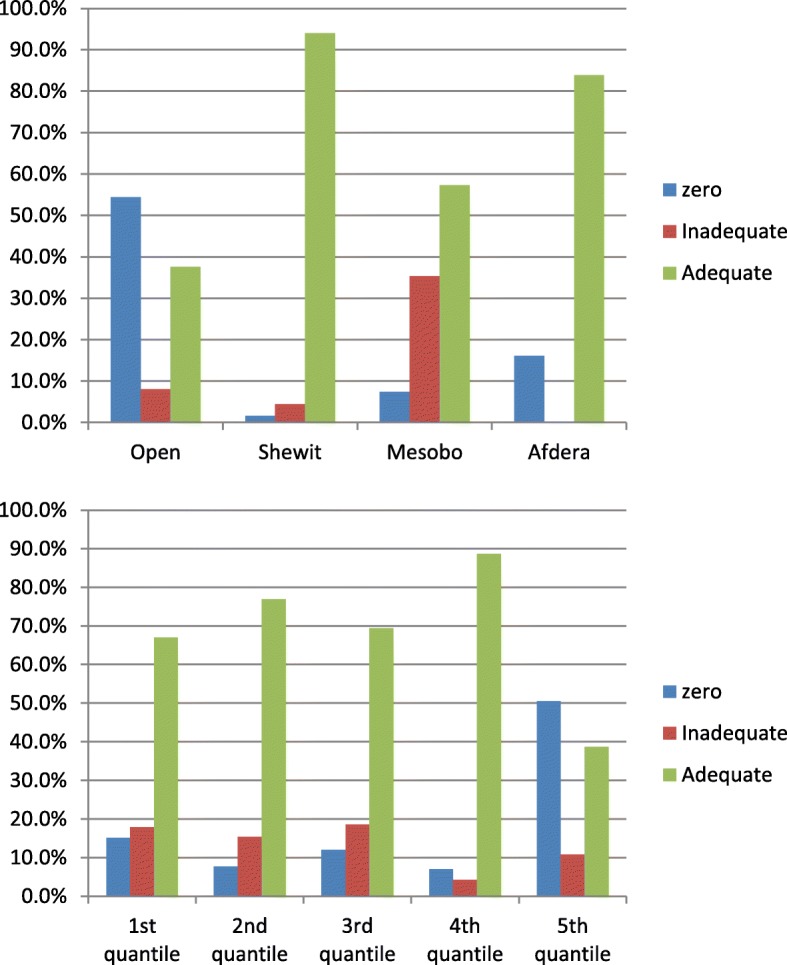
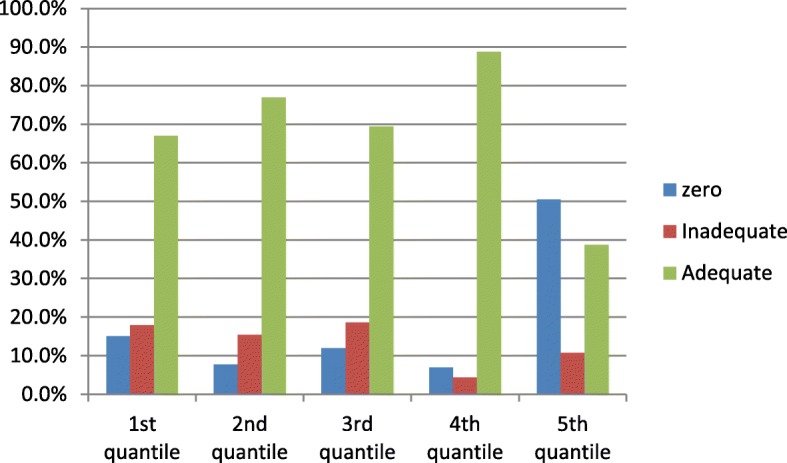
Nearly one-thrid (31.2%) of the households used inadequate iodized salt, which was below the World Health Organization recommendation level (≥15 ppm at the household level). Most of the respondents from Combolcha town (64.6%) were affected by inadequate use of iodized salt as compared to Dessie Town residents (22.2%). Being Dessie resident (OR = 2.53; 95% CI: 1.31-4.90), households with better socioeconomic status (OR = 2.54; 95% CI:1.10-5.87), site of labeling and packing (salt from open market (OR = 0.10; 95% CI: 0.04-0.23) and no exposure to sunlight (OR = 2.54; 95% CI:1.31-4.91) were the predictors of adequacy of iodized salt at household level.
Availability of adequately iodized salt at the household level in the study area was low. There should be regular quality control and regulatory enforcement of salt iodization at production, labeling and packaging sites of small scale industries and at household level.
碘缺乏症是发展中国家智力迟钝和经济表现不佳的主要原因。在全球范围内,实施了普遍的食盐碘化以消除碘缺乏症。然而,需要密切监测盐中的碘含量,以实现其预期目标,本研究旨在调查德西和孔波乔镇家庭层面膳食盐中碘的充足性。
2017 年 1 月至 2 月,在德西和孔波乔镇进行了基于社区的横断面研究。使用系统抽样技术从 753 户家庭中收集数据。使用快速检测试剂盒分析盐中碘的充足性。通过使用开放数据工具套件开发的问卷收集社会人口经济学、饮食来源、标签、包装、储存和家庭烹饪方法等特征的信息,使用 STATA 版本 12 进行进一步的统计分析。采用有序逻辑回归评估解释变量与因变量之间的关系。
近三分之一(31.2%)的家庭使用的碘盐不足,低于世界卫生组织推荐水平(家庭层面≥15ppm)。与德西镇居民(22.2%)相比,来自孔波乔镇的大多数受访者(64.6%)受到碘盐使用不足的影响。作为德西镇居民(OR=2.53;95%CI:1.31-4.90)、社会经济地位较好的家庭(OR=2.54;95%CI:1.10-5.87)、标签和包装地点(来自开放市场的盐(OR=0.10;95%CI:0.04-0.23)和不受阳光照射(OR=2.54;95%CI:1.31-4.91)是家庭层面碘盐充足性的预测因素。
研究地区家庭层面充足碘盐的供应率较低。应定期对小工业生产、标签和包装地点以及家庭层面的盐碘化进行质量控制和监管执法。