Devanesan Sandhanasamy, AlSalhi Mohamad S, Balaji Radhakrishnan Vishnu, Ranjitsingh Amirtham Jacob A, Ahamed Anis, Alfuraydi Akram A, AlQahtani Fulwah Y, Aleanizy Fadilah S, Othman Ahmed H
Research Chair in Laser Diagnosis of Cancer, Department of Physics and Astronomy, College of Science, King Saud University, Riyadh, 11451, Kingdom of Saudi Arabia.
Department of Physics and Astronomy, College of Science, King Saud University, Riyadh, 11451, Kingdom of Saudi Arabia.
Nanoscale Res Lett. 2018 Oct 4;13(1):315. doi: 10.1186/s11671-018-2731-y.
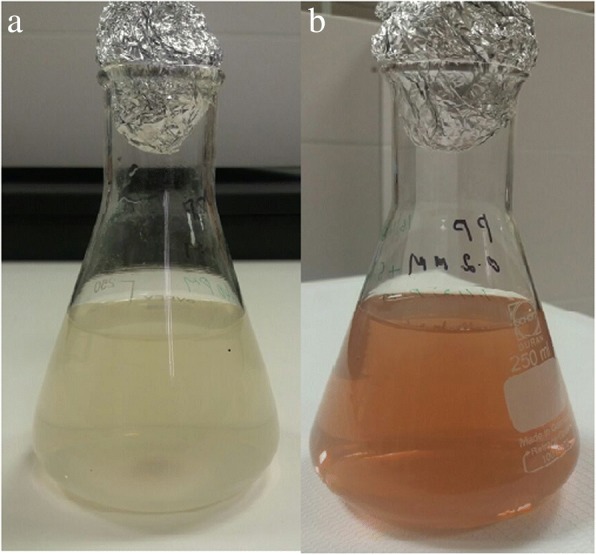
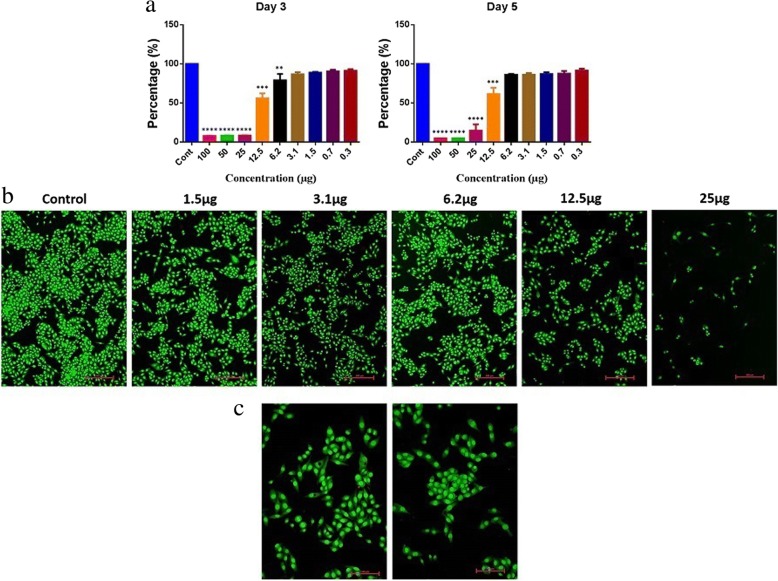
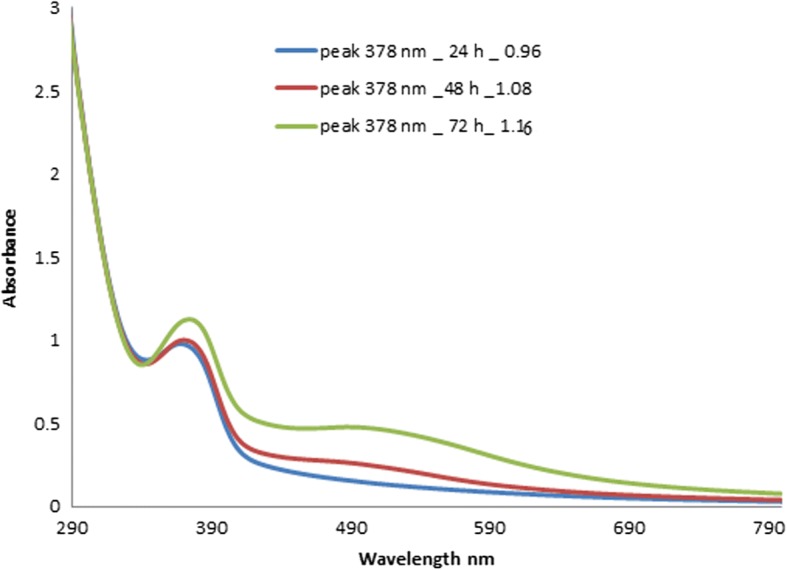
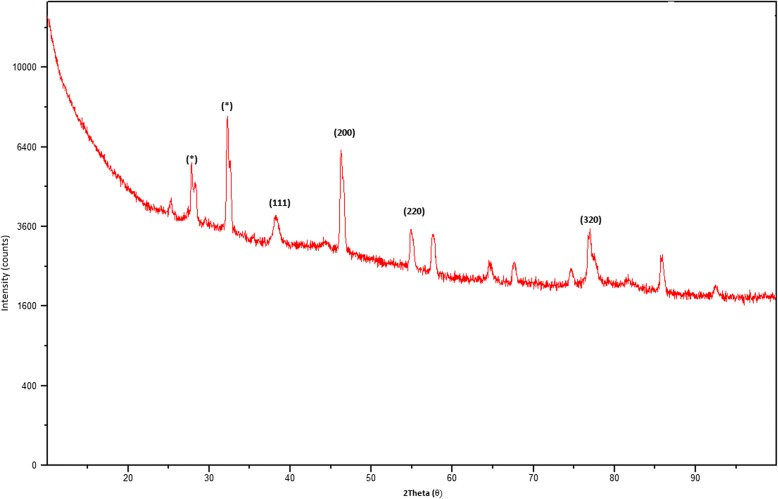
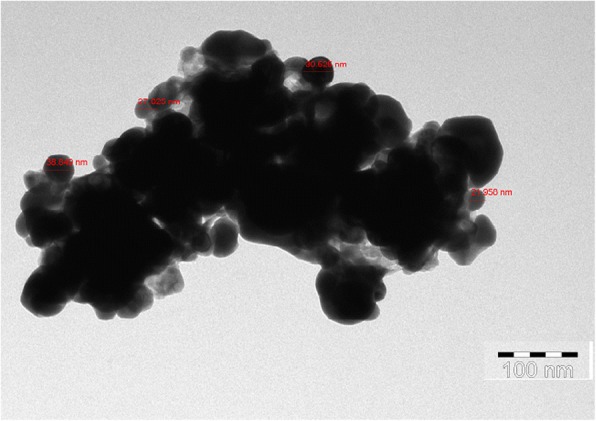
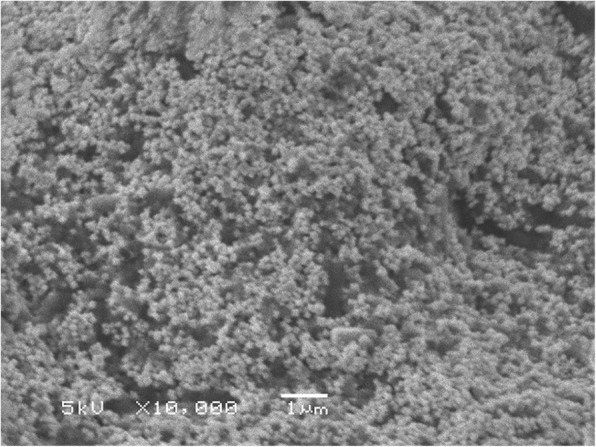
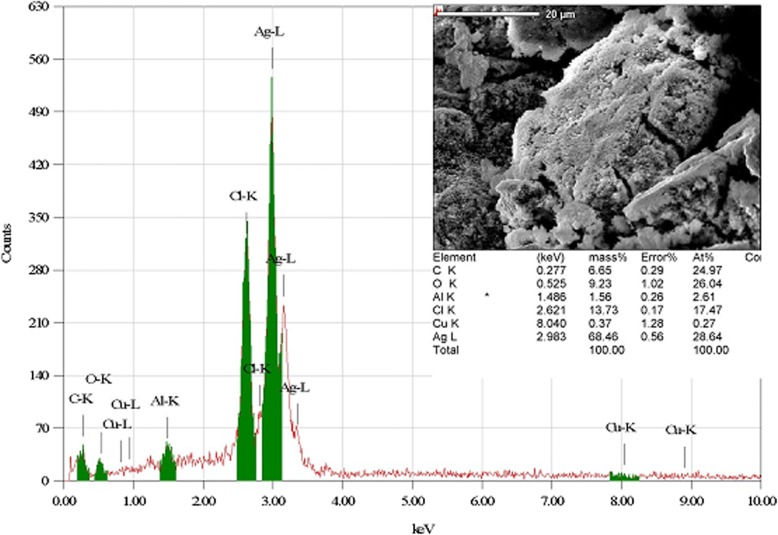
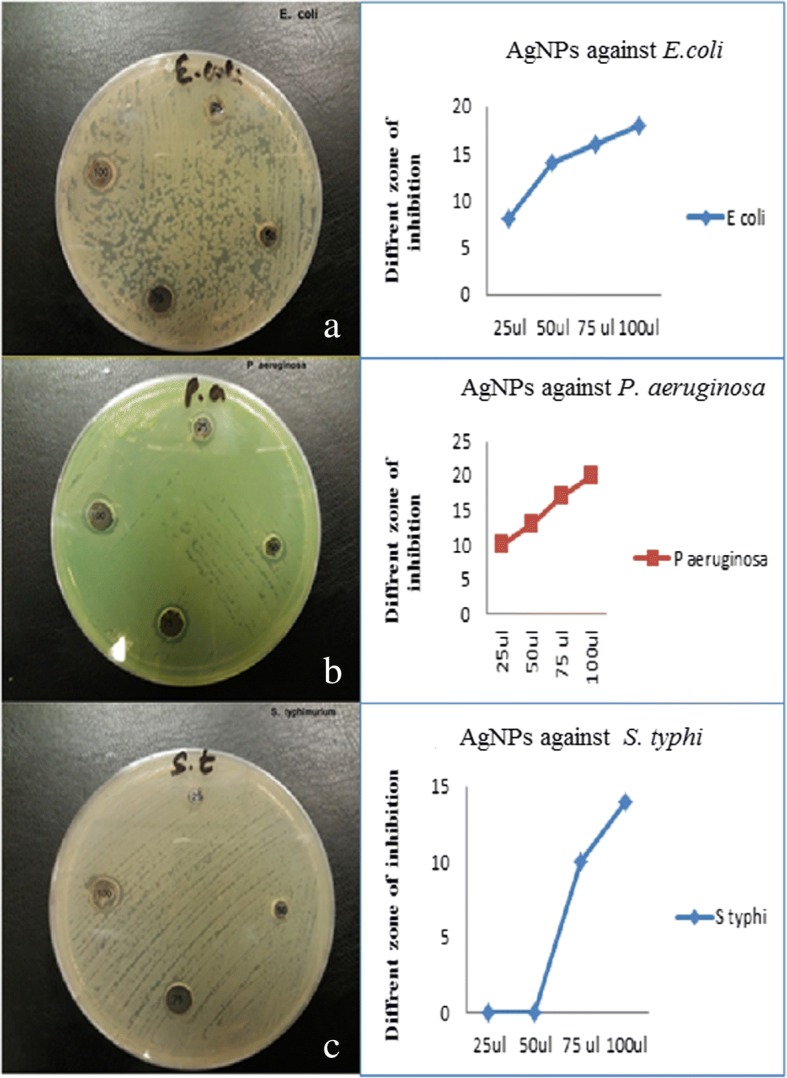
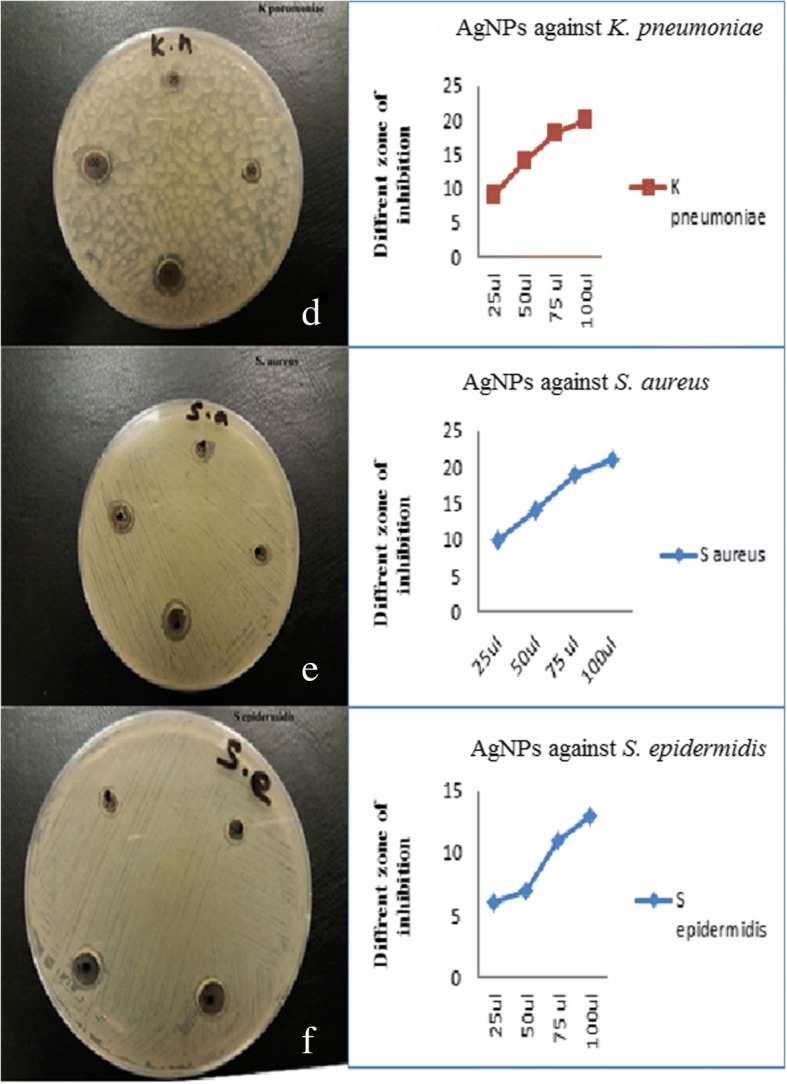
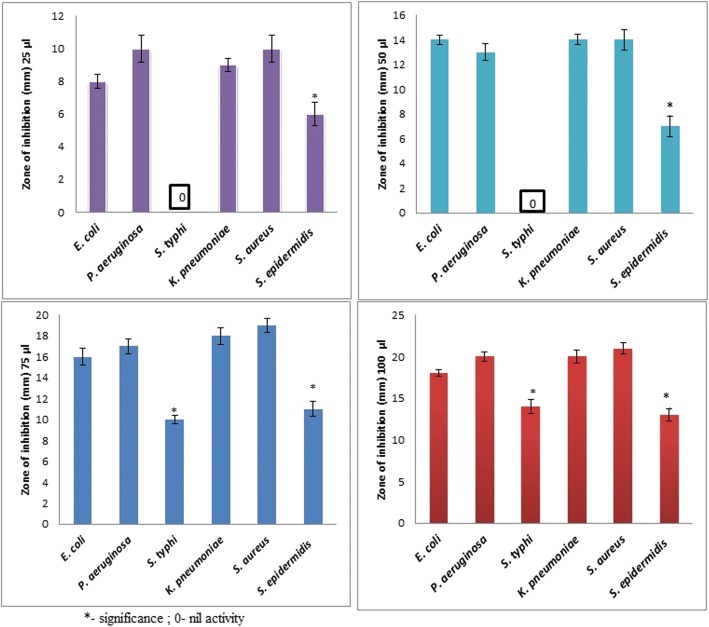
To address the growing challenges from drug-resistant microbes and tumor incidence, approaches are being undertaken to phytosynthesize metal nanoparticles, particularly silver nanoparticles, to get remedial measure. In this study, an attempt has been made to utilize a major biowaste product, pomegranate fruit peel (Punica granatum), to synthesize silver nanoparticles. The silver nanoparticles (AgNPs) were synthesized using the aqueous extract of pomegranate peel. The formation of synthesized AgNPs was confirmed through UV-Vis spectroscopy, X-ray diffraction (XRD), transmission electron microscopy (TEM), scanning electron microscopy (SEM), and energy-dispersive X-ray spectroscopy (EDX) as well as through the change of the colorless aqueous solution to a dark brown solution. Using UV-Vis spectroscopy, the dark brown solution showed a Plasmon resonance band peak at 378 nm in UV-Vis spectroscopy after reacting for 24, 48, and 72 h. The XRD report revealed that the AgNPs had a cubic structure. The TEM and SEM report showed the nanoparticles were equally distributed in the solution, with a spherical shape and size ranging from 20 to 40 nm and with an average particle size of 26.95 nm. EDX imaging also confirmed the presence of AgNPs. The synthesized AgNPs were found to exhibit good antimicrobial effects on Gram-negative and Gram-positive bacteria, particularly the pathogens Escherichia coli (ATCC 25922), Pseudomonas aeruginosa (ATCC 27584), Proteus vulgaris (ATCC 8427), Salmonella typhi (ATCC 14028), Staphylococcus aureus (ATCC 29213), Staphylococcus epidermidis (MTCC 3615), and Klebsiella pneumonia. The cytotoxic effects of AgNPs were also tested against a colon cancer cell line (RKO: ATCC® CRL-2577™), and it was observed that the viabilities were 56% and 61% on days 3 and 5, respectively, with exposure to 12.5 μg of AgNPs. This simple, economic, and eco-friendly method suggests that the AgNPs biosynthesized using pomegranate peel extract may be a novel, potent solution for the development of a drug for colon cancer that also has antibacterial activity.
为应对耐药微生物和肿瘤发病率不断增加带来的挑战,人们正在采用各种方法通过植物合成金属纳米颗粒,尤其是银纳米颗粒,以寻求补救措施。在本研究中,尝试利用一种主要的生物废弃物——石榴果皮(石榴)来合成银纳米颗粒。银纳米颗粒(AgNPs)是使用石榴皮的水提取物合成的。通过紫外可见光谱、X射线衍射(XRD)、透射电子显微镜(TEM)、扫描电子显微镜(SEM)和能量色散X射线光谱(EDX)以及无色水溶液变为深棕色溶液,证实了合成的AgNPs的形成。使用紫外可见光谱,深棕色溶液在反应24、48和72小时后,在紫外可见光谱中显示出378nm处的等离子体共振带峰。XRD报告显示AgNPs具有立方结构。TEM和SEM报告显示纳米颗粒在溶液中均匀分布,呈球形,尺寸范围为20至40nm,平均粒径为26.95nm。EDX成像也证实了AgNPs的存在。发现合成的AgNPs对革兰氏阴性和革兰氏阳性细菌具有良好的抗菌作用,特别是病原体大肠杆菌(ATCC 25922)、铜绿假单胞菌(ATCC 27584)、普通变形杆菌(ATCC 8427)、伤寒沙门氏菌(ATCC 14028)、金黄色葡萄球菌(ATCC 29213)、表皮葡萄球菌(MTCC 3615)和肺炎克雷伯菌。还测试了AgNPs对结肠癌细胞系(RKO:ATCC® CRL-2577™)的细胞毒性作用,观察到在暴露于12.5μg AgNPs的第3天和第5天,细胞活力分别为分别为56%和61%。这种简单、经济且环保的方法表明,使用石榴皮提取物生物合成的AgNPs可能是开发一种同时具有抗菌活性的结肠癌药物的新型有效解决方案。