Zhang Xiaoping, Zhang Bo, Miao Renyun, Zhou Jie, Ye Lei, Jia Dinghong, Peng Weihong, Yan Lijuan, Zhang Xiaoping, Tan Wei, Li Xiaolin
Soil and Fertilizer Institute, Sichuan Academy of Agriculture Sciences, Chengdu, China.
Department of Microbiology, College of Resources, Sichuan Agricultural University, Chengdu, China.
Mycobiology. 2018 Aug 13;46(3):224-235. doi: 10.1080/12298093.2018.1497795. eCollection 2018.
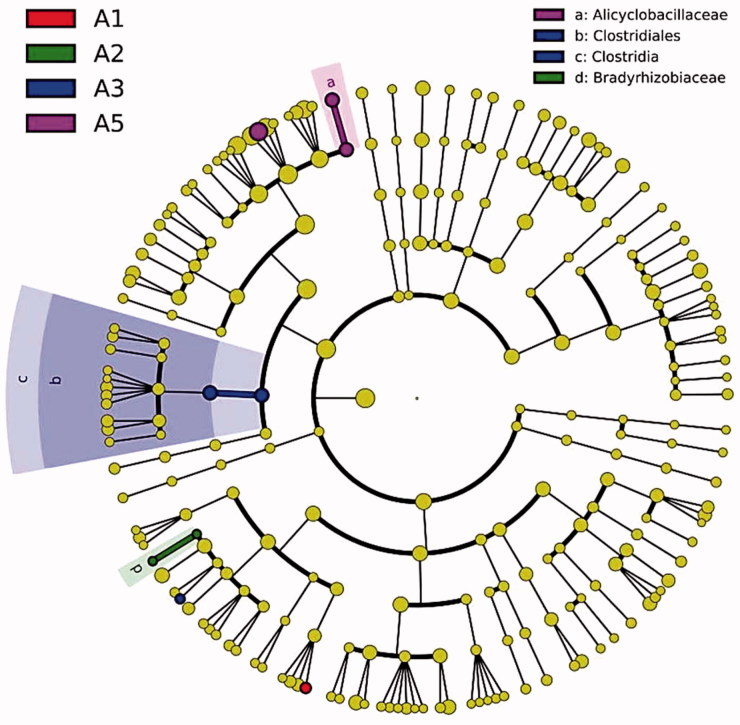
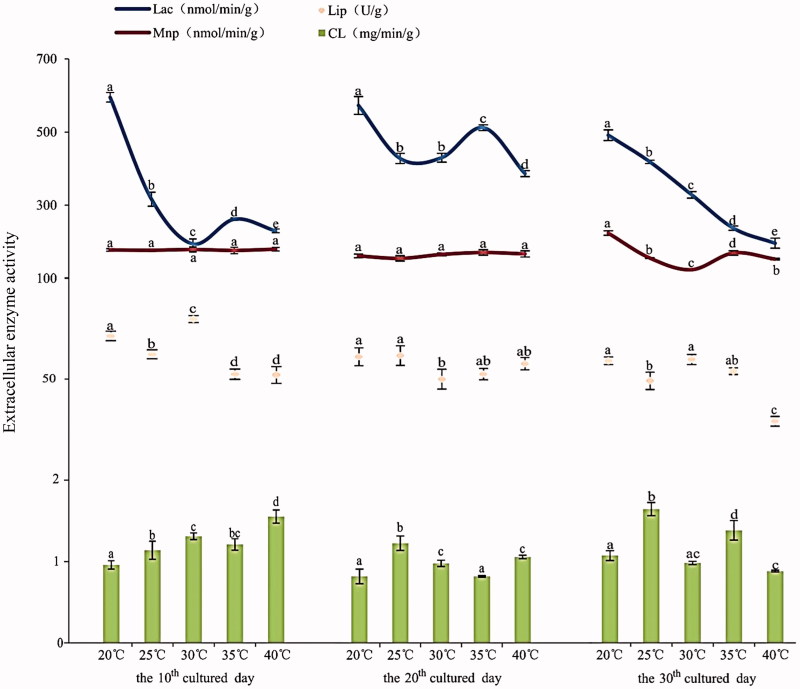
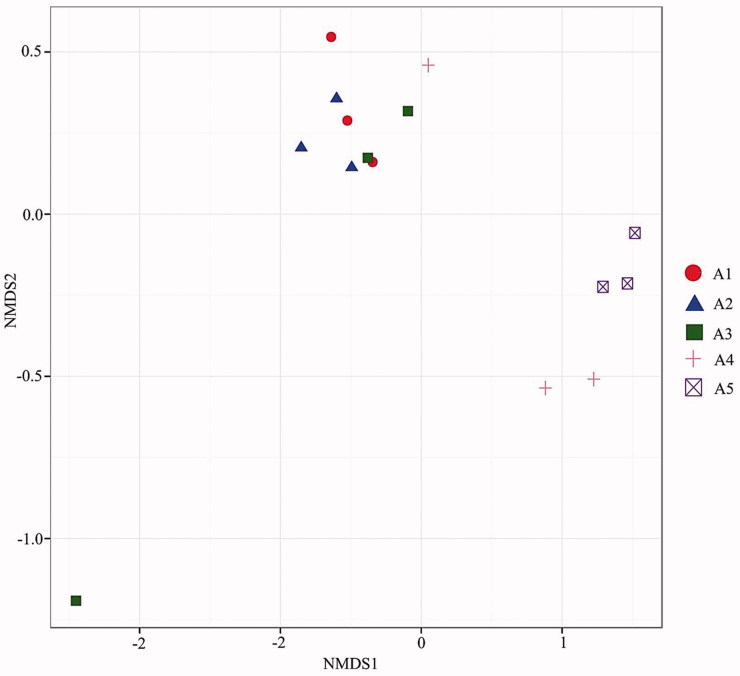
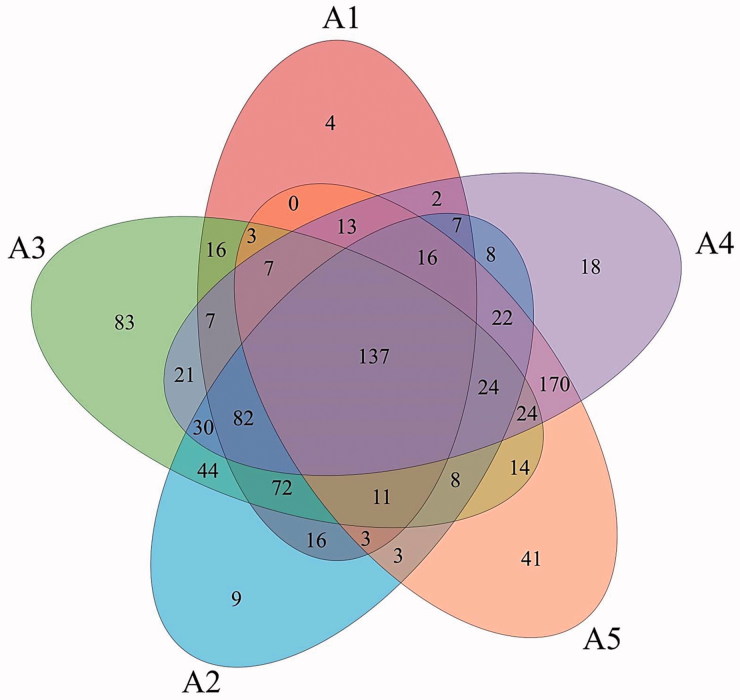
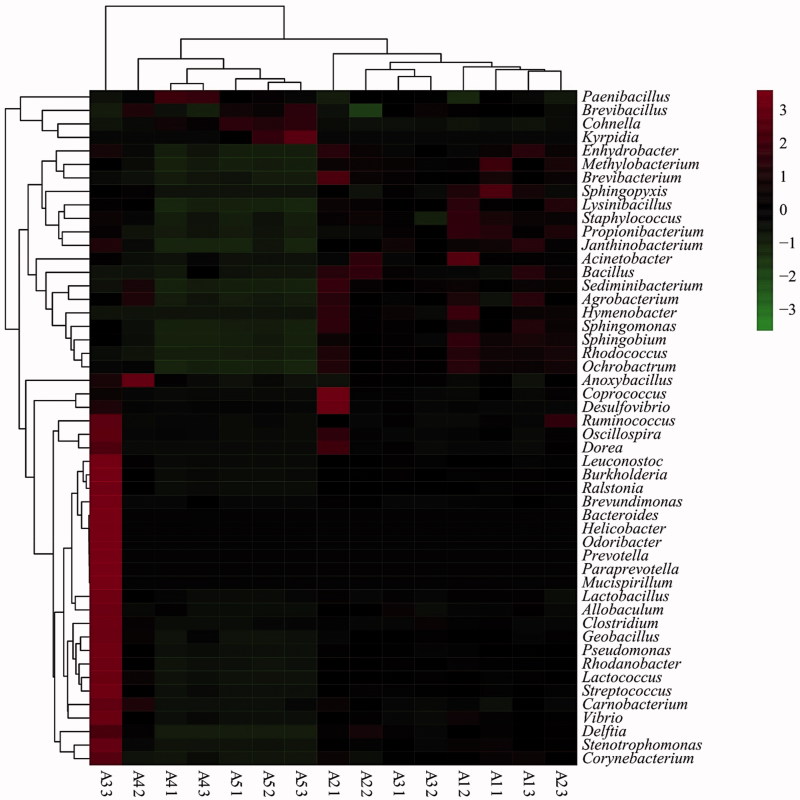
Temperature is an important environmental factor that can greatly influence the cultivation of . In this study, lignin peroxidase, laccase, manganese peroxidase, and cellulose in fruiting bodies were tested under five different temperatures (20 °C, 25 °C, 30 °C, 35 °C, and 40 °C) in three different culture periods (10 days, 20 days and 30 days). In addition, the V4 region of bacterial 16S rRNA genes in the substrate of cultivated for 30 days at different temperatures were sequenced using next-generation sequencing technology to explore the structure and diversity of bacterial communities in the substrate. Temperature and culture days had a significant effect on the activities of the four enzymes, and changes in activity were not synchronized with changes in temperature and culture days. Overall, we obtained 487,694 sequences from 15 samples and assigned them to 16 bacterial phyla. Bacterial community composition and structure in the substrate changed when the temperature was above 35 °C. The relative abundances of some bacteria were significantly affected by temperature. A total of 35 genera at five temperatures in the substrate were correlated, and 41 functional pathways were predicted in the study. Bacterial genes associated with the membrane transport pathway had the highest average abundance (16.16%), and this increased at 35 °C and 40 °C. Generally, different temperatures had impacts on the physiological activity of and the bacterial community in the substrate; therefore, the data presented herein should facilitate cultivation of .
温度是一个重要的环境因素,会极大地影响……的培养。在本研究中,在三个不同培养时期(10天、20天和30天)的五个不同温度(20°C、25°C、30°C、35°C和40°C)下,对……子实体中的木质素过氧化物酶、漆酶、锰过氧化物酶和纤维素进行了测试。此外,使用下一代测序技术对在不同温度下培养30天的……底物中细菌16S rRNA基因的V4区域进行测序,以探索底物中细菌群落的结构和多样性。温度和培养天数对这四种酶的活性有显著影响,且活性变化与温度和培养天数的变化并不同步。总体而言,我们从15个样本中获得了487,694个序列,并将它们归为16个细菌门。当温度高于35°C时,底物中的细菌群落组成和结构发生变化。一些细菌的相对丰度受温度显著影响。底物中五个温度下共有35个属相关联,本研究预测了41条功能途径。与膜转运途径相关的细菌基因平均丰度最高(16.16%),且在35°C和40°C时增加。一般来说,不同温度对……的生理活性和底物中的细菌群落有影响;因此,本文提供的数据应有助于……的培养。